


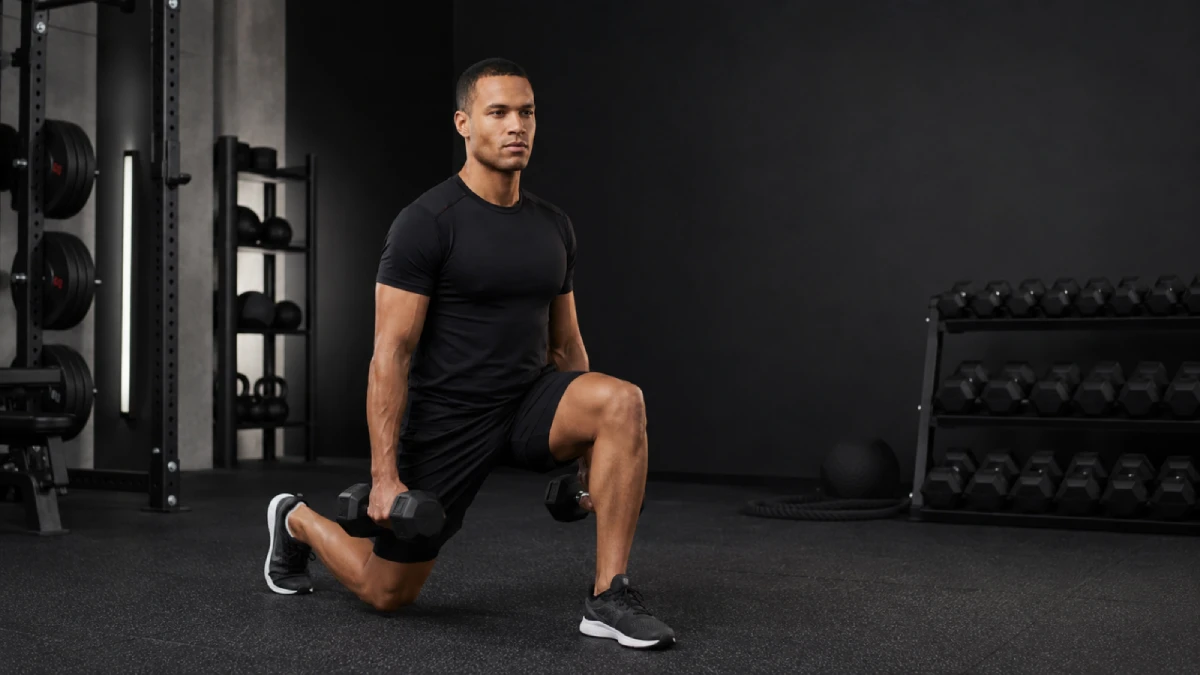
The dumbbell walking lunge is a loaded unilateral lower-body exercise where you step forward continuously while holding dumbbells. It trains the quadriceps, glutes, hamstrings, adductors, calves and core stabilizers while also challenging balance, coordination and hip control.
In biomechanical terms, it is a dynamic closed kinetic chain exercise that works mainly through sagittal-plane kinematics: the hips, knees and ankles flex and extend as you step, lower, drive up and move into the next repetition.
For home gym users, it is also highly practical. You do not need a large machine or full commercial setup. A pair of dumbbells, stable flooring and a short walking lane are enough.
Dumbbell Walking Lunge: Quick Exercise Profile
Detail | Information |
|---|---|
Exercise type | Strength / unilateral lower-body movement |
Movement pattern | Dynamic lunge / closed kinetic chain |
Main plane of motion | Sagittal plane |
Equipment needed | Pair of dumbbells |
Primary muscles worked | Quadriceps, gluteus maximus, hamstrings |
Secondary muscles worked | Adductors, calves, gluteus medius, transverse abdominis, erector spinae |
Difficulty level | Intermediate |
Best rep range | 8–12 steps per leg |
Best for | Leg strength, glute training, balance, conditioning and dumbbell-only workouts |
What Is a Dumbbell Walking Lunge?
A dumbbell walking lunge is a lunge variation where you hold dumbbells and move forward with alternating steps.
In a regular dumbbell lunge, you step forward, lower your body and return to the starting position. In a dumbbell walking lunge, you step forward, rise up and bring the back leg forward into the next rep.
That continuous forward movement increases the balance and coordination demand. Your front leg produces force, your back leg helps with transition, and your core prevents the torso from swaying side to side.
Exercise | Movement Pattern | Best Use |
|---|---|---|
Dumbbell lunge | Step forward and return | Learning basic lunge mechanics |
Dumbbell walking lunge | Step forward continuously | Strength, balance, conditioning and athletic control |
Dumbbell rear lunge | Step backward | More controlled, often easier for beginners |
Dumbbell step up | Step onto a platform | Single-leg strength with less forward travel |
Dumbbell goblet squat | Squat with one dumbbell held at chest | Beginner-friendly lower-body strength |
If you are still learning lunge mechanics, start with the standard dumbbell lunge or dumbbell rear lunge before progressing to walking lunges.
Muscles Worked in the Dumbbell Walking Lunge
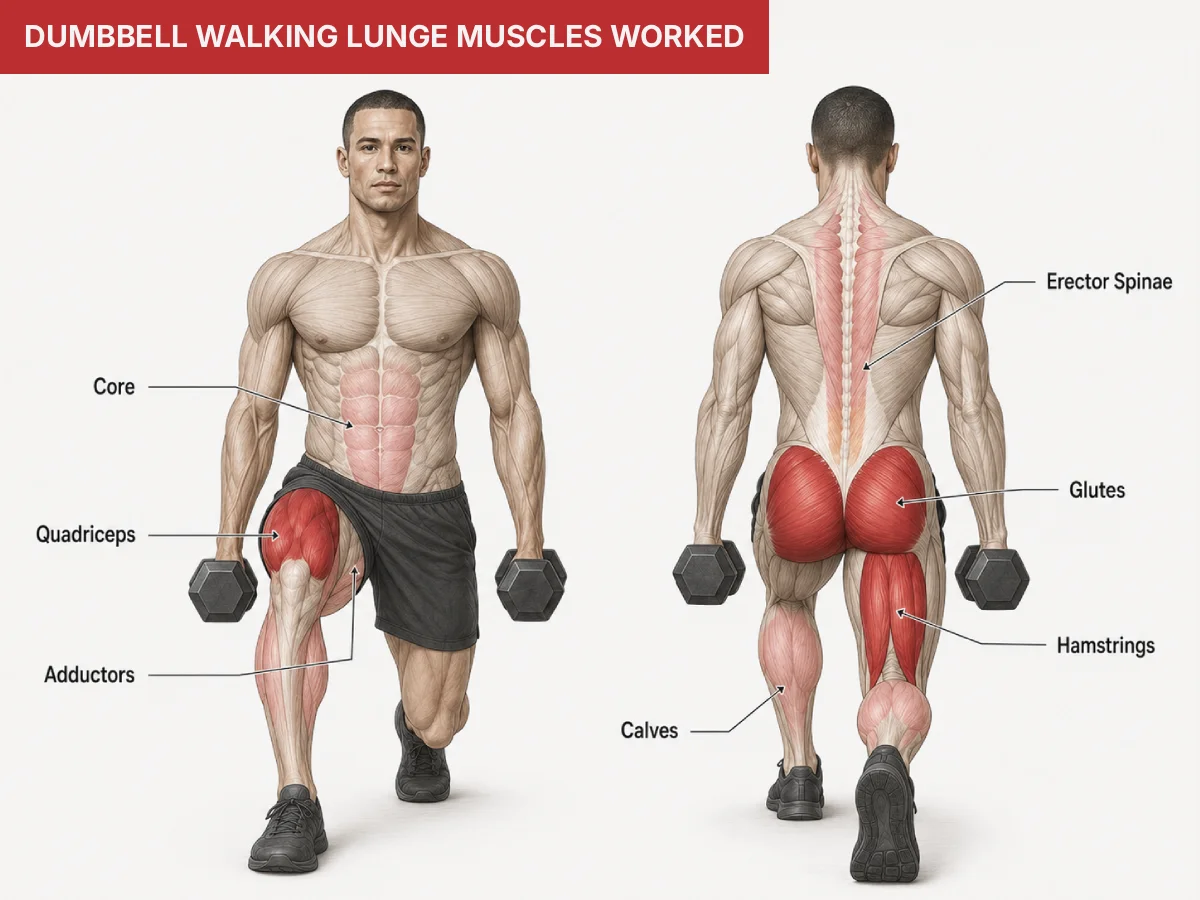
The dumbbell walking lunge is often described as a quad and glute exercise, but the movement is more complete than that. Because each repetition loads one leg while the body travels forward, the hips, knees, ankles and core all contribute.
Primary Muscles Worked
Muscle Group | Specific Muscles | Role During the Exercise |
|---|---|---|
Quadriceps femoris | Rectus femoris, vastus lateralis, vastus medialis, vastus intermedius | Extends the front knee and controls the descent |
Gluteals | Gluteus maximus | Drives hip extension as you rise and move forward |
Hamstrings | Biceps femoris, semitendinosus, semimembranosus | Assist hip extension and help stabilize the knee |
Adductors | Adductor longus, adductor magnus and related inner-thigh muscles | Stabilize the thigh and pelvis during each step |
Secondary and Stabilizing Muscles
Muscle Group | Specific Muscles | Role During the Exercise |
|---|---|---|
Hip stabilizers | Gluteus medius, gluteus minimus | Help prevent hip drop and knee collapse |
Calves | Gastrocnemius and soleus | Support ankle stability and push-off |
Core stabilizers | Transverse abdominis, rectus abdominis, external obliques | Resist trunk sway, rotation and lateral flexion |
Spinal stabilizers | Erector spinae | Maintain torso position and spinal alignment |
Hip flexors | Iliopsoas and related hip-flexor muscles | Help bring the rear leg forward into the next step |
The front leg performs most of the visible work. The quadriceps control knee flexion and extension, while the gluteus maximus and hamstrings drive the hip upward and forward. The gluteus medius and core stabilizers work quietly in the background to keep the pelvis level.
This is why walking lunges are useful not only for muscle building, but also for improving single-leg control. To build a stronger lower-body foundation, explore our deep dives into leg press machine mechanics, barbell back squat form and mastering the dumbbell goblet squat.
How to Do the Dumbbell Walking Lunge Correctly
Use a weight you can control. Walking lunges should feel smooth, not rushed.
Setup
Stand tall with your feet hip-width apart.
Hold one dumbbell in each hand.
Keep your palms facing inward.
Let the dumbbells hang by your sides.
Pull your shoulders slightly back and down.
Brace your core before the first step.
Keep your eyes forward.
Step-by-Step Instructions
Step forward with your right foot.
Land softly through the heel and mid-foot.
Bend both knees and lower under control.
Keep the front knee tracking over the second or third toe.
Lower until the back knee is close to the floor.
Keep your torso stable and your spine neutral.
Push through the front foot to stand.
Bring the back leg forward into the next step.
Repeat on the opposite side.
Continue alternating legs for the target number of steps.
Critical Posture Checklist
Form Cue | What It Means |
|---|---|
Knee follows toes | The front knee should not collapse inward |
Front foot stays grounded | Keep heel and mid-foot on the floor |
Back knee lowers softly | Do not crash into the floor |
Dumbbells stay quiet | Avoid swinging the weights |
Torso stays controlled | No rounding, twisting or side bending |
Step on train tracks | Do not walk on one narrow line |
A good rep should look controlled from start to finish. If you lose balance, shorten the set or reduce the dumbbell weight.
Stride Length Optimization: Finding Your Ideal Step
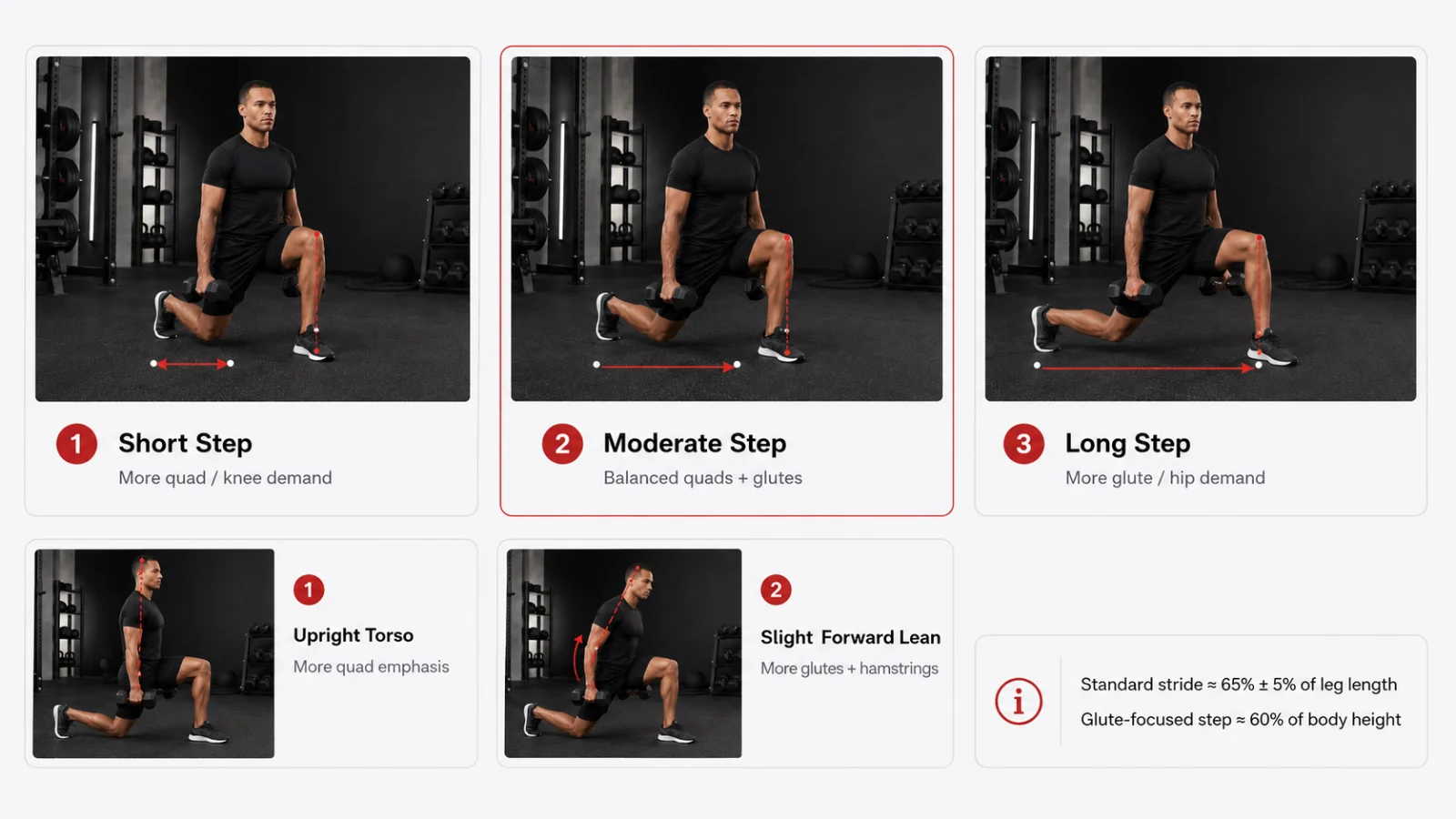
Most exercise guides say “take a short step” or “take a long step,” but that advice is too vague. Your ideal stride depends on your height, leg length, mobility and training goal.
Clinical biomechanics literature often uses anthropometrically scaled stride lengths, meaning step distance is calculated from the body rather than guessed.
1. Biomechanical Standard Lunge Distance
For a balanced walking lunge that allows good knee tracking, hip control, and trailing-knee clearance, use this practical estimate:
$$\text{Standard Stride Length} = (65\% \pm 5\%) \times \text{Leg Length}$$
This gives you a controlled step that is neither too short nor too long.
Example:
If your leg length is 90 cm:
$$90 \times 0.65 = 58.5 \text{ cm}$$
So your standard stride may be roughly 54–63 cm depending on comfort, mobility and control.
2. Glute-Dominant Step Length
If your goal is to increase hip-extensor demand and bias the movement more toward the glutes and hamstrings, a longer height-scaled step can be used:
$$\text{Step Length} = 60% \times \text{Body Height}$$
Example:
If your height is 170 cm:
$$170 \times 0.60 = 102 \text{ cm}$$
This is a longer step and should be used only if you can keep the front foot grounded, the pelvis stable and the spine neutral.
Short Step vs Moderate Step vs Long Step
Step Type | Main Emphasis | Best For | Watch Out For |
|---|---|---|---|
Short step | More knee and quad demand | Quad-focused training | May increase forward knee travel |
Moderate step | Balanced quads and glutes | Most lifters | Requires steady control |
Long step | More hip-extensor and glute demand | Glute-focused training | Can become unstable if too long |
A longer step is not automatically better. If you overstride, the back leg may stretch too far, your pelvis may rotate, and your push-off may become weak. Use the formula as a guide, then adjust based on clean technique.
Torso Kinematics: Upright Torso vs Slight Forward Lean
Your torso angle changes how force is distributed across the knees and hips. This is one of the most important technique variables in the dumbbell walking lunge.
Upright Torso Mechanics
Keeping the torso more perpendicular to the floor generally increases knee-joint demand. This can heighten patellofemoral compressive forces and knee joint moments, especially when the step is short.
In practical terms, an upright walking lunge often feels more quad-dominant. The vastus medialis and vastus lateralis work hard to control forward deceleration and extend the knee as you rise.
This does not mean an upright torso is wrong. It simply means it is usually more knee- and quad-focused.
Slight Forward Lean Mechanics
A slight forward lean of the trunk, while maintaining a neutral spine, shifts the center of gravity forward. This increases the demand on the hip extensors.
That means more work from the gluteus maximus and biceps femoris, especially during the drive upward and forward. This mechanics shift is heavily backed by sports science; a 2021 study by Bezerra et al. confirmed that altering trunk angle can reshape lower-body muscle activation patterns, allowing you to place more emphasis on the posterior chain.
The key word is slight. A controlled forward lean is useful. A rounded forward collapse is a mistake.
Torso Position | Training Effect | Coaching Cue |
|---|---|---|
Tall upright torso | More quad and knee-extensor emphasis | “Chest tall, knee tracks forward” |
Slight forward lean | More glute and hamstring contribution | “Lean from the hips, not the lower back” |
Rounded collapse | Poor control and higher risk of compensation | “Brace and reset” |
Think of the torso as a rigid column. It can lean slightly, but it should not fold.
Dumbbell Position: Two Dumbbells vs Contralateral and Ipsilateral Loading
Most people should begin with one dumbbell in each hand. This is the most balanced and beginner-friendly option.
But once your form is strong, dumbbell position can be used to change the training effect.
Loading Style | Difficulty | Best Use |
|---|---|---|
Two dumbbells by sides | Beginner to intermediate | Standard strength and hypertrophy |
Goblet hold | Intermediate | Torso control and posture |
Front-rack dumbbells | Advanced | Core and upper-back demand |
Single dumbbell, contralateral | Advanced | Hip stability and anti-lateral flexion |
Single dumbbell, ipsilateral | Advanced | Trunk stabilization and asymmetrical loading |
Contralateral Unilateral Loading
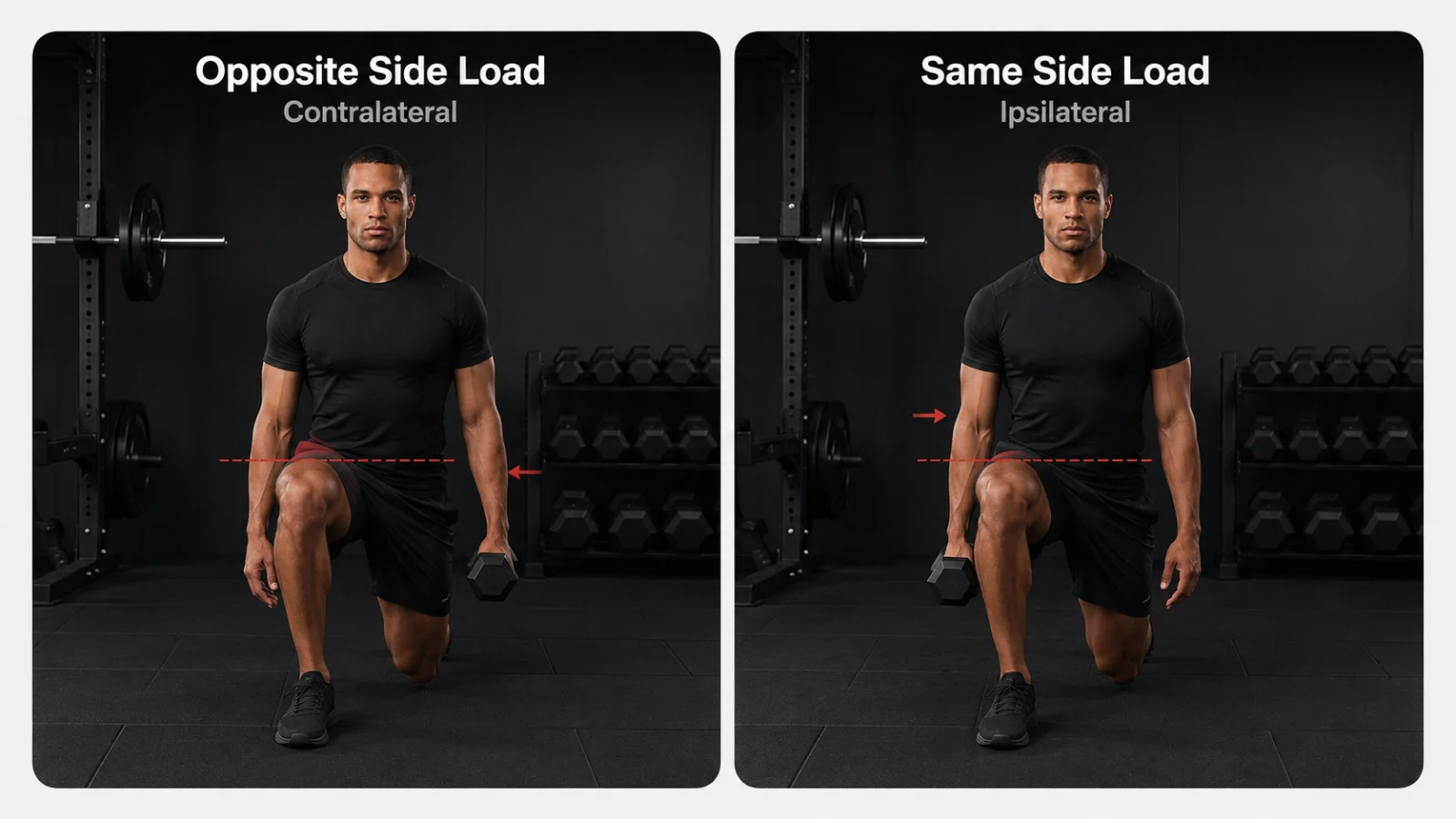
Contralateral loading means holding one dumbbell in the hand opposite your leading leg.
Example: right leg forward, dumbbell in left hand.
This creates a strong anti-lateral flexion challenge. Your body must resist side bending while the stance-side hip stabilizers keep the pelvis level.
This is not just gym folklore — electromyography (EMG) tracking by Šťastný et al. (2015) demonstrated that contralateral loading can force the gluteus medius of the stance leg to fire at up to 90% of its Maximal Voluntary Isometric Contraction MVIC in the tested protocol. This matters because the gluteus medius helps prevent hip drop and knee collapse.
Use this variation only after you can perform standard dumbbell walking lunges cleanly.
Ipsilateral Unilateral Loading
Ipsilateral loading means holding one dumbbell on the same side as your leading leg.
Example: right leg forward, dumbbell in right hand.
This setup changes the stabilization demand. It may reduce the specific gluteus medius challenge seen in contralateral loading, but it increases the need for trunk control. The erector spinae, external obliques and rectus abdominis help keep the torso aligned against the uneven load.
Research on load distribution during lunge exercises, including work by García-Vaquero / López-de-Celis et al. (2023), supports the idea that asymmetrical loading can increase trunk muscle activity.
Practical Recommendation
Training Goal | Best Dumbbell Position |
|---|---|
Learn the movement | Two dumbbells by sides |
Build muscle | Two dumbbells by sides |
Improve posture | Goblet hold |
Challenge core stability | Front-rack or single-dumbbell loading |
Improve hip control | Contralateral single-dumbbell loading |
Advanced trunk stabilization | Ipsilateral single-dumbbell loading |
Do not use single-dumbbell loading just to make the exercise look harder. Use it when you can control your hips, ribs and knee tracking.
Benefits of Dumbbell Walking Lunges
1. Builds Stronger Quads, Glutes and Hamstrings
Dumbbell walking lunges train the quadriceps, glutes and hamstrings together. The quads control the knee, while the glutes and hamstrings drive hip extension.
This makes the exercise useful as an accessory after heavy lower-body lifts like the barbell back squat, leg press or machine hack squat.
2. Improves Single-Leg Strength
Because each step loads one leg at a time, walking lunges help expose and improve left-right imbalances. This is valuable for athletes, lifters and general fitness users.
3. Builds Hip and Core Stability
The pelvis must stay level while the body moves forward. That requires gluteus medius, transverse abdominis, obliques and erector spinae involvement.
4. Adds Athletic Carryover
Walking lunges train stepping, deceleration, balance, hip extension and forward drive. These qualities are useful in running, court sports, field sports and functional training.
5. Works Well in Home Gyms
Many people training at home, in commercial gyms, or in smaller workout spaces do not have access to bulky machines. Dumbbell walking lunges are useful because they require only a clear walking path and a pair of dumbbells, making them a practical exercise for a wide range of training environments.
To build a space-efficient setup, check out LIFE FIT’s premium hex dumbbells, explore the full dumbbells collection, or use versatile free weights that fit modern Indian apartments. A compact selectorized or adjustable dumbbell system can also help when floor space is limited.
For complete planning, see LIFE FIT’s home gym setup service.
6. Useful for Conditioning
High-rep walking lunges can raise your heart rate quickly. Use lighter dumbbells when the goal is conditioning instead of maximum strength.
Dumbbell Walking Lunge vs Regular Dumbbell Lunge
Both exercises are valuable, but they serve slightly different purposes.
Feature | Dumbbell Walking Lunge | Regular Dumbbell Lunge |
|---|---|---|
Movement | Continuous forward steps | Step forward and return |
Balance demand | Higher | Moderate |
Space required | More | Less |
Best for beginners | Not first choice | Better option |
Best for conditioning | Excellent | Moderate |
Best for small rooms | Limited | Better |
Training feel | More dynamic and athletic | More controlled and repeatable |
Choose the regular dumbbell lunge if you are learning. Choose the walking version once you can control knee tracking, stride length and balance.
Common Dumbbell Walking Lunge Mistakes
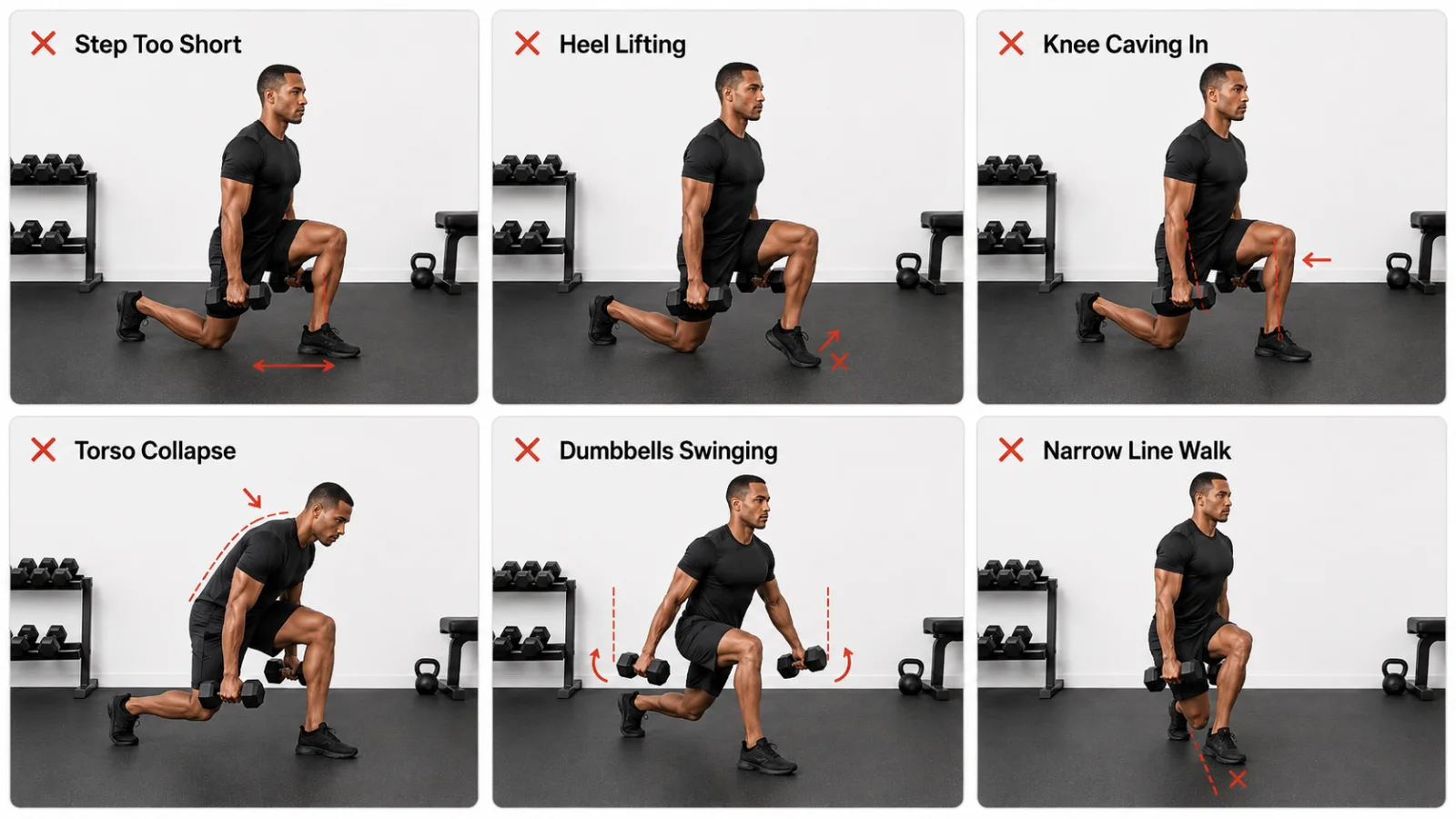
Mistake | What Happens | How to Fix It |
|---|---|---|
Step too short | Knee demand increases and balance may suffer | Use a moderate stride |
Step too long | Hip position becomes unstable | Shorten the stride slightly |
Front heel lifts | Force shifts too far forward | Keep heel and mid-foot grounded |
Knee caves inward | Hip control is lost | Drive knee over second or third toe |
Torso collapses forward | Spine loses position | Brace core and keep neutral spine |
Back knee hits the floor | Loss of eccentric control | Stop just above the floor |
Dumbbells swing | Momentum replaces muscle tension | Keep arms quiet |
Walking on one line | Balance becomes unstable | Step on two parallel tracks |
The goal is not to cover distance quickly. The goal is to own every step.
How Heavy Should Dumbbells Be for Walking Lunges?
Choose a weight that allows clean movement through the full set.
Training Level | Recommended Load |
|---|---|
Beginner | Bodyweight first, then light dumbbells |
Intermediate | Moderate dumbbells for 8–12 steps per leg |
Advanced | Heavier dumbbells for 6–10 controlled steps per leg |
A good working weight should feel challenging without causing knee collapse, heel lift, torso sway or dumbbell swinging.
For general strength planning, one-rep max calculator can help estimate loading for major lifts. For walking lunges, however, form quality should decide the weight.
Sets and Reps for Dumbbell Walking Lunges
Goal | Sets | Reps / Distance | Load |
|---|---|---|---|
Learn form | 2–3 | 6–8 steps per leg | Light |
Muscle growth | 3–4 | 8–12 steps per leg | Moderate |
Strength | 3–5 | 6–8 steps per leg | Heavy but controlled |
Conditioning | 2–4 | 12–20 steps per leg | Light to moderate |
Leg-day finisher | 1–3 | 20–40 total steps | Light |
Rest 60–120 seconds between sets. Use longer rest for heavier sets and shorter rest for conditioning work.
Best Dumbbell Walking Lunge Variations
Bodyweight Walking Lunge: Best for learning the movement before adding load.
Standard Dumbbell Walking Lunge: Hold dumbbells by your sides. This is the main strength and muscle-building variation.
Goblet Walking Lunge: Hold one dumbbell at chest height. This encourages a more upright torso and better core awareness.
Front-Rack Dumbbell Walking Lunge: Hold dumbbells near the shoulders. This increases upper-back, core and breathing demand.
Contralateral Single-Dumbbell Walking Lunge: Hold one dumbbell opposite the leading leg. This is excellent for advanced hip stability and anti-lateral flexion.
Ipsilateral Single-Dumbbell Walking Lunge: Hold one dumbbell on the same side as the leading leg. This creates a different asymmetrical trunk challenge.
Pause Walking Lunge: Pause briefly at the bottom of every rep. This removes momentum and improves control.
Dumbbell Rear Lunge: The dumbbell rear lunge is a strong alternative if you want more control and less forward travel.
Dumbbell Step Up: The dumbbell step up is another excellent single-leg exercise for quads, glutes and balance.
Dumbbell Walking Lunge Alternatives
Alternative | Best For |
|---|---|
Dumbbell rear lunge | Beginners and knee-sensitive users |
Dumbbell step up | Glutes, quads and balance |
Dumbbell goblet squat | Simple lower-body strength |
Barbell back squat | Heavy strength development |
Leg press | Stable quad-focused loading |
Machine hack squat | Controlled lower-body training |
Hip thrust | Glute-focused training |
Plie squat | Inner thighs and glutes |
For a complete lower-body plan, combine walking lunges with exercises like the dumbbell goblet squat, front squat, leg press and plie squat.
Who Should Do Dumbbell Walking Lunges?
Dumbbell walking lunges are useful for:
Intermediate lifters
Athletes and functional fitness users
Home gym users
People training with limited equipment
Lifters who want stronger quads, glutes and hamstrings
Users who want better balance and single-leg control
They may not be the best starting option if you struggle with balance, knee tracking or hip stability. In that case, start with bodyweight split squats, regular dumbbell lunges or reverse lunges.
If you have knee pain, hip pain, back pain, osteoporosis concerns, balance issues or a recent injury, speak with a qualified fitness or healthcare professional before adding loaded walking lunges.
Dumbbell Walking Lunge Workouts
Beginner Lower-Body Add-On
Exercise | Sets | Reps |
|---|---|---|
Bodyweight squat | 2 | 12 |
Bodyweight walking lunge | 2 | 6 steps per leg |
Glute bridge | 2 | 15 |
Plank | 2 | 30 seconds |
Muscle-Building Leg Day
Exercise | Sets | Reps |
|---|---|---|
Barbell back squat or leg press | 4 | 6–10 |
Dumbbell walking lunge | 3 | 8–12 steps per leg |
Dumbbell Romanian deadlift | 3 | 10–12 |
Standing calf raise | 3 | 12–15 |
Dumbbell-Only Home Gym Workout
Exercise | Sets | Reps |
|---|---|---|
Dumbbell goblet squat | 3 | 10–12 |
Dumbbell walking lunge | 3 | 8–10 steps per leg |
Dumbbell step up | 3 | 8–10 per leg |
Plank | 3 | 30–45 seconds |
For small urban home gyms, use a short lane of 2–4 metres and turn around between sets. If that is not possible, perform alternating forward lunges or reverse lunges in place.
Equipment Needed for Dumbbell Walking Lunges
You need:
A pair of dumbbells
Flat, non-slip flooring
Clear walking space
Optional mirror or coach feedback
Optional dumbbell rack for organized storage
Hex dumbbells are practical because they do not roll easily when placed on the floor. If you are building a compact home setup, explore our hex dumbbells, dumbbells collection, free weights and dumbbell racks.
For home, studio or commercial gym planning, you can also request guidance through LIFE FIT’s quotation request page.
FAQs About Dumbbell Walking Lunges
Dumbbell walking lunges work the quadriceps, gluteus maximus, hamstrings, adductors and calves. They also train the gluteus medius, transverse abdominis, obliques and erector spinae because the body must stay stable during each forward step.
They are good for both. A more upright torso and shorter stride usually feel more quad-dominant. A slightly longer stride with a controlled forward lean can increase hip-extensor demand and make the movement feel more glute-focused.
They are not automatically bad for knees. Poor control, excessive load, short unstable steps or knee collapse can create discomfort. Keep the front foot grounded, knee tracking over the toes and movement controlled. If pain continues, stop and get professional guidance.
Some forward knee travel can happen naturally depending on your limb length and stride. The bigger priority is control. Keep the heel grounded, knee aligned with the toes and avoid collapsing inward.
Use a weight you can control for every step. For muscle growth, many users do well with moderate dumbbells for 8–12 steps per leg. If balance or knee position breaks down, the weight is too heavy.
For general strength and muscle growth, perform 3–4 sets of 8–12 steps per leg. For conditioning, use lighter dumbbells and perform 12–20 steps per leg.
Walking lunges move forward continuously, making them more dynamic and balance-focused. Stationary lunges keep you in one place, making them easier to control and better for beginners.
Dumbbells at the sides are best for most users because they are stable and easy to load. Front-rack dumbbells increase core and upper-back demand, so they are better for advanced users.
Yes. You only need dumbbells and enough clear space for a few controlled steps. In small apartments, use a shorter walking lane or switch to reverse lunges.
Final Takeaway
The dumbbell walking lunge is more than a basic leg exercise. It is a loaded unilateral movement that trains lower-body strength, hip control, balance, coordination and core stability.
Use a moderate stride first. Keep the front foot grounded. Track the knee over the toes. Brace the core. Then progress with heavier dumbbells, longer walking distances, pauses or advanced loading variations.
For best results, pair dumbbell walking lunges with other lower-body movements such as the dumbbell lunge, dumbbell step up, barbell back squat and leg press.
References and Further Reading
Šťastný et al., 2015 — Does the Dumbbell-Carrying Position Change the Muscle Activity During Split Squats and Walking Lunges?
Bezerra et al., 2021 — Influence of Trunk Position during Three Lunge Exercises on Electromyographic Activity of the Hip and Thigh Muscles
Escamilla et al., 2008 — Patellofemoral Joint Force and Stress Between a Short- and Long-Step Forward Lunge
Riemann et al., 2012 — Biomechanical Analysis of the Anterior Lunge During External-Load Conditions
Neto et al., 2020 — Gluteus Maximus Activation during Common Strength and Hypertrophy Exercises: A Systematic Review
García-Vaquero / López-de-Celis et al., 2023 — Effect of Load Distribution on Trunk Muscle Activity with Lunge Exercises
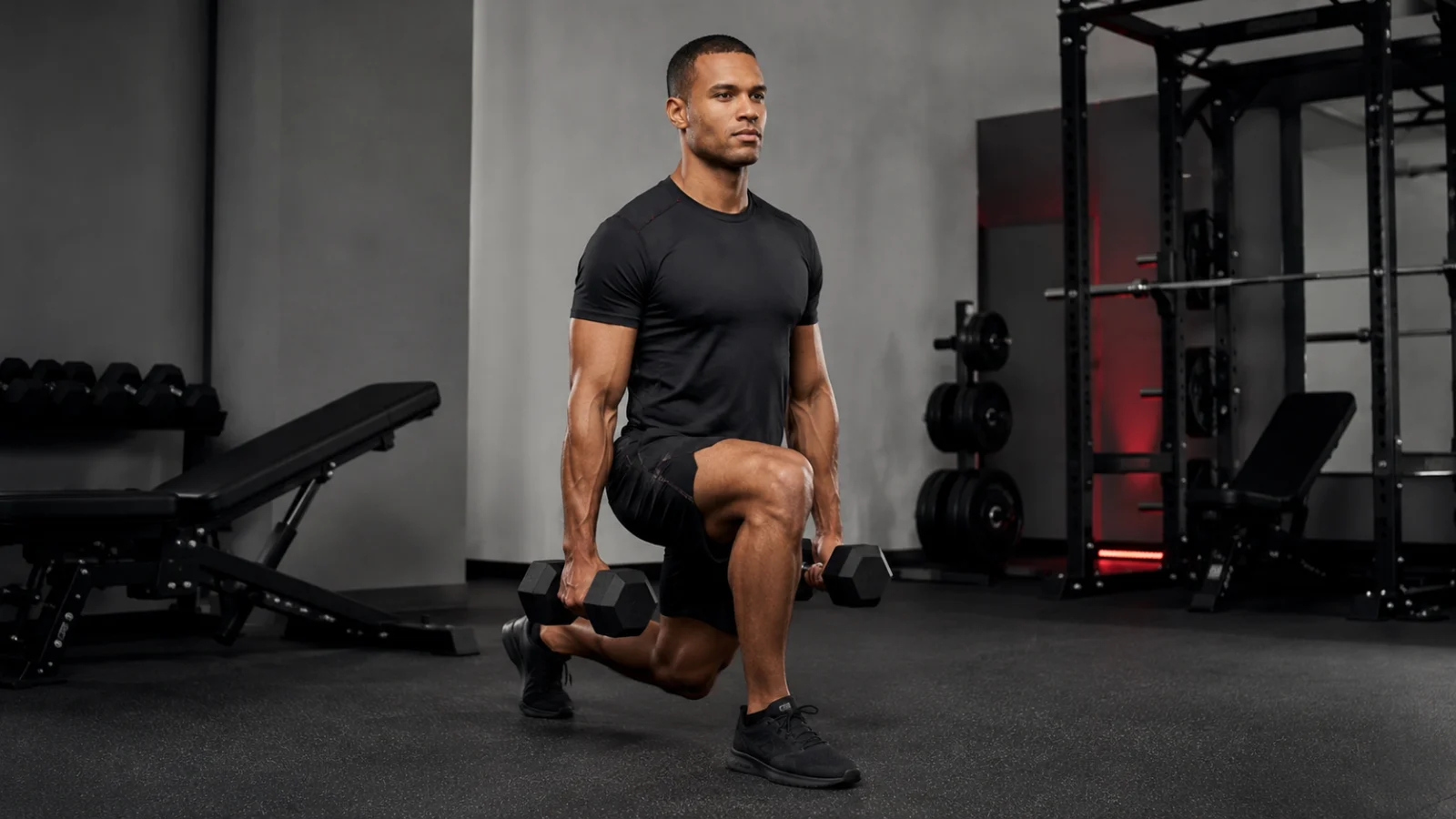
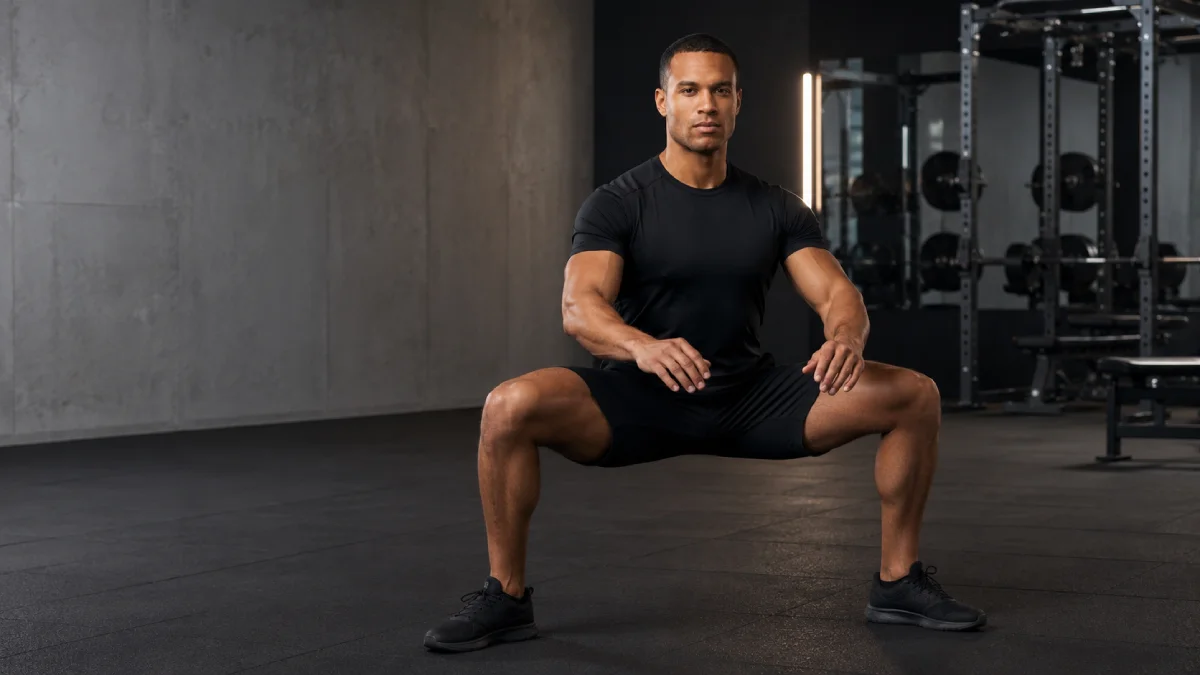
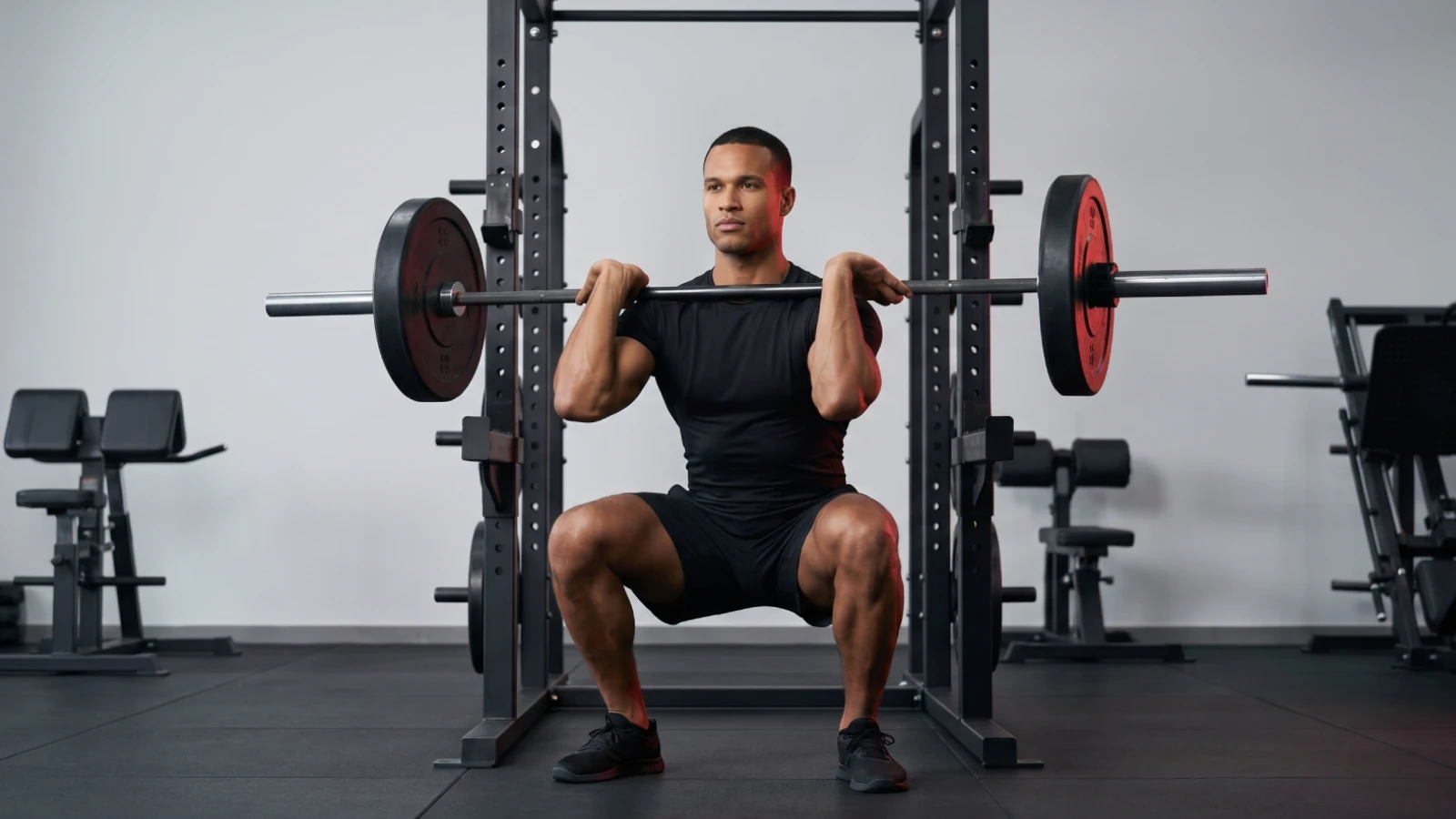
0 Comments
Loading comment form…
Loading comments…