


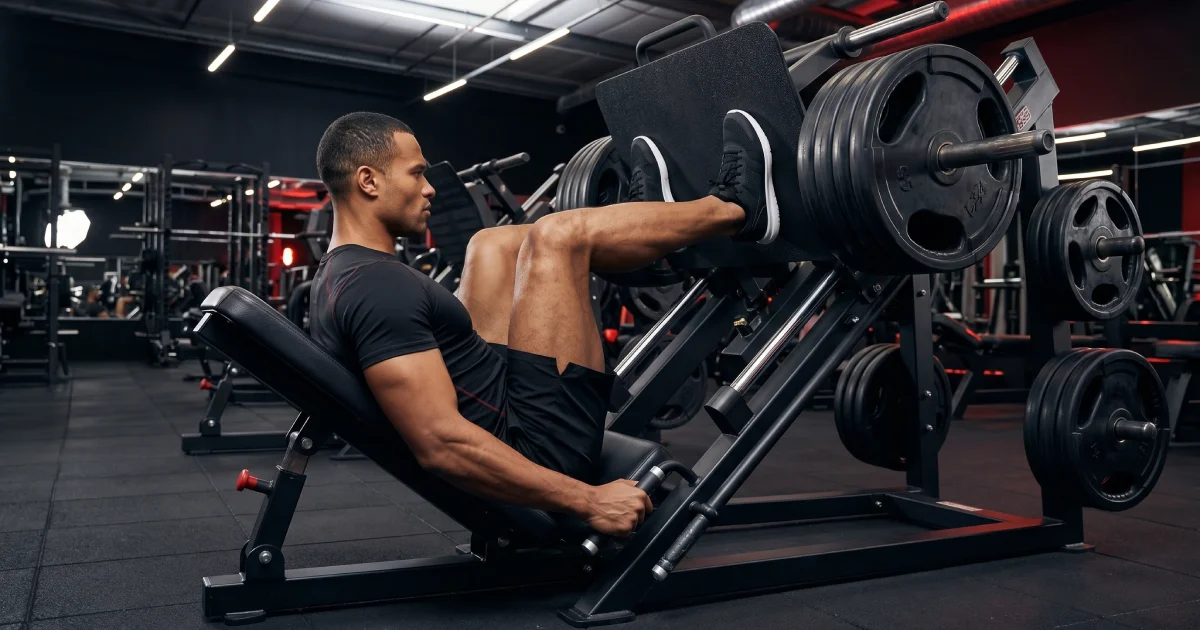
The leg press is one of the most effective machine exercises for building stronger, more muscular legs. It is especially useful for training the quadriceps, while also working the glutes, hamstrings, and calves.
The movement follows a fixed path and supports your upper body. That makes the leg press easier to control than many free-weight leg exercises, making it a great option for both beginners and experienced lifters.
Whether your goal is bigger quads, safer lower-body volume, or better machine-based training, the leg press can earn a strong place in your workout plan.
If you are exploring more quad exercises or comparing different machine exercises, this guide will show you exactly how to use the leg press correctly and get better results from it.
Looking for a leg press machine for your gym or home setup?
Get pricing, machine details, and the best leg press options for your setup.
What Is the Leg Press Exercise?
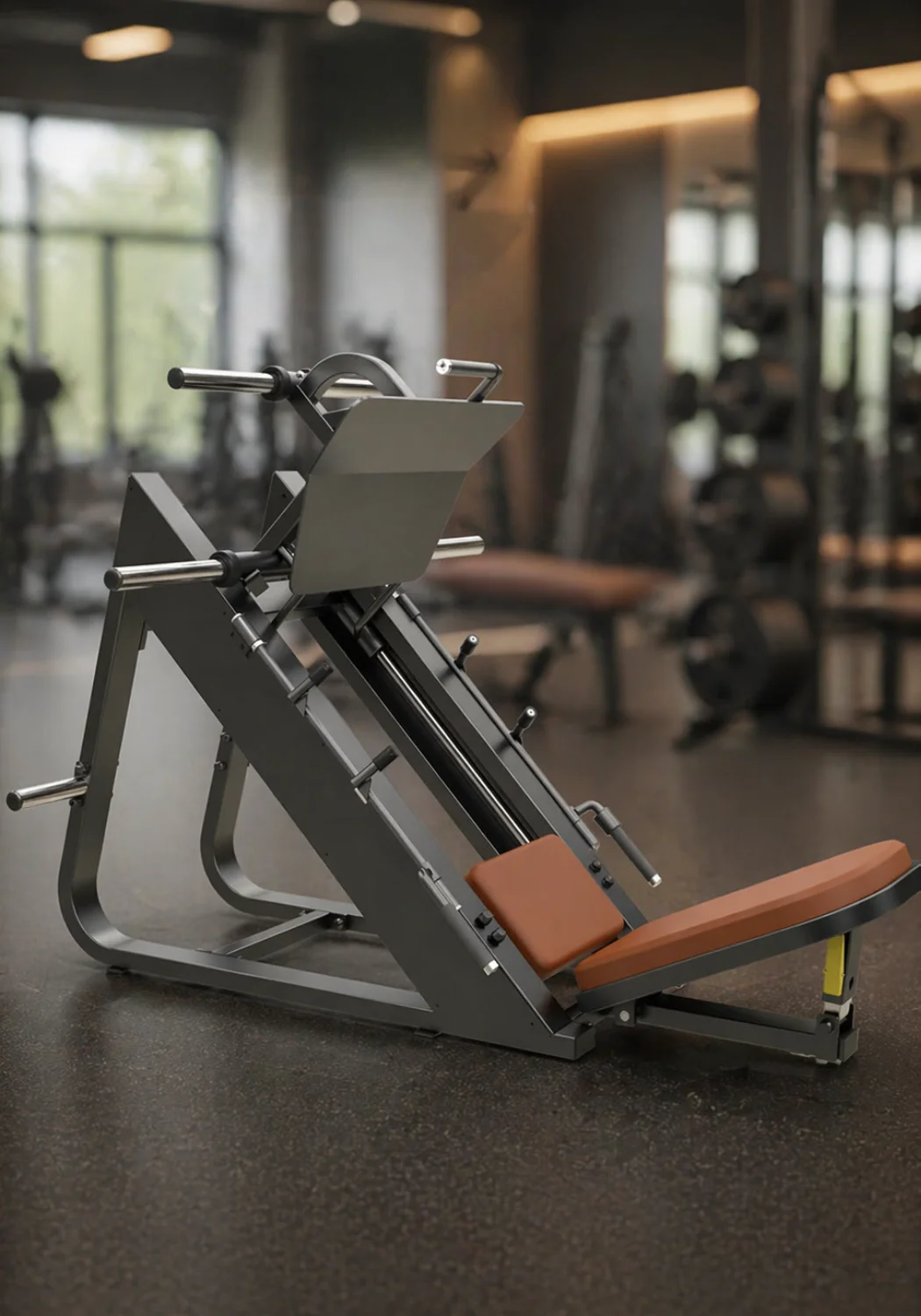
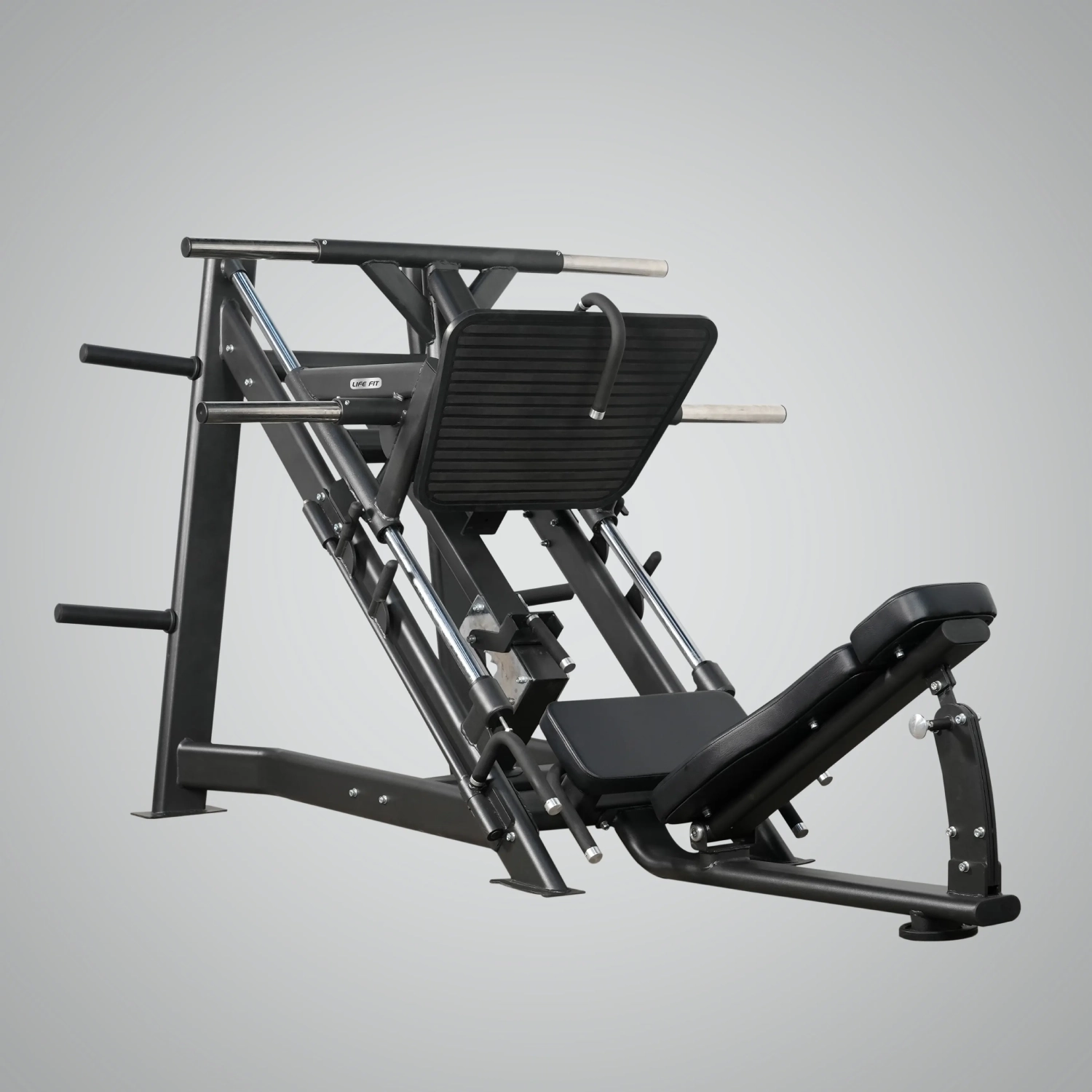
The leg press is a lower-body compound exercise performed on a machine where you push a weighted platform away from your body using your legs. Most gyms use a 45-degree leg press machine, although horizontal versions also exist.
Unlike squats, the leg press does not require you to balance a barbell on your body. That support makes it easier to focus directly on your working muscles, especially the quads. It also makes the exercise useful for people who want to add leg training volume without relying only on free weights.
For home gyms, studios, or commercial fitness spaces, you can also explore our leg press machines collection.
Leg Press Muscles Worked
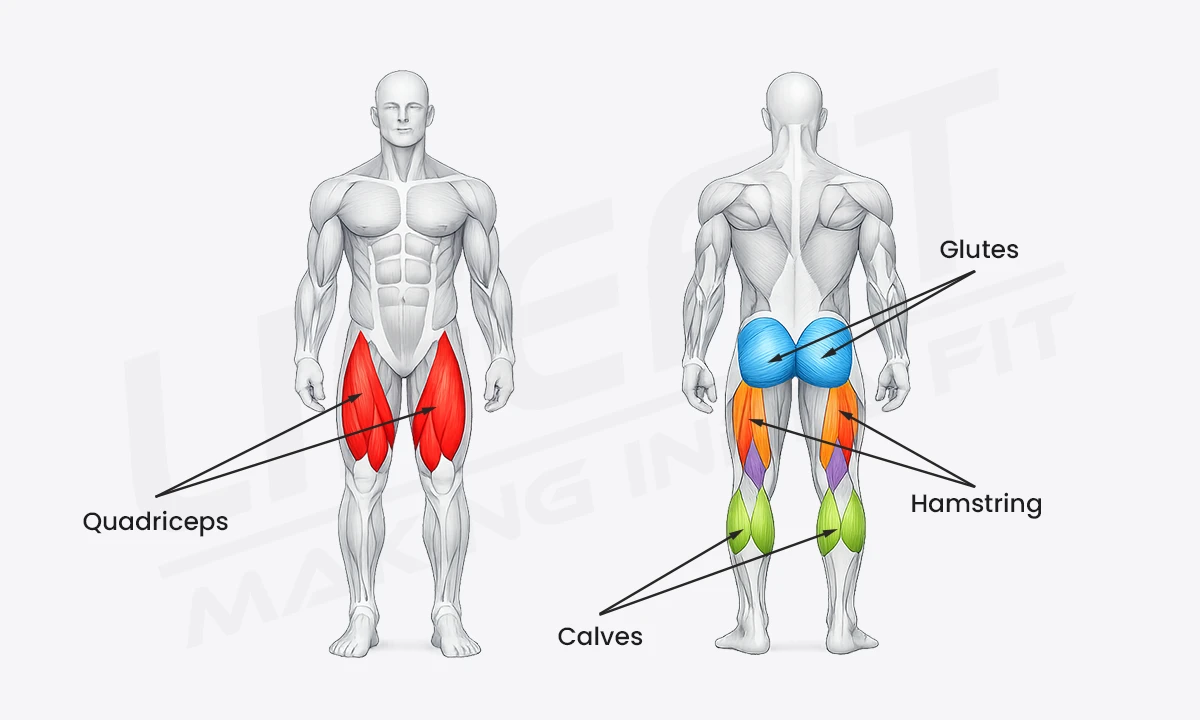
The leg press mainly targets the quadriceps, which are the large muscles on the front of your thighs. At the same time, the glutes, hamstrings, calves, and adductors assist during the movement.
Primary muscle
Quadriceps
Secondary muscles
Glutes
Hamstrings
Calves
Adductors
The exact muscle emphasis changes slightly depending on your foot placement, range of motion, and machine setup. A more standard, shoulder-width stance is usually best for overall development, while a controlled, quad-focused setup can help shift more work toward the front of the thighs.
To build a more complete lower-body routine, combine leg press training with other leg exercises, plus isolation work like our Seated Leg Curl Exercise and Leg Extension Guide.
Benefits of the Leg Press Exercise
1. Great for quad development
The leg press is one of the best machine-based exercises for building the quads. Because the movement is stable, you can focus on effort, controlled reps, and muscle tension without worrying as much about balance.
2. Beginner-friendly
New gym users often find the leg press easier to learn than squats. The fixed movement path and back support help reduce complexity, which makes it easier to practice proper form.
3. Useful for hypertrophy training
The leg press works very well for moderate to high reps, time under tension, and training close to muscular fatigue. That makes it a strong option for anyone focused on muscle growth.
4. Adds volume without the same balance demand as squats
Squats are excellent, but they also require more coordination, bracing, and full-body stability. The leg press can help you add extra lower-body volume without the same technical demand.
5. Easy to adjust for different training goals
Small changes in foot position and stance width can slightly shift the emphasis between quads, glutes, and hamstrings. That flexibility makes the leg press a practical part of many gym programs.
How to Do the Leg Press Properly
Follow these steps to perform the leg press safely and effectively:
Sit down on the machine with your head, upper back, and hips firmly against the pad.
Place your feet on the platform about shoulder-width apart.
Keep your toes slightly turned out if that feels natural and comfortable.
Grab the handles and brace your core.
Extend your legs enough to un-rack the sled.
Lower the platform slowly until your knees are deeply bent, but do not let your hips roll off the seat.
Press the platform back up by driving through your feet.
Stop just short of aggressively locking out your knees.
Repeat for controlled reps.
The best reps are the ones you can control from start to finish. Smooth technique is more valuable than loading the machine with more weight than you can actually handle.
Best Leg Press Foot Placement for Quad Focus
If your main goal is to target the quads, use a moderate stance with your feet around shoulder width and placed in a central to slightly lower position on the platform, as long as you can keep your heels down and your lower back stable.
Quad-focused cues
Keep your feet around shoulder width
Use a central or slightly lower foot position
Let your knees track in line with your toes
Lower the sled with control
Drive through the mid-foot
A higher foot position often shifts more emphasis toward the glutes and hamstrings, while a more standard position is usually better for overall leg training. The best setup is the one that lets you train hard while keeping your back flat and your movement controlled.
Common Leg Press Mistakes to Avoid
Lifting your hips off the pad
This is one of the biggest mistakes on the leg press. If your hips roll off the seat at the bottom, your lower back may round under pressure. That usually means the weight is too heavy, your range is too deep for your mobility, or both.
Fix it: Reduce the weight and stop the descent at the deepest position you can control without losing contact with the pad.
Locking out the knees too hard
Some lifters slam the sled upward and snap their knees into lockout. That reduces muscular tension and can place unnecessary stress on the joints.
Fix it: Press strongly, but keep the top of each rep controlled.
Using too much weight
The leg press is often treated like an ego lift. Many people load the sled heavily, then perform short, messy reps with poor form.
Fix it: Choose a weight you can move through a full, controlled range of motion.
Letting the knees collapse inward
Your knees should generally follow the same line as your toes. If they cave in, you lose stability and quality.
Fix it: Use a manageable load and focus on consistent knee tracking.
Moving too fast
Fast, uncontrolled reps reduce tension on the muscles and make technique harder to maintain.
Fix it: Slow down the lowering phase and stay in control.
Leg Press Sets and Reps
The best set and rep scheme depends on your goal.
For muscle growth
3 to 4 sets
8 to 15 reps
For strength-focused training
3 to 5 sets
5 to 8 reps
For beginners
2 to 3 sets
10 to 12 reps with moderate weight
Start lighter than you think you need. Once your form is strong and repeatable, add weight gradually over time.
Leg Press Variations
Standard leg press
A shoulder-width stance with controlled depth works well for most lifters and is great for overall lower-body development.
Narrow stance leg press
A slightly narrower stance may increase quad involvement for some people, though comfort and joint mechanics still matter.
High-foot leg press
Placing the feet higher on the platform may increase glute and hamstring contribution.
Single-leg press
This variation helps address left-right imbalances and improves unilateral control.
Tempo leg press
Slowing down the eccentric phase increases time under tension and can make lighter weights more challenging.
If your training also includes more glute-dominant work, our Hip Thrust Exercise guide is another strong addition.
Leg Press vs Squat: Which Is Better?
The better question is not which exercise is better overall, but which one fits your goal.
Squats train the lower body with more coordination, balance, and full-body involvement.
Leg press training gives you more support and often makes it easier to push your leg muscles close to fatigue.
For many people, the best answer is to use both. Squats are excellent for general strength and athletic movement, while the leg press is excellent for targeted machine-based volume.
Who Should Use the Leg Press?
The leg press is a good option for:
Beginners learning gym-based lower-body training
Lifters focused on quad hypertrophy
People who want extra leg volume after squats
Gym users who prefer machine exercises
Home or commercial gym buyers comparing lower-body machines
If you have knee, hip, or lower-back pain, it is smart to get advice from a qualified trainer or healthcare professional before training heavy.
How to Add the Leg Press to a Leg Workout
A simple way to use the leg press in your routine is to place it after your main compound lift or use it as the primary lower-body movement on a machine-focused day.
Example leg day structure
Squat or primary lower-body movement
Leg press
Leg curl
Leg extension
Calf work
This approach gives you a mix of compound and isolation work for complete leg development.
You can also support recovery and training consistency with our Exercise Recovery guide.
Should You Buy a Leg Press Machine?
If you are building a serious training setup, a leg press machine can be a valuable investment for lower-body strength and hypertrophy work. It is especially useful in commercial gyms, training studios, and premium home gyms where machine-based leg work is a priority.
For buyers comparing options, take a look at:
Need help choosing the right leg press machine?
Fill out the form to get a callback for your gym, studio, or home setup.
Final Thoughts
The leg press is more than just a beginner machine. When used with proper setup, controlled depth, and smart loading, it becomes one of the best exercises for building stronger, more muscular legsu2014especially the quads.
Focus on clean reps, stable positioning, and gradual progression. Avoid ego lifting, keep your hips planted, and use a foot position that matches your training goal.
Frequently Asked Questions
Yes. The leg press is one of the best machine exercises for targeting the quadriceps, especially when you use controlled form and a quad-focused foot placement.
No. The leg press can complement squats very well, but it does not fully replace the balance, coordination, and full-body strength demands of squatting.
Go as deep as you can while keeping your hips and lower back stable against the pad. If your hips start lifting, reduce the depth or lower the weight.
Not always. A higher foot position may shift more emphasis toward the glutes and hamstrings, while a more standard setup often works better for balanced development.
Most people can perform the leg press 1 to 2 times per week as part of a balanced lower-body routine, depending on total training volume and recovery.
Ready to add a leg press machine to your setup?
Explore our leg press machines or connect with us on WhatsApp for pricing, details, and available options.
0 Comments
Loading comment form…
Loading comments…