


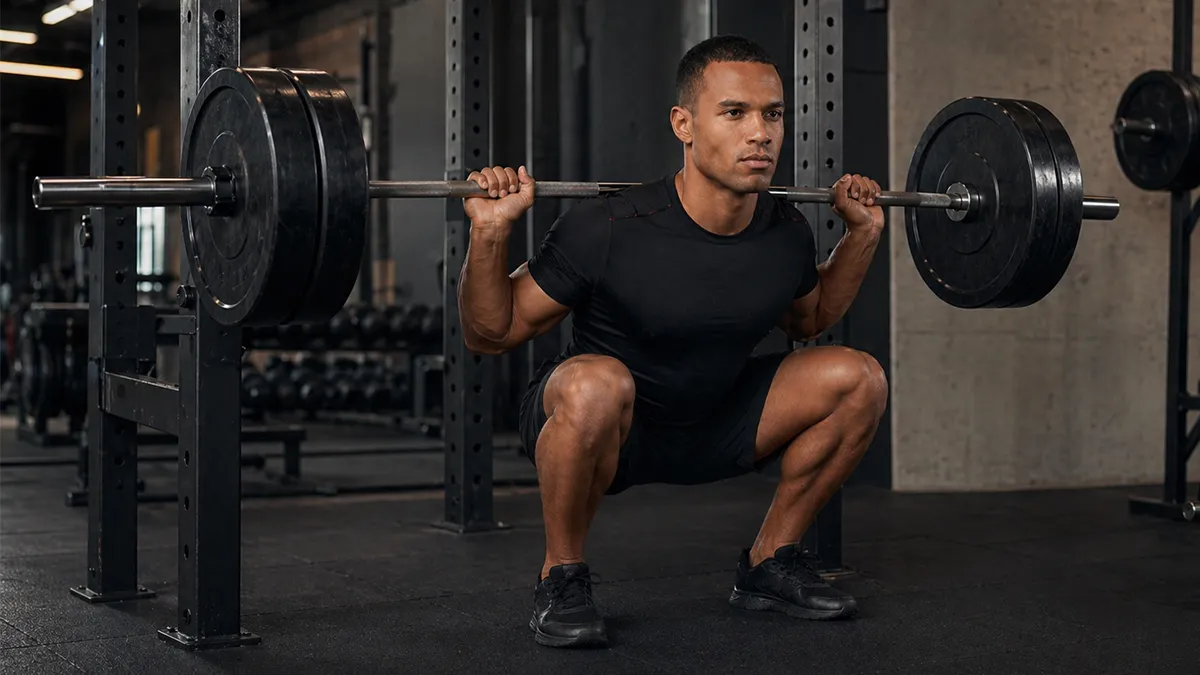
The barbell back squat is one of the most effective exercises for building strong legs. It mainly targets the quadriceps, but it also trains the glutes, hamstrings, adductors, calves, core, and upper back.
This Barbell Back Squat Exercise Guide explains how to set up the lift, how to squat with proper form, which muscles work, what mistakes to avoid, and how many sets and reps to do.
The exercise uses a barbell and weight plates. For safety, you should also use a squat rack or power rack, especially when lifting heavier weights.
If your goal is stronger quads, the back squat is a great compound lift to learn. You can also explore more quad exercises and leg exercises to build a complete lower-body workout.
Quick Exercise Profile
Detail | Barbell Back Squat |
|---|---|
Main target muscle | Quadriceps |
Secondary muscles | Glutes, hamstrings, adductors, calves, core, upper back |
Equipment needed | Barbell, weight plates, squat rack or power rack, collars |
Exercise type | Compound strength exercise |
Movement pattern | Squat |
Difficulty level | Beginner to advanced, depending on load and form |
Best for | Leg strength, quad growth, lower-body power, full-body stability |
What Is the Barbell Back Squat?
The barbell back squat is a compound strength exercise. You place a loaded barbell across your upper back, squat down, and stand back up.
Unlike a bodyweight squat, the back squat uses external resistance from a barbell and weight plates. This extra load makes the exercise more effective for strength development, but it also requires better control.
A good back squat needs:
stable feet,
a braced core,
strong upper-back tension,
controlled depth,
knees that track with the toes,
and a safe rack setup.
Most lifters should perform back squats inside a squat rack or power rack. If you are planning a gym or home setup, read our squat rack buying guide before choosing equipment.
Barbell Squat Muscles Worked
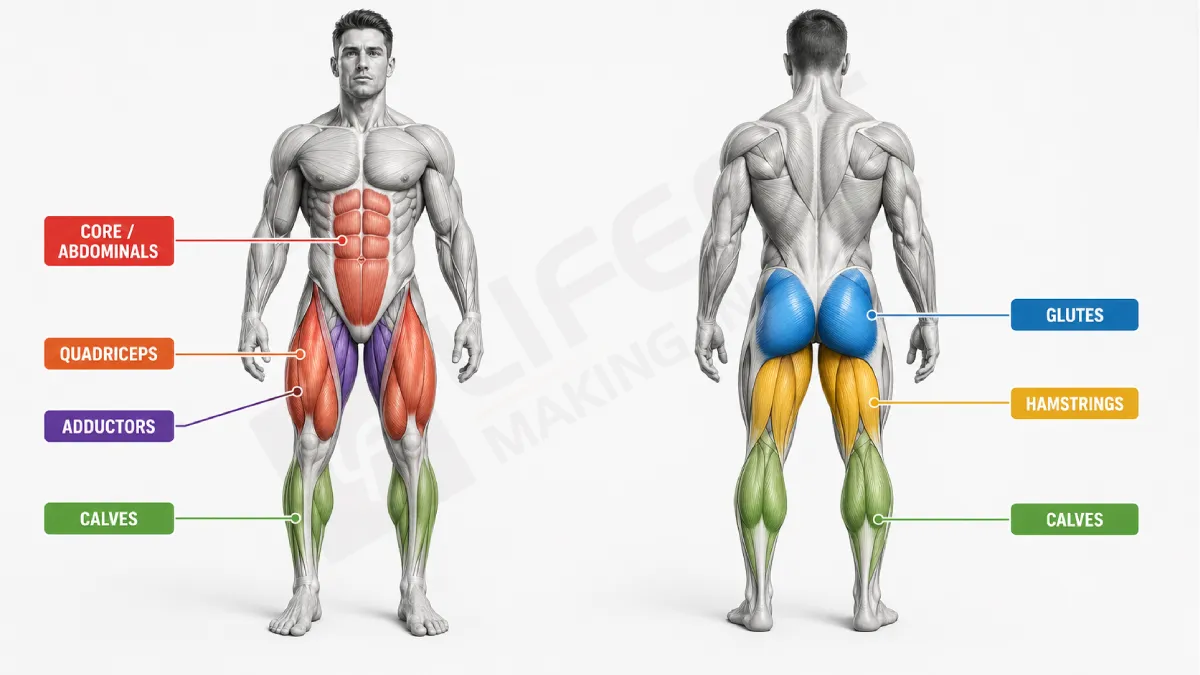
The barbell squat muscles worked include the quads, glutes, hamstrings, adductors, calves, core, and upper back.
Primary Muscle: Quadriceps
The quadriceps are the large muscles on the front of your thighs. They work hard when you bend your knees during the descent and extend your knees as you stand up.
If your main goal is stronger thighs, the back squat is one of the most useful compound movements you can add to your training.
Secondary Muscles
The barbell back squat also trains these muscles:
Glutes: help drive the hips forward as you stand.
Hamstrings: support hip control and lower-body stability.
Adductors: help with hip movement and knee tracking.
Calves: stabilize the ankles and feet.
Core: keeps the spine stable under load.
Upper back: keeps the bar secure and supports posture.
For extra quad-focused work, pair squats with the leg press exercise or the leg extension exercise.
Equipment Needed for Barbell Back Squats
You need the right equipment before you start loading the bar.
1. Barbell
Use a standard Olympic-style barbell for most back squats. It gives you a stable grip and lets you add weight plates as you get stronger.
For gym setup, you can explore this Olympic barbell for strength training.
2. Weight Plates
Weight plates add resistance to the barbell. Start light. Add weight only when your reps look smooth and controlled.
For floor protection and strength training, rubber bumper plates can be a practical option. You can also read the gym weight plates guide to compare plate types.
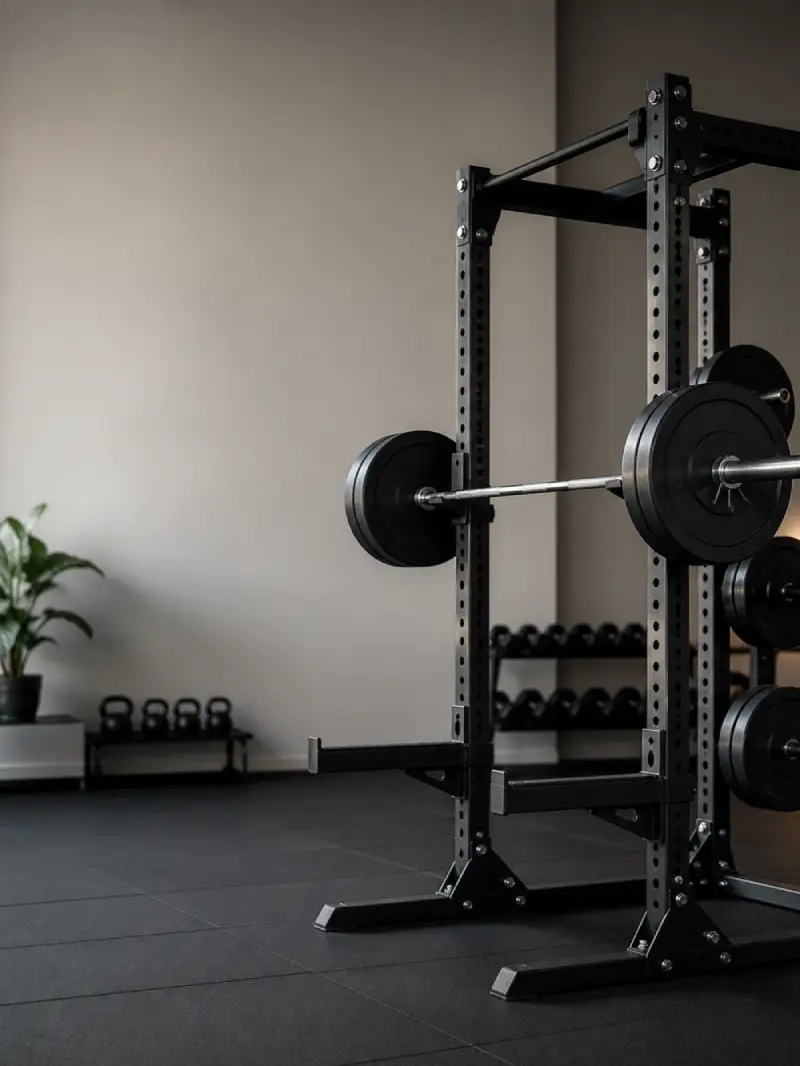
3. Squat Rack or Power Rack
A squat rack helps you un-rack and rerack the bar safely. A power rack gives you more protection because you can set safety pins.
4. Barbell Collars
Use collars on both sides of the bar. They keep the plates from sliding during the lift.
5. Stable Shoes
Use flat, firm training shoes or weightlifting shoes. Avoid soft running shoes because they can make your feet unstable under load.
Build a Safer Squat Setup
Get the right squat rack, barbell, and weight plates for safer and more effective back squat training at home or in your gym.
How to Set Up for the Barbell Back Squat
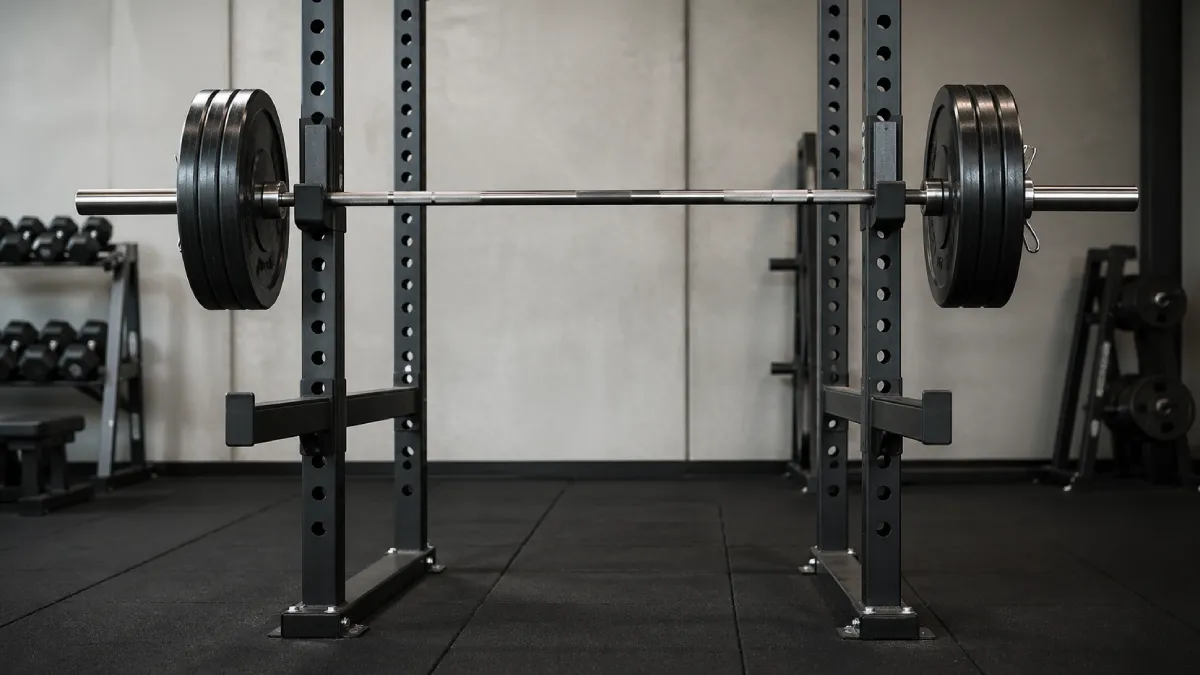
Step 1: Set the Rack Height
Place the bar slightly below shoulder height. You should be able to un-rack it by standing tall.
Do not set the bar too high. If you need to stand on your toes to lift it out, lower the rack hooks.
Step 2: Set the Safety Pins
Set the safety pins slightly below your lowest squat depth. They should not hit the bar during normal reps.
They should catch the bar if you miss a rep. This matters most when you lift heavy or train alone.
Step 3: Load the Plates Evenly
Add the same weight on both sides of the bar. Secure each side with collars.
Beginners should start with an empty barbell or very light plates.
Step 4: Choose Your Bar Position
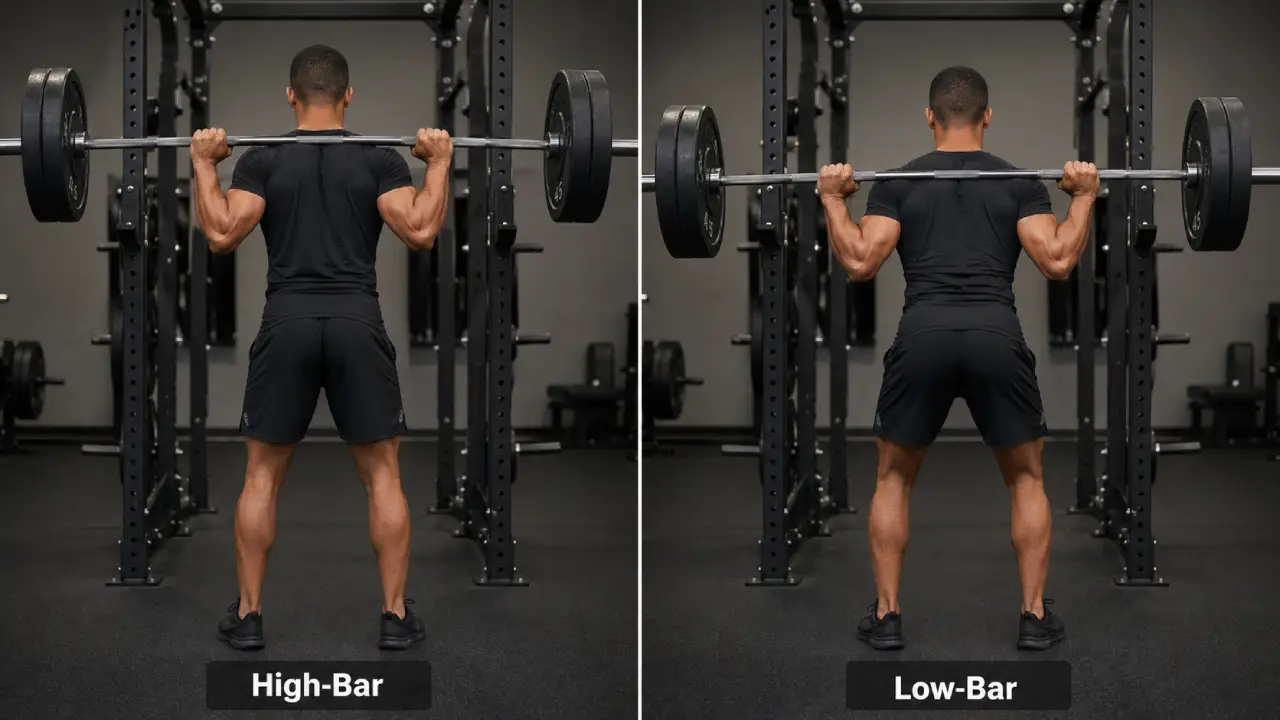
You can use a high-bar or low-bar position.
High-Bar Back Squat
In a high-bar squat, the bar rests on your upper traps. This position usually keeps your torso more upright. Many lifters also feel more quad work here.
Best for: beginners, general fitness, quad-focused training, and lifters who prefer an upright squat.
Low-Bar Back Squat
In a low-bar squat, the bar sits slightly lower across the rear delts. This position usually uses more hip drive and a slightly forward torso angle.
Best for: experienced lifters, powerlifting-style training, and lifters with good shoulder mobility.
Most beginners should start with the high-bar back squat.
How to Do the Barbell Back Squat with Proper Form
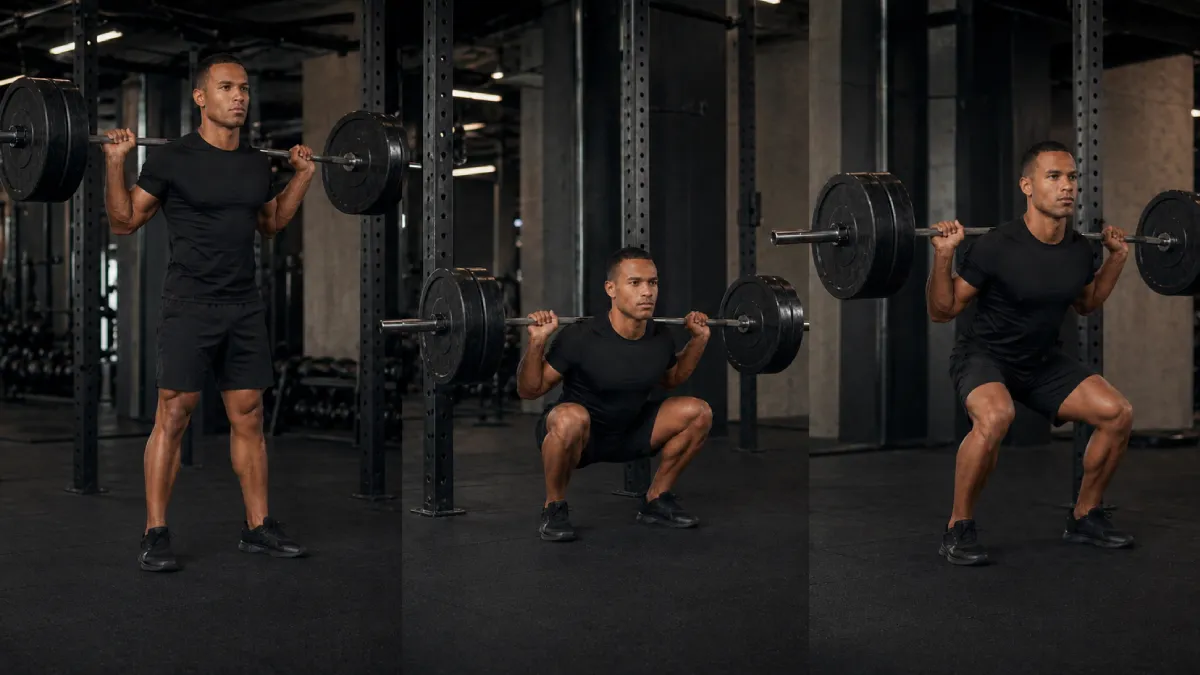
Follow these steps to perform the back squat safely.
1. Stand Under the Bar
Step under the bar. Place it across your upper back, not on your neck.
Pull your shoulder blades slightly together. This creates a strong shelf for the bar.
2. Grip the Bar
Hold the bar firmly with both hands. Keep your wrists as neutral as possible.
Your grip should feel secure, not painful.
3. Brace Your Core
Take a deep breath into your belly and ribs. Tighten your core as if someone is about to push your stomach.
This brace helps protect your position under load.
4. Un-rack the Bar
Stand tall and lift the bar out of the rack. Take one or two small steps back.
Do not walk too far away from the rack. A short walkout saves energy and improves safety.
5. Set Your Feet
Place your feet around shoulder-width apart. Turn your toes slightly outward.
Your exact stance may change based on hip shape, ankle mobility, and comfort.
6. Squat Down with Control
Bend your hips and knees together. Keep your chest up, core tight, and feet flat.
Think: “Sit down between your hips.”
7. Keep Your Knees in Line with Your Toes
Your knees should move in the same direction as your toes. Do not let them cave inward.
A simple cue is: "Push the floor apart."
8. Reach a Safe Depth
Squat until your thighs are around parallel to the floor. Go slightly deeper only if you can control the position.
Stop higher if your heels lift, your lower back rounds, your knees cave in, or pain appears.
9. Stand Up Strong
Push the floor away through your midfoot and heels. Keep your chest up.
Your hips and shoulders should rise together.
10. Reset Before the Next Rep
Stand tall at the top. Breathe, brace, and repeat.
Quick Barbell Squat Form Checklist
Use this checklist before each working set:
Bar sits on your upper back, not your neck.
Feet feel stable.
Toes point slightly outward.
Core is braced before each rep.
Spine stays neutral.
Knees track with the toes.
Heels stay on the floor.
Bar moves with control.
Hips and shoulders rise together.
You stop the set before form breaks.
Breathing and Bracing for Back Squats
Good breathing makes your squat stronger and safer.
Use this pattern:
Breathe in before the rep.
Expand your belly and ribs.
Brace your core.
Squat down while holding that brace.
Stand up with control.
Exhale near the top.
Reset before the next rep.
Do not rush heavy reps. A strong brace helps you control the bar.
How Deep Should You Squat?
A good target is around parallel, where your thighs are roughly level with the floor. Some lifters can go below parallel with good control.
But depth should match your body and skill level.
Limit your squat depth if:
your heels lift,
your knees cave inward,
your lower back rounds,
your balance shifts,
you feel sharp pain,
or you lose control of the weight.
Your best squat depth is the deepest position you can control with stable feet, good knee tracking, and a neutral spine.
Common Barbell Back Squat Mistakes and Fixes
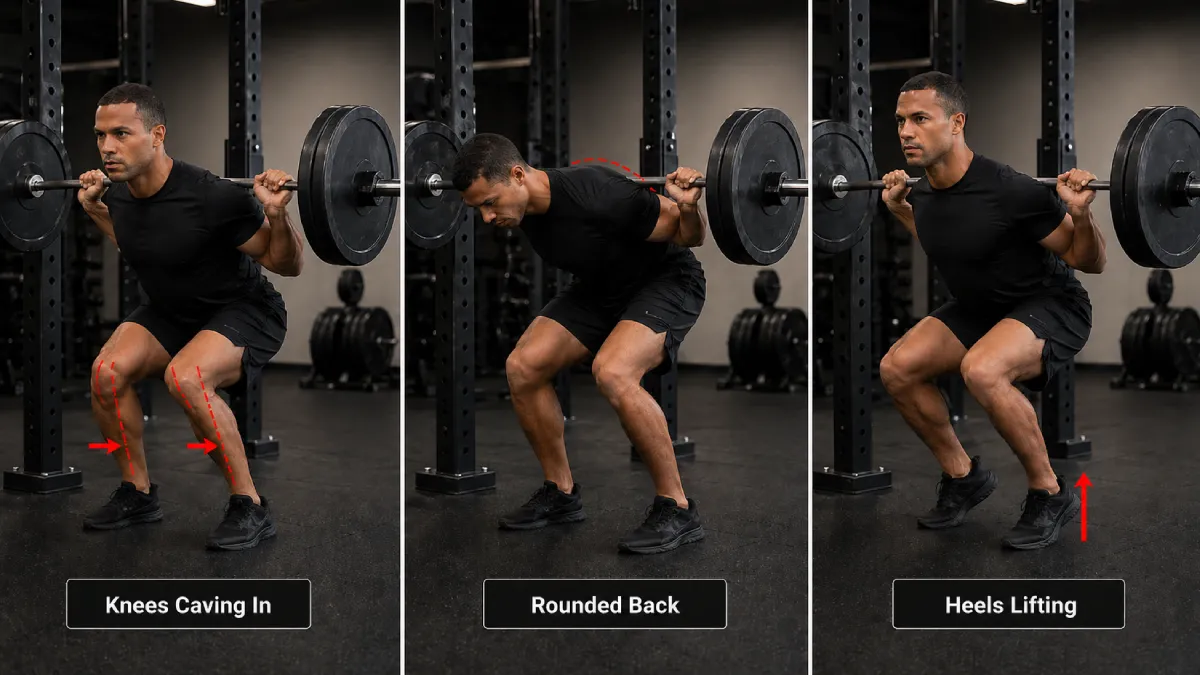
Mistake | Why It Happens | How to Fix It |
|---|---|---|
Bar sits on the neck | Poor setup or low upper-back tension | Place the bar on your upper traps or rear delts |
Knees cave inward | Poor control, weak stability, or too much weight | Reduce the load and keep knees in line with toes |
Heels lift | Limited ankle mobility or poor stance | Use a stable stance and keep pressure through the full foot |
Torso falls too far forward | Weak bracing, poor bar position, or heavy load | Brace harder, keep chest up, and reduce weight |
Lower back rounds | Depth exceeds your current mobility or control | Stop at a safer depth and build mobility gradually |
Reps feel rushed | Poor control | Lower the weight slowly and own each rep |
Weight increases too fast | Ego lifting or poor progression | Add weight only after clean reps |
No safety pins | Incomplete rack setup | Set safety pins before working sets |
Uneven loading | Careless setup | Load both sides equally and use collars |
Barbell Squat Benefits
1. Builds Stronger Quads
The back squat is a strong quad-building exercise. It lets you use progressive overload, which means you can add more weight over time.
2. Trains More Than One Muscle
The squat trains your lower body, core, and upper back in one movement. That makes it more efficient than many single-muscle exercises.
3. Improves Lower-Body Strength
Squats train a basic movement pattern used in standing, lifting, climbing stairs, and many sports.
4. Supports Muscle Growth
With good form, enough volume, and gradual progression, back squats can help build your quads, glutes, and other lower-body muscles.
5. Builds Core Stability
The barbell sits on your back, so your core must work hard to keep your torso stable.
6. Offers Many Progression Options
You can progress by adding weight, reps, sets, tempo, pauses, or range of motion.
Who Should Do the Barbell Back Squat?
The barbell back squat can help:
people who want stronger legs,
lifters training for quad and glute growth,
athletes building lower-body power,
gym users learning compound lifts,
intermediate lifters improving squat strength,
and beginners who already control bodyweight squats well.
If you are new to lifting, start with bodyweight squats, goblet squats, and empty-bar practice before adding heavy plates.
Who Should Avoid or Modify It?
You may need to avoid or modify barbell back squats if you have:
knee, hip, back, or ankle pain,
a recent surgery or injury,
poor balance under load,
lower-back rounding during basic squats,
shoulder mobility limits,
or medical restrictions against heavy resistance training.
Safety note: This article is for general fitness education only. If you have pain, an injury, a medical condition, or movement limitations, speak with a certified trainer, physiotherapist, or healthcare professional before doing barbell back squats.
Beginner-Friendly Modifications
Bodyweight Squat
Start here if you are new to squatting. Learn balance, knee tracking, and depth control first.
Box Squat
Squat to a box or bench. This helps you learn consistent depth.
Goblet Squat
Hold a dumbbell or kettlebell in front of your chest. This often helps beginners stay more upright.
Empty-Bar Back Squat
Use only the barbell. Focus on setup, bracing, foot pressure, and bar path.
Tempo Squat
Lower for about 3 seconds. This builds control and confidence.
Advanced Back Squat Variations
Pause Back Squat
Pause for 1-3 seconds at the bottom. This builds control and strength from the hardest position.
Tempo Back Squat
Slow down the lowering phase. This improves technique and increases muscle tension.
Low-Bar Back Squat
This variation uses more hip drive. Experienced lifters often use it for heavier strength work.
High-Bar Back Squat
This variation keeps the torso more upright. Many lifters use it for quad-focused training.
Box Squat
This variation helps with depth control and confidence under load.
Front Squat
This variation places the bar on the front of the shoulders. It usually demands a more upright torso and more core control.
Recommended Sets and Reps
Fitness Level | Goal | Sets x Reps | Load Guide |
|---|---|---|---|
Beginner | Learn form | 2-3 sets x 5-8 reps | Empty bar to light weight |
Beginner | Muscle endurance | 2-3 sets x 10-12 reps | Light and controlled |
Intermediate | Strength | 3-5 sets x 3-6 reps | Moderate to heavy |
Intermediate | Muscle growth | 3-4 sets x 6-10 reps | Moderate |
Advanced | Max strength | 4-6 sets x 1-5 reps | Heavy, clean reps |
Advanced | Hypertrophy | 4-5 sets x 6-12 reps | Moderate to heavy |
Rest 1-2 minutes for lighter sets. Rest 2-4 minutes for heavier strength sets.
How to Add Barbell Back Squats to Your Workout
Beginner Leg Workout Example
Barbell back squat: 3 sets x 5-6 reps
Leg press: 3 sets x 10 reps
Seated or lying leg curl: 3 sets x 10-12 reps
Calf raise: 3 sets x 12-15 reps
Muscle-Building Leg Workout Example
Barbell back squat: 4 sets x 6-10 reps
Leg press: 3 sets x 10-12 reps
Leg extension: 3 sets x 12-15 reps
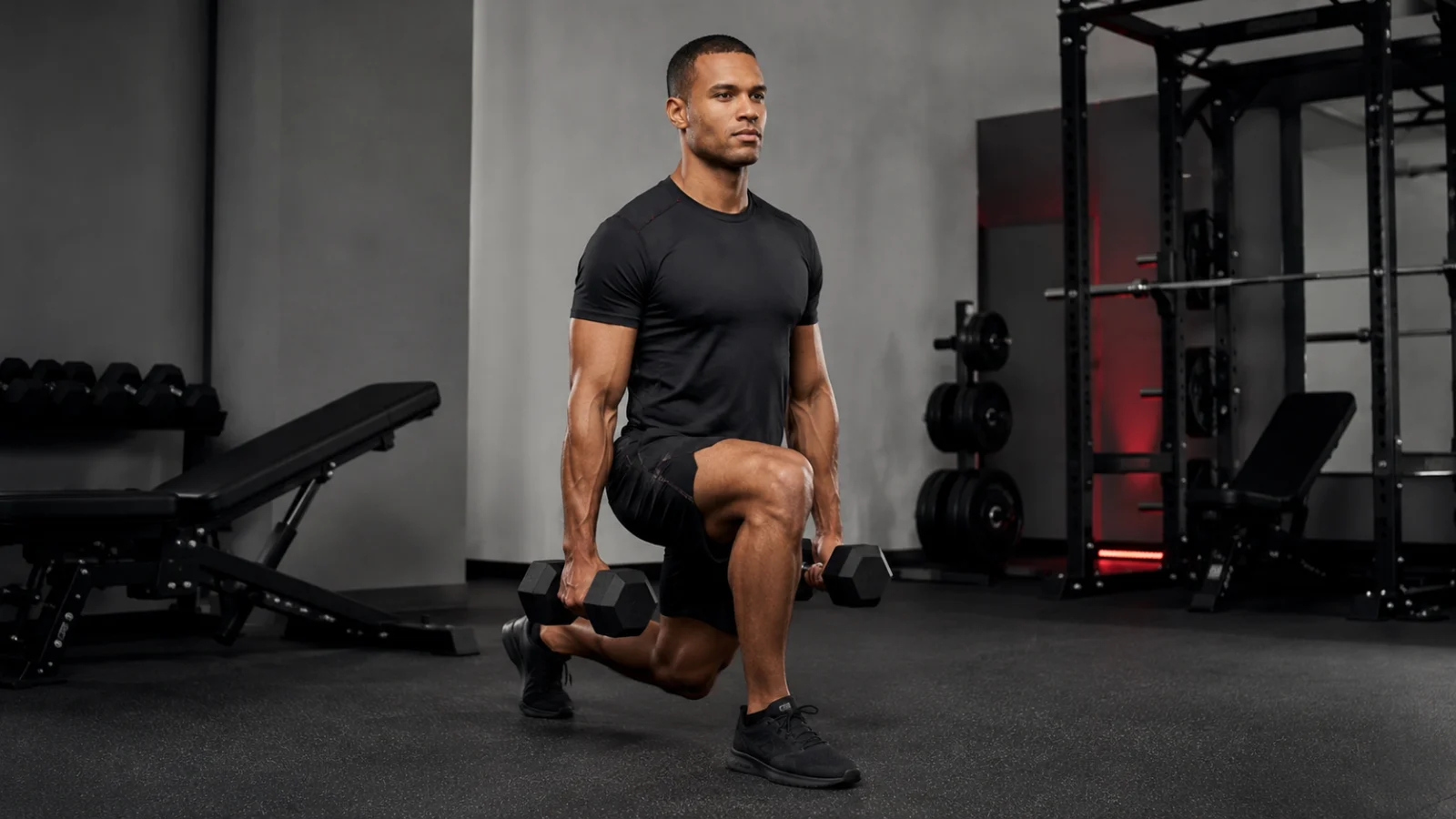
Walking lunges: 2-3 sets x 10 steps each leg
Strength-Focused Squat Workout Example
Barbell back squat: 5 sets x 3-5 reps
Romanian deadlift: 3 sets x 6-8 reps
Split squat: 3 sets x 8 reps each leg
Core bracing drill: 3 sets
You can also explore more barbell exercises to build a complete strength routine.
Warm-Up Before Barbell Back Squats
A good warm-up helps you squat with better control.
Try this simple warm-up:
Light cardio: 5 minutes
Bodyweight squats: 2 sets x 10 reps
Hip openers: 8-10 reps each side
Ankle rocks: 10 reps each side
Goblet squat hold: 20-30 seconds
Empty-bar squat: 2 sets x 8 reps
Gradual warm-up sets with light weight
Do not jump straight into heavy working sets.
Practical Coaching Cues
Use these cues during your set:
Brace before you move.
Grip the floor with your feet.
Keep your knees in line with your toes.
Keep your chest proud.
Sit between your hips.
Push the floor away.
Let your hips and shoulders rise together.
Control the descent. Stand up strong.
Barbell Back Squat vs Leg Press
Both exercises can build stronger legs, but they train the body differently.
Exercise | Best For | Key Difference |
|---|---|---|
Barbell back squat | Strength, coordination, full-body stability | Requires balance, bracing, and upper-back control |
Leg press | Quad volume and controlled machine training | Easier to stabilize and often more beginner-friendly |
If your goal is complete leg development, use both. Do barbell back squats first when you are fresh. Then use the leg press for extra quad volume.
Final Takeaway
The barbell back squat is one of the best exercises for building strong legs. It mainly targets the quads and also trains the glutes, hamstrings, adductors, calves, core, and upper back.
Start light. Set up your rack correctly. Brace your core. Keep your knees tracking with your toes. Add weight only when your form stays clean.
With the right technique, the barbell back squat can become a key exercise in your lower-body strength routine.
Frequently Asked Questions
Yes. The barbell back squat is a strong quad exercise. It works best when you use controlled depth, stable foot pressure, and proper knee tracking.
You need a barbell, weight plates, collars, and a squat rack or power rack. Safety pins are strongly recommended.
Place the bar across your upper back. Brace your core, step back, set your feet, squat down with control, keep your knees in line with your toes, and stand back up through your full foot.
Beginners can learn barbell back squats, but they should start with bodyweight squats, goblet squats, and empty-bar practice. Add weight only after form improves.
The bar should sit across your upper back, not on your neck. In a high-bar squat, it rests on your upper traps. In a low-bar squat, it sits lower across your rear delts.
Aim for around parallel if you can control it. Squat deeper only if your heels stay down, your knees track well, and your spine stays neutral.
Your knees may cave in because of poor control, unstable foot pressure, weak hip stability, or too much weight. Reduce the load and keep your knees in line with your toes.
Neither is always better. The barbell back squat trains balance, bracing, and full-body coordination. The leg press gives you controlled quad volume with less balance demand. Many lifters use both.
Beginners can start with 2-3 sets of 5-8 reps. For muscle growth, use 3-4 sets of 6-10 reps. For strength, use 3-5 sets of 3-6 reps with longer rest.
Loaded barbell back squats are not recommended without a rack. A rack helps you start and finish the lift safely. Without a rack, use goblet squats, dumbbell squats, or bodyweight squat variations.
The biggest mistake is adding heavy weight before learning proper technique. Other common mistakes include knees caving in, heels lifting, lower-back rounding, and poor bracing.
0 Comments
Loading comment form…
Loading comments…