

Core training is one of the foundations of fitness. A strong core supports posture, stability, and athletic performance. Among the many exercises designed to target the midsection, the ab crunch exercise remains one of the most widely practiced.
For decades, crunches have been the go-to move for building visible abdominal definition. However, their safety and effectiveness often spark debate. Some argue crunches risk spinal stress, while others highlight their benefits when performed with proper form.
This guide explains what an ab crunch is, how to perform it correctly, variations for different fitness levels, research-backed benefits, and safe alternatives. It also links to trusted resources and equipment to help you build a stronger core both at home and in the gym.
What Is an Ab Crunch? Anatomy and Function
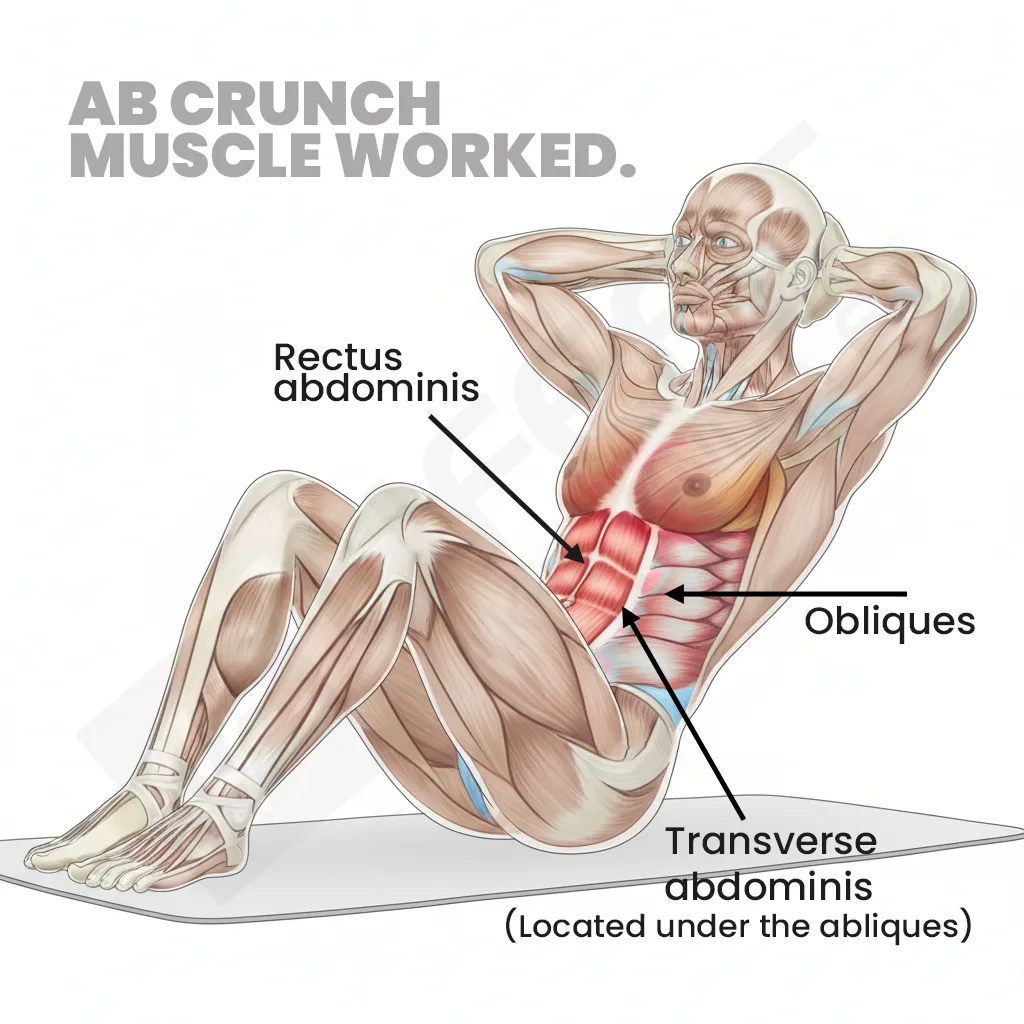
The ab crunch is a bodyweight isolation exercise that primarily works the rectus abdominis, commonly known as the six-pack muscle. During a crunch, you flex the spine by lifting the shoulders off the ground while keeping the lower back stable.
This controlled spinal flexion engages:
Rectus abdominis: Main target muscle.
Obliques: Assist with stabilization.
Transverse abdominis: Deep core muscle that supports abdominal tension.
 The Mayo Clinic explains that crunches are safe and effective when done with correct technique. They should not involve pulling on the neck or using momentum.
If you are exploring additional core moves, see our guide on the plank, which builds stability without spinal flexion.
How to Do the Perfect Ab Crunch
Step-by-Step Instructions
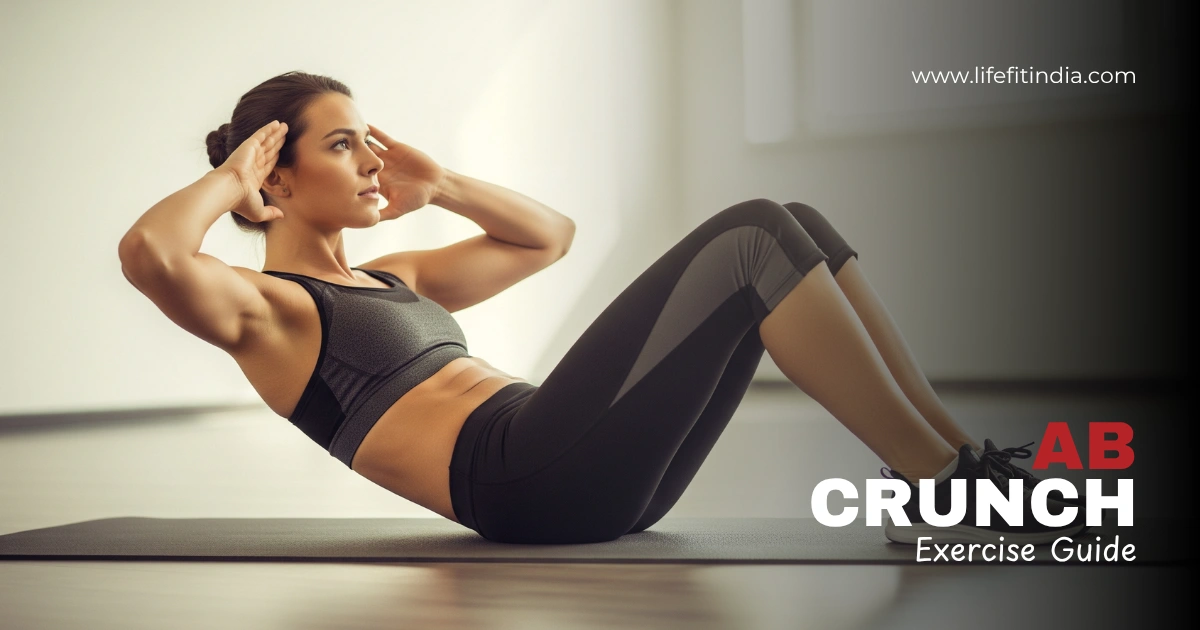
Lie flat on a yoga mat with knees bent and feet flat.
Cross arms over the chest or place fingertips gently behind the ears.
Pull your navel toward the spine to engage the core.
Exhale and lift your shoulders a few inches off the ground.
Pause briefly at the top for maximum contraction.
Inhale and return to the start position with control.
Breathing Technique
Exhale on the upward phase.
Inhale on the return phase.
Common Mistakes to Avoid
Pulling the neck: Causes strain instead of core activation.
Lifting too high: Turns the crunch into a sit-up, involving hip flexors.
Using momentum: Reduces tension on abs and increases injury risk.
For improved posture and alignment, try performing crunches with your feet elevated on a flat bench.
Are Crunches Safe?
The safety of crunches is one of the most debated topics in core training. Some experts claim spinal flexion is risky, while others argue that crunches are safe when performed correctly.
A review in the Strength and Conditioning Journal concluded that crunches are not inherently dangerous for individuals with healthy spines. The research highlighted that the human spine is built to handle controlled flexion. Problems arise when crunches are performed with poor form or excessively high volume.
On the other hand, noted spine researcher Dr. Stuart McGill has warned that repeated flexion under load may contribute to disc stress. He often recommends alternative exercises like the plank, side plank, and bird-dog for those with lower back sensitivity.
In short:
For healthy individuals, crunches are safe when performed with good form.
For those with back pain, consider alternatives such as the side plank or hanging leg raise.
Benefits of Crunches
Crunches deliver multiple benefits beyond aesthetics.
Core Strength: Crunches strengthen the rectus abdominis, which supports functional movement.
Posture Improvement: A strong rectus abdominis helps prevent slouching and supports spinal alignment.
Stability and Balance: Core activation improves stability for sports and daily tasks.
Accessibility: Crunches require no equipment. A rubber floor mat is often enough for comfort.
Versatility: Crunches can be modified with weights, angles, or cables for progressive overload.
According to the American Council on Exercise (ACE), crunches effectively target the abs but should be combined with other core exercises for balance.
Ab Crunch Variations for Different Goals
For Beginners
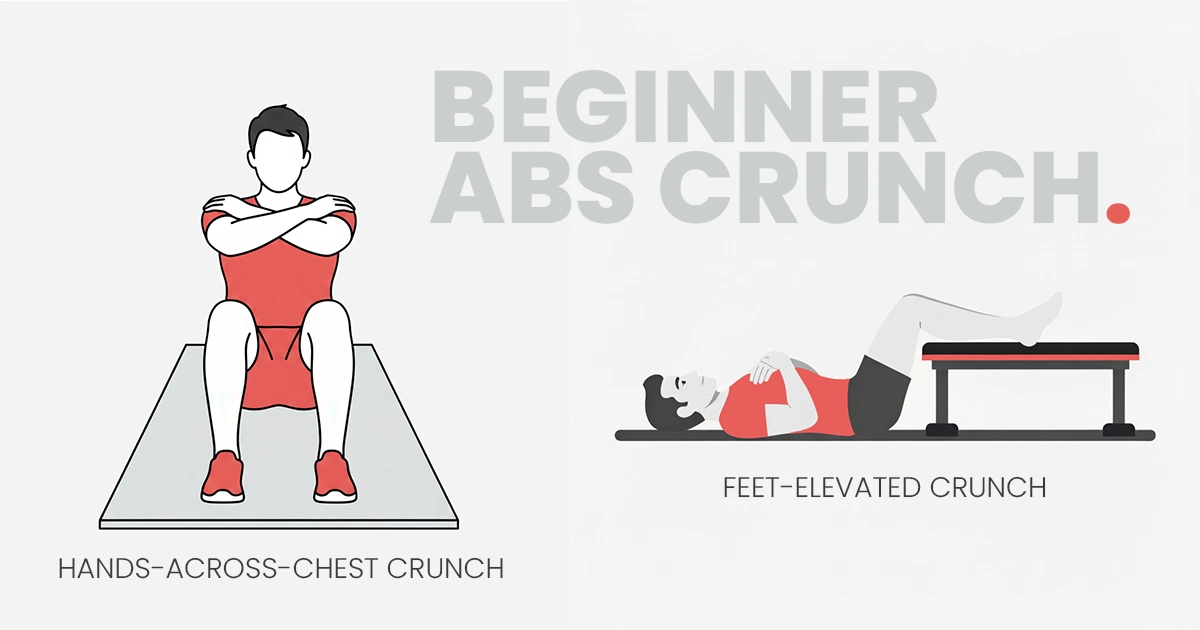
Hands-across-chest crunch: Safer for the neck than hands-behind-head.
Feet-elevated crunch: Builds stability and core awareness.
For Muscle Growth
Weighted Crunches: Hold a hex dumbbell across your chest.
Decline Crunch: Use an Olympic decline bench for greater range of motion.
Cable Crunch: Perform with a functional trainer.
A PubMed study found that crunches on a stability ball with resistance increased rectus abdominis activation compared to floor crunches.
For Athletes
Bicycle Crunch: Activates both rectus abdominis and obliques.
Crossover Crunch: Adds rotation for sports performance.
Barbell Ab Rollout: A progression that challenges stability. See our guide on the barbell ab rollout.
For a Healthier Spine
Plank: Builds endurance in stabilizers.
Hanging Leg Raise: Strengthens lower abs and grip.
Bird-Dog: Promotes spinal stability.
Ab Crunch Workout Plan
Beginner Routine
Basic Crunch: 3 sets of 12 reps
Plank: 3 sets of 20 seconds
Bird-Dog: 3 sets of 10 per side
Intermediate Routine
Weighted Crunch: 3 sets of 12 reps
Bicycle Crunch: 3 sets of 20 reps
Side Plank: 3 sets of 15 seconds per side
Advanced Routine
Decline Crunch: 3 sets of 15 reps
Cable Crunch: 3 sets of 12 reps
Hanging Leg Raise: 3 sets of 10 reps
For progressive overload, use equipment from our benches collection to modify angles and intensity.
Frequently Asked Questions
Start with 2 to 3 sets of 12–15 reps, focusing on controlled form.
No. Spot reduction is a myth. Combine crunches with cardio like treadmills and a calorie deficit for fat loss.
Yes, for abs isolation. Sit-ups involve hip flexors, which reduce abdominal focus. Research in the Physical Therapy Journal confirms crunches activate abs more selectively. For a full breakdown, see our sit-up exercise guide.
Yes, but start with hands-across-chest crunches to reduce neck strain.
No. Ab visibility depends on body fat levels. Combine crunches with cardio machines and nutrition.
Most experts recommend avoiding traditional crunches during pregnancy. Safer alternatives include pelvic tilts and side planks. Consult a medical professional.
Planks build stability and endurance, while crunches isolate rectus abdominis. Both are effective when included in a program.
Conclusion
The ab crunch exercise is one of the most recognized core training movements. When performed with proper form, it is safe, effective, and adaptable to all fitness levels.
Crunches strengthen the rectus abdominis, improve posture, and add versatility to core training. Variations such as weighted crunches, decline crunches, and cable crunches allow progressive overload. Alternatives like planks and hanging leg raises ensure balance and spinal health.
For a complete training experience, combine crunches with compound lifts, stability work, and cardio. If you are building a home gym, explore our range of strength machines and home gym equipment to complement your core workouts.