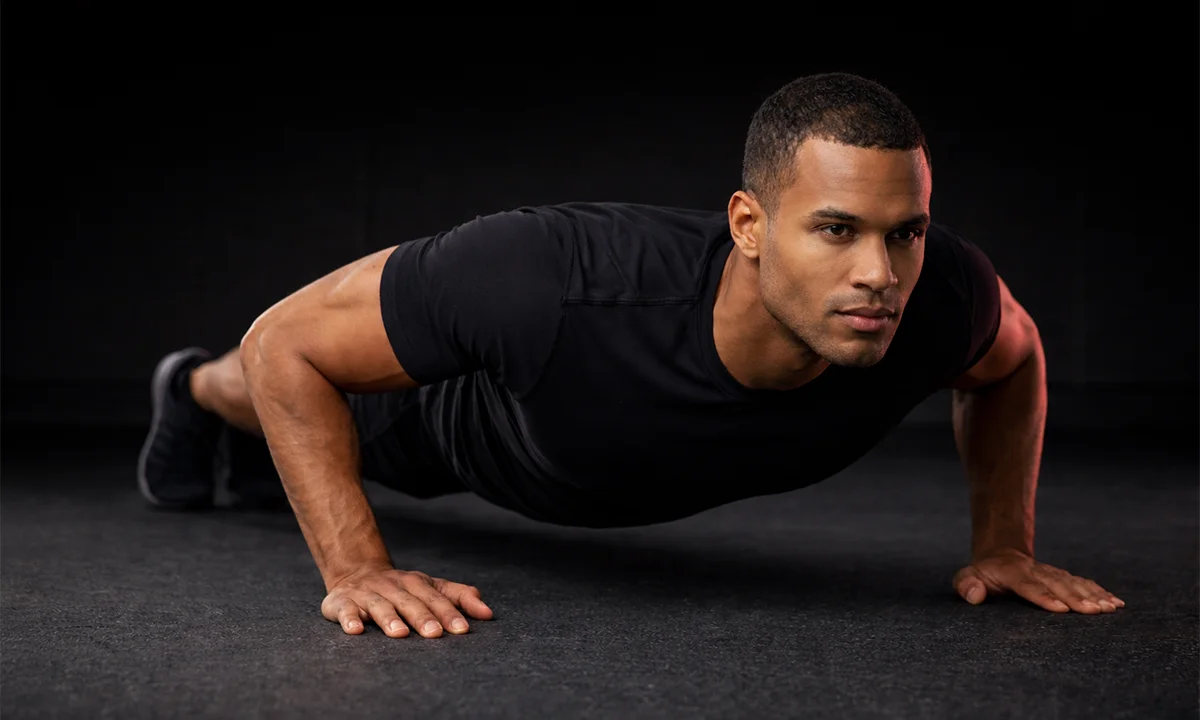



What if one exercise could build a rock-solid core and bulletproof your spine? That move is the side plank. This powerful, equipment-free staple is praised by top coaches for a reason.
This guide will take you through everything you need to know about the side plank. We’ll cover beginner form, elite variations, and common mistakes to avoid. It’s all based on scientific literature to help you achieve your fitness goals.
What is a Side Plank and Why is it a Core-Training Staple?
The side plank is an isometric, bodyweight exercise, unlike a traditional plank. Specifically, its main purpose is building anti-lateral flexion strength. In other words, this is your core’s power to resist side-bending.
In fact, this exercise is one of Dr. Stuart McGill’s “Big 3.” As a leading spine expert, his exercises build spinal stability with minimal stress. For this reason, the side plank is a safe yet powerful choice.
How to Do the Perfect Side Plank: Step-by-Step Form
Of course, proper form is essential for results and injury prevention. Therefore, perform this exercise on a comfortable surface. For example, a quality yoga mat offers excellent support.
Forearm Side Plank (The Standard)
This is the most common variation.
Lie on your right side with your legs straight.
Place your right elbow directly under your shoulder.
Ensure your forearm is flat on the ground, pointing away.
Next, brace your core and drive your forearm into the floor. Simultaneously, use your obliques to lift your hips toward the ceiling.
Your body should form a straight line from your head to your feet.
Hold this position without letting your hips sag.
Finally, repeat on your left side.
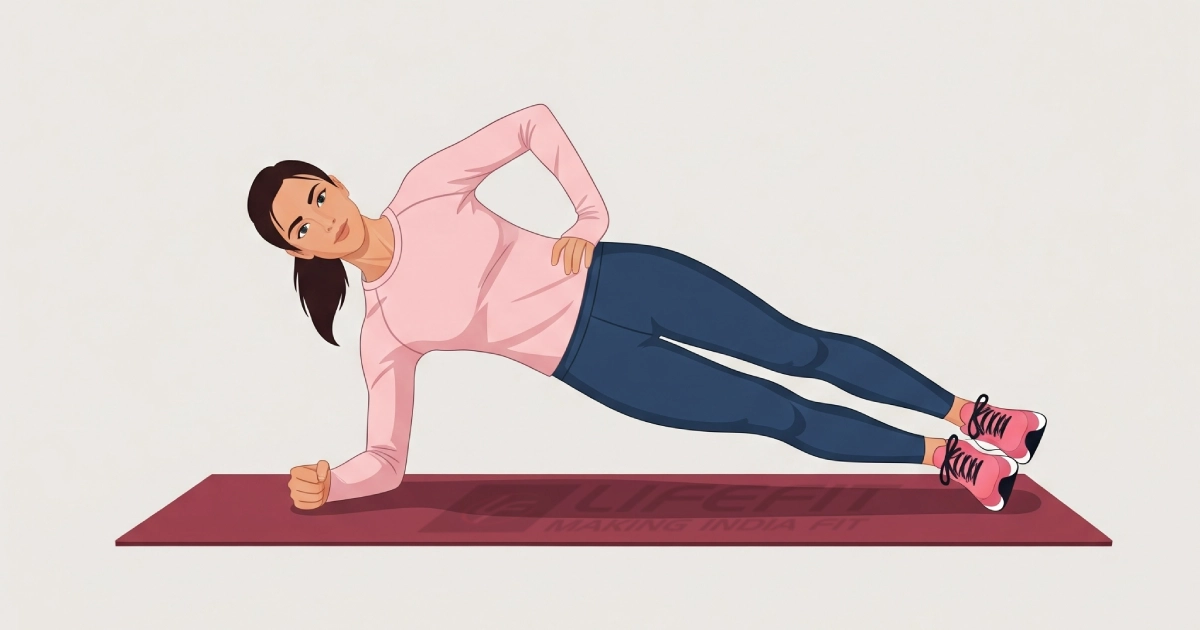 Perfect Form Checklist:
Shoulder is stacked directly over the elbow.
Body forms a straight line from head to heels.
Hips are lifted and not sagging.
Neck is neutral and aligned with the spine.
Core and glutes are actively squeezed.
Straight-Arm Side Plank
This version increases the challenge by demanding more shoulder stability.
Start in the same side-lying position.
Place your right hand directly under your shoulder.
Your arm should be straight but not locked.
Lift your hips to form a straight body line.
Hold the position, then switch sides.
The Science-Backed Benefits of the Side Plank
The side plank offers many science-backed benefits.
Builds Multi-Directional Core Strength
This exercise targets your entire lateral core, including obliques and the deep TVA. These muscles, in effect, act like a natural corset, stabilizing your trunk for many exercise types.
Protects Your Spine and Reduces Back Injury Risk
A strong core is essential for protecting your back. The side plank helps by strengthening deep spinal muscles like the quadratus lumborum (QL). In fact, research confirms that poor core endurance is linked to a higher risk of injury. Unlike traditional sit-ups, side planks safely build strength with minimal pressure on your spine. This makes them an excellent preventative tool for anyone with back pain concerns.
Improves Balance, Coordination, and Athletic Performance
In addition, the side plank improves proprioception, your body’s awareness in space. Consequently, better balance is key for sports and activities needing rotational power.
Strengthens Hips and Shoulders
Moreover, this exercise activates the gluteus medius, a key hip stabilizer. A strong gluteus medius, in turn, helps prevent knee injuries. It also engages shoulder stabilizers, thus creating a strong, connected body.
Muscles Worked by the Side Plank: An Anatomical Deep Dive
To be specific, the side plank is a full-body exercise that works many muscles simultaneously.
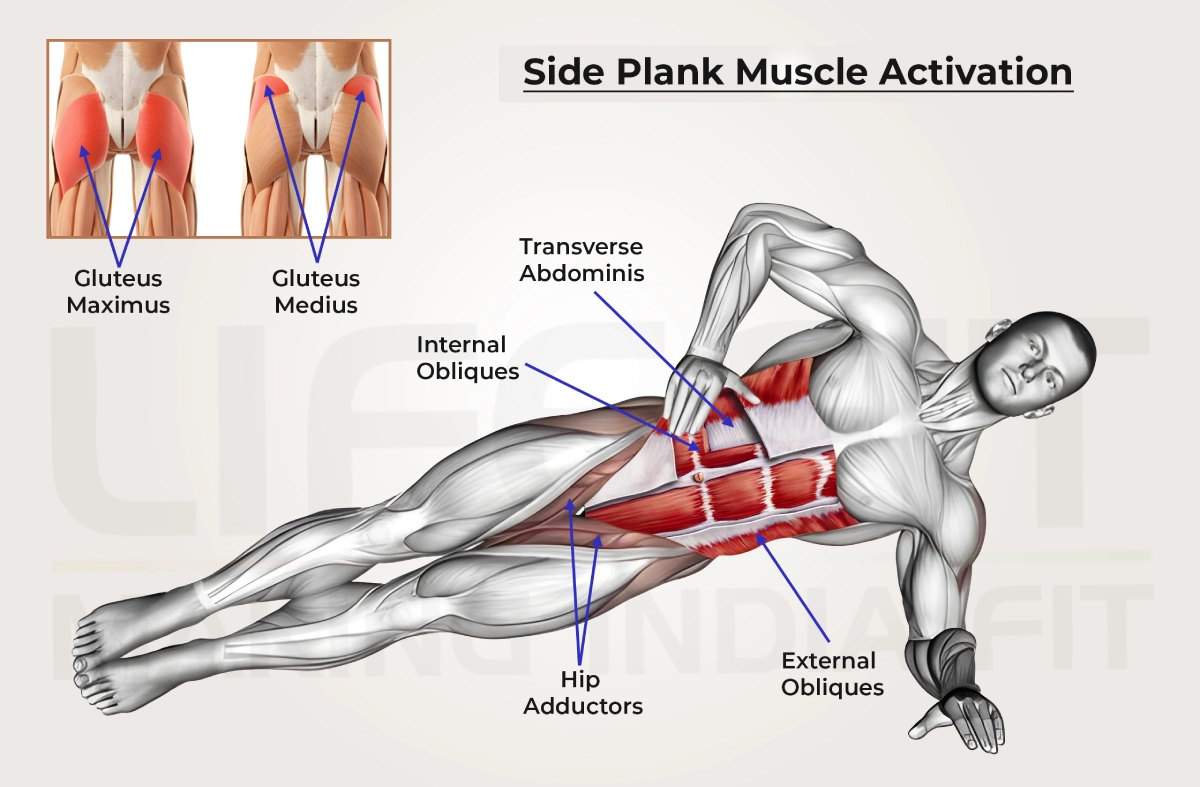 Primary Muscles Activated
Internal & External Obliques: These muscles create the lifting force and resist side-bending.
Transverse Abdominis (TVA): Your deepest core muscle that wraps around your midsection.
Gluteus Medius & Maximus: Your hip muscles that prevent your hips from dropping.
Hip Adductors: Your inner thigh muscles that help with stability.
Secondary and Stabilizing Muscles
Quadratus Lumborum (QL): A deep lower back muscle crucial for side-bending control.
Erector Spinae: Muscles that run along your spine.
Shoulder Stabilizers: Muscles around your shoulder blade that support your upper body.
15 Side Plank Variations: From Absolute Beginner to Advanced Athlete
First, master the standard form before exploring these variations. Afterward, they will challenge your body in new and exciting ways.
Building the Foundation (Beginner Variations)
Bent-Knee Side Plank: Bend your knees at 90 degrees and lift from your knees, not your feet.
Elevated Side Plank: Place your supporting forearm on a sturdy bench to decrease difficulty.
Clamshell Side Plank: From a bent-knee plank, keep feet together and lift your top knee.
Mastering the Standard (Intermediate Variations)
Standard Forearm Side Plank
Standard Straight-Arm Side Plank
Side Plank with Top Leg Lift: Hold a standard side plank and slowly lift your top leg.
Side Plank with Top Arm Reach: Extend your top arm toward the ceiling for a balance challenge.
Dynamic Stabilization (Advanced Variations)
Side Plank Dips / Hip Lifts: From a side plank, lower your hips toward the floor and lift back up.
Side Plank with Rotation (Thread the Needle): From a straight-arm plank, rotate and reach your top arm under you.
Side Plank Crunch (Knee-to-Elbow): Bring your top knee and elbow together, similar to a bicycle crunch.
Side Plank with Forward Roll: From a standard side plank, slowly roll your entire torso toward the floor until your chest is parallel to it. Briefly hold, then use your obliques to roll back to the starting side plank position with control.
Elite Performance (Expert Variations)
Weighted Side Plank: Place a hex dumbbell on your top hip.
Side Plank on Unstable Surface: Perform a side plank on a BOSU ball for an immense stability challenge.
Side Plank Row: Use a resistance band or our functional trainer to row with your top arm.
Adductor Side Plank (Copenhagen Plank): Place your top leg on a bench to intensely target inner thighs.
Common Side Plank Mistakes and How to Fix Them
However, you must avoid these common errors for a more effective workout.
Sagging Hips
The Fix: First, imagine a string pulling your top hip toward the ceiling. To make this happen, focus on driving the bottom knee (or foot) into the floor while squeezing your glutes. If your hips still drop, however, reduce the hold time and focus on perfect form.
Rolling Forward
The Fix: Keep your chest open, stacking your top shoulder over your bottom one. If you struggle, simply return to an easier version.
Shoulder and Elbow Misalignment
The Fix: Always check your setup to ensure your elbow is directly under your shoulder. This creates a stable support structure.
Holding Your Breath
The Fix: Remember to breathe steadily throughout the hold. Consistent breathing delivers oxygen to your working muscles.
The Science of Making Your Side Plank MORE Effective
Furthermore, you can make this great exercise even more effective with simple, science-backed tricks.
The “Hollowing” Maneuver for Deeper Muscle Activation
For example, abdominal hollowing means drawing your navel to your spine. A study in the Journal of Physical Therapy Science subsequently showed this maneuver increases activation of deep core muscles like the TVA.
Using External Cues to Maximize Muscle Recruitment
Similarly, your thoughts can change muscle activation. For instance, a study found a powerful external cue. Specifically, telling participants to “push the floor away” boosted trunk muscle activity more effectively.
How to Program Side Planks into Your Routine
Now, integrate side planks into your workout routines based on your goals. For spinal endurance, for example, Dr. McGill suggests multiple short holds. In his view, 8-10 reps of 10-second holds are better than one long hold.
Sample Side Plank Programming
Goal | Exercise Variation | Hold Time / Reps | Sets | Rest | Frequency |
Core Endurance (Beginner) | Bent-Knee Side Plank | 15-30 seconds | 3 per side | 30 sec | 3x per week |
Core Endurance (Intermediate) | Standard Side Plank | 10 reps of 10-sec holds | 1 per side | 3-5 sec between reps | 3x per week |
Max Strength | Weighted Side Plank | 30-45 seconds | 3 per side | 60-90 sec | 2x per week |
Dynamic Stability | Side Plank with Rotation | 8-12 reps | 3 per side | 45 sec | 2-3x per week |
Frequently Asked Questions (FAQ)
Start with 15-30 seconds, focusing on perfect form. Quality is more important than duration.
They build strong oblique muscles, creating definition. A slim waist, however, requires a healthy diet and total-body exercise.
It is not ideal, as your core muscles need rest to recover. Therefore, aim for 2-4 times per week for the best results.
First, check your form, ensuring your elbow is under your shoulder. If pain continues, stop and regress to an easier variation.
They are different, not better. A regular plank resists spinal arching, whereas a side plank resists side-bending. A complete ab workout should include both.
Key Takeaways
Ultimately, the side plank is more than just an ab exercise. It is a foundational move for building a resilient and powerful body. The stability you gain from mastering it will translate to all your other lifts.
When you are ready to take on a new challenge, explore our hex dumbbells and benches to elevate your training.