
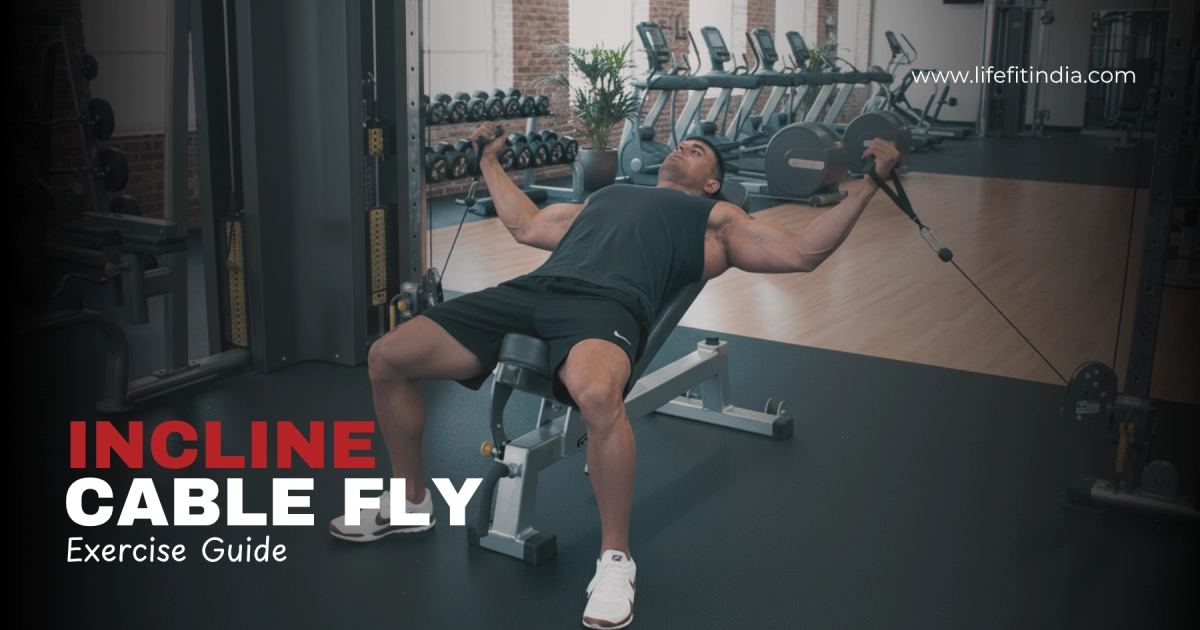
If you’ve been training your chest and still struggle to see that defined upper “shelf,” the issue might not be effort but technique. Many lifters perform incline flys only to feel the burn in their shoulders instead of their chest. This guide will show you how to perform the Incline Cable Fly correctly, explain why it works, and help you avoid common mistakes that limit your progress.
For best results, use a Cable Crossover Machine or a Functional Trainer to ensure smooth, constant tension during the exercise.
Why the Incline Cable Fly is the Ultimate Upper Chest Builder
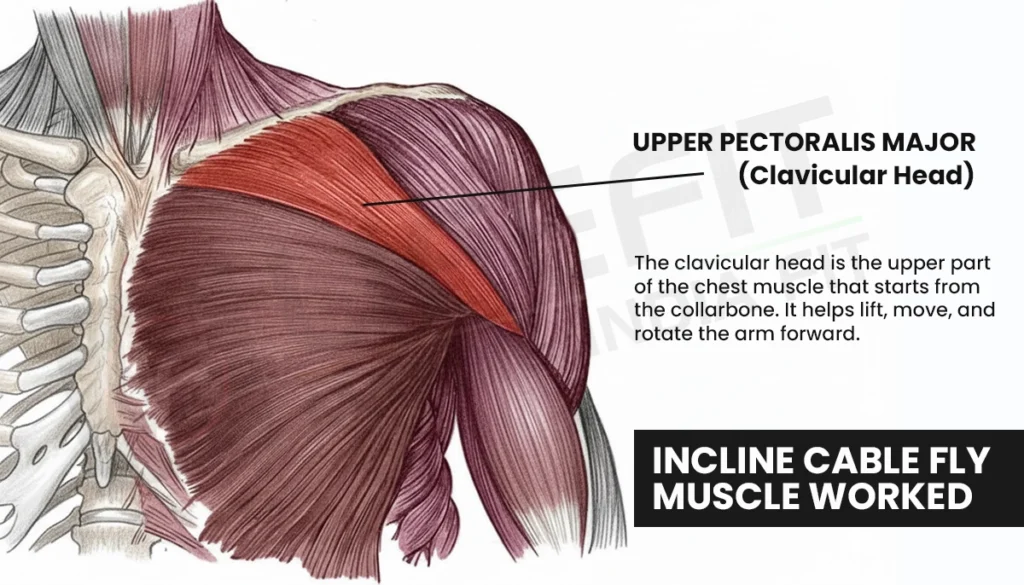
Anatomy 101: Targeting the Upper Chest (Clavicular Head)
The pectoralis major, your main chest muscle, has multiple fiber directions. The upper fibers, known as the clavicular head, originate at the collarbone and insert into the upper arm. These fibers require a low-to-high motion for full activation.
Unlike flat pressing, which emphasizes the middle chest, the Incline Cable Fly aligns perfectly with these upper fibers, promoting a sculpted, balanced look.
The 30° Advantage: The Optimal Angle for Upper Chest Activation
Setting your bench to 30 degrees is crucial. According to a study published in Medicina (Lauver et al., 2020, PubMed), the upper pectoralis major showed maximal EMG activity at a 30° bench angle, while steeper angles shifted the load toward the front delts.
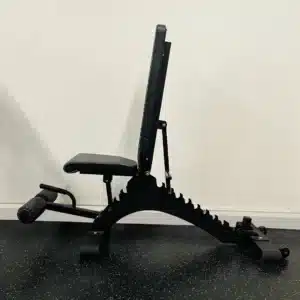
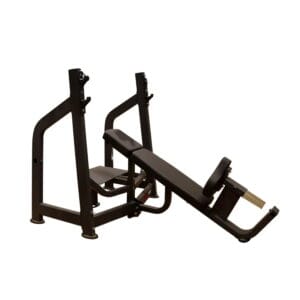
Use a Life Fit Pro Series Olympic Incline Bench to maintain the ideal setup.
Constant Tension: Why Cables Outperform Dumbbells
Dumbbells lose tension at the top of each rep because gravity acts straight down. Cables, on the other hand, maintain constant resistance throughout the full range of motion, leading to better muscle fiber recruitment and hypertrophy.
A comparative study on SportRxiv (BlackBox VR, 2020) found that cable-based training produced equal or greater muscle activation than dumbbells while offering improved range control.
If you train at home, consider a Multi-Station Home Gym with adjustable pulleys for consistent cable resistance.
Aligning with Your Muscle Fibers: The Low-to-High Path
To engage the upper chest efficiently, your arm motion must mirror the fiber direction—from low to high. This path matches the natural function of the clavicular head and ensures peak contraction at the top.
How to Perform the Incline Cable Fly
Equipment Needed
- Cable crossover machine or dual pulley system
- Incline bench set to 30°
- Pair of D-handles
Step-by-Step Instructions
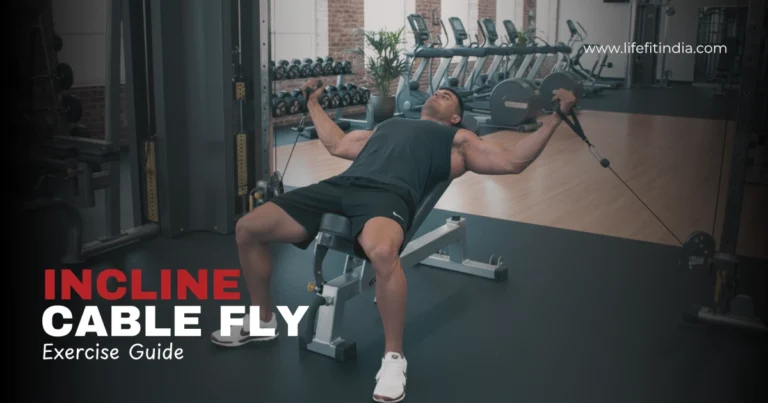
- Place your bench between the pulleys and set the cables to the lowest position.
- Grab one handle in each hand and lie back on the bench with feet firmly planted.
- Begin with your arms extended above your chest, elbows slightly bent.
- Slowly open your arms in a wide arc until you feel a stretch across your chest.
- Exhale and bring your arms together in the same arc, focusing on your chest contraction, not your arms.
- Squeeze at the top for one second before lowering back down in control.
Pro Tip: Imagine you are hugging a tree. Keep your arms fixed and let your chest muscles do the work.
For an incline cable fly alternative standing version that increases core engagement, explore our Standing Cable Fly Guide.
Incline Cable Fly Common Mistakes and Shoulder Pain Fixes
Feeling the fly in your shoulders is a common issue. Here’s why it happens and how to fix it.
1. Pressing Instead of Flying
When you bend your elbows too much, the movement becomes a press, engaging your front delts instead of your chest.
Fix: Maintain a slight, consistent elbow bend and focus on a wide arc motion.
2. Overstretching at the Bottom
Lowering your arms too far can stress the shoulder capsule. The ACE Fitness guidelines warn that excessive stretching may compromise shoulder joint health.
Fix: Stop when your arms are in line with your torso or when you feel a comfortable chest stretch.
3. Using Momentum or Heavy Weight
This isolation move is about control, not load. Using too much weight reduces chest engagement.
Fix: Slow down the eccentric (lowering) phase and use a weight you can control for 10–15 reps.
For shoulder-safe alternatives, you can also read our Pallof Press Guide or Side Plank Tutorial.
Incline Cable Fly Variations for Better Activation
- Standing Incline Cable Fly: Performing the movement while standing requires more core stability but uses lighter resistance. It’s excellent for functional strength and can be done using a Functional Trainer Machine.
- Unilateral Incline Cable Fly: Working one arm at a time helps correct strength imbalances and enhances focus on each side of the chest.
How to Program the Incline Cable Fly
- Perform 2–3 sets of 10–15 controlled reps
- Use it after compound lifts such as the Incline Dumbbell Press or Barbell Bench Press
- Focus on stretch and squeeze, not heavy loading
Remember, research comparing bench press and fly variations (Solstad et al., 2020, NIH) shows presses elicit higher overall activation, while flys serve best as an accessory movement to add isolation volume.
Alternatives to the Incline Cable Fly
- Dumbbell Fly: A traditional version but loses tension at the top.
- Pec Deck Machine: Safer and easy to control, available in our Life Fit Pro Pec Deck Machine.
- Resistance Band Fly: Great for at-home training with constant tension.
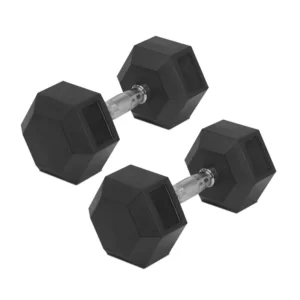
For a full upper chest workout, combine these with the Incline Adjustable Bench and Hex Dumbbells from Life Fit India.
Frequently Asked Questions
What angle should I set for Incline Cable Fly?
30 degrees. According to Medicina (Lauver et al., 2020), this angle provides maximal upper chest activation.
Why do I feel it in my shoulders?
You’re likely pressing instead of flying or overstretching the bottom position. Use lighter weight and refine your form.
Can I do it standing?
Yes, the standing variation activates stabilizers more but requires better balance.
Is it a compound or isolation exercise?
It’s an isolation move best used after your compound lifts for targeted hypertrophy.
Conclusion
The Incline Cable Fly is one of the most effective exercises for sculpting the upper chest when performed correctly. Its low-to-high motion targets the clavicular fibers of the pectoralis major, while cable resistance ensures constant tension across the full range of motion.
When executed with control and supported by scientific evidence, it becomes an indispensable accessory to your chest routine. Combine it with the Incline Bench Press or Dumbbell Pullover for a complete upper chest workout.