


If you’ve searched for the “Abdominal Pendulum Exercise,” you may have noticed confusion online between the abdominal core-focused version and the shoulder rehabilitation version.
Clarifying this ambiguity at the start helps readers understand what this movement truly targets and how it differs from other pendulum exercises. Many resources describe a core stability movement, others confuse it with rotational windshield wipers, and some even reference the shoulder rehabilitation technique known as Codman’s Pendulum.
This guide explains the exercise’s true purpose, benefits, and proper form, using evidence-based research and professional fitness expertise. It also explores how this exercise can support lower back pain prevention and management.
Abdominal vs. Shoulder Pendulum Exercise
The shoulder “pendulum” or Codman’s exercise is a rehabilitation movement for rotator cuff recovery. In contrast, the Abdominal Pendulum Exercise is a core-focused drill that builds stability and deep abdominal engagement.
These are not interchangeable, and the distinction is critical for correct training. Both exercises fall under different types of exercises — one rehabilitative and the other strength-focused.
Feature | Abdominal Pendulum | Shoulder Pendulum |
|---|---|---|
Target | Core musculature | Shoulder joint rehab |
Movement | Controlled leg swing | Arm swinging from passive hang |
Goal | Deep abdominal activation | Joint decompression and recovery |
How the Abdominal Pendulum Differs from Windshield Wipers
The abdominal pendulum is often mistakenly labeled or taught as the lying windshield wiper. Although both involve side-to-side leg movement, their goals and techniques differ.
Feature | Abdominal Pendulum | Windshield Wiper |
|---|---|---|
Movement | Small, controlled swing | Wide rotational arc |
Focus | Core stability | Oblique strength |
Intensity | Low to moderate | Moderate to high |
Range of Motion | Minimal | Extensive |
For more dynamic oblique training, explore the Barbell Ab Rollout, which focuses on rotational strength and hypertrophy.
How to Perform the Abdominal Pendulum Correctly
Equipment Needed:
An exercise mat or non-slip yoga mat.
A foam roller for mobility prep.
Starting Position
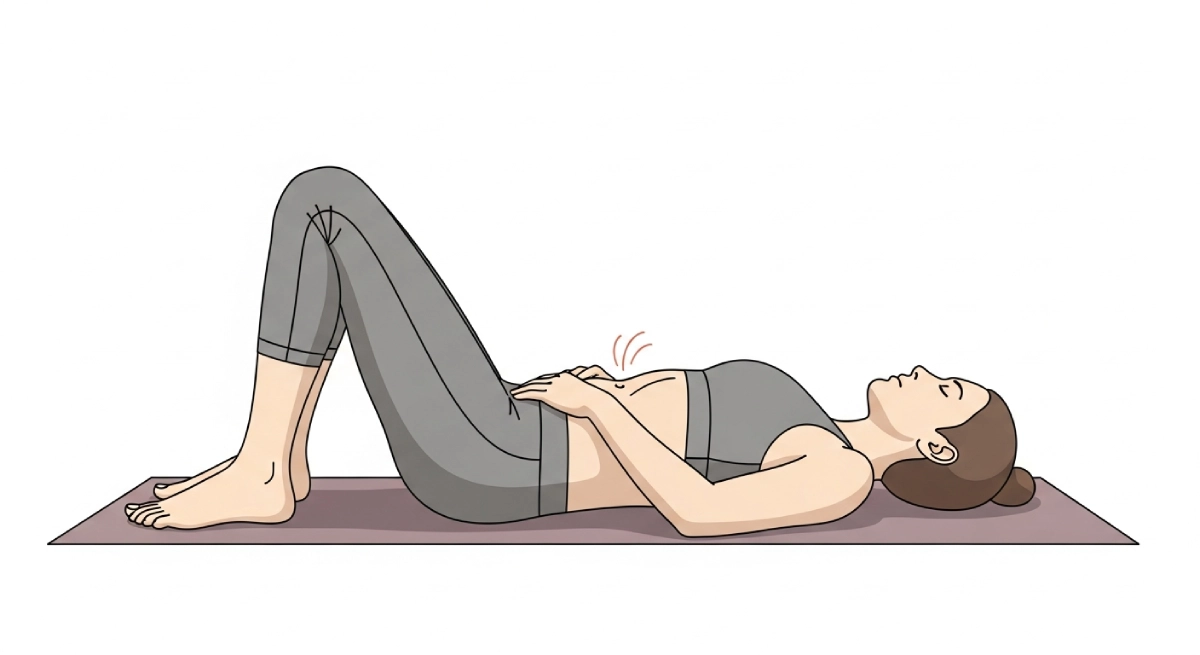
Lie flat on your back with your arms extended out to form a “T.” Bend your knees to 90 degrees and lift your legs so that your knees are above your hips.
Step 1: Core Engagement
Press your lower back into the floor and draw your navel inward toward your spine. This is known as the Abdominal Drawing-In Maneuver (ADIM), which specifically activates the transversus abdominis (TrA) muscle.
Research confirms that ADIM is highly effective for targeting deep core musculature. Like the plank exercise, maintaining spinal alignment and core engagement is key.
 Step 2: Controlled Swing
Exhale as you slowly swing your knees a few inches to one side. Avoid momentum, as it reduces TrA engagement and increases reliance on superficial muscles. The motion should be initiated by your core, not your hips or legs.
Step 3: Pause and Return
Stop the swing before your opposite shoulder or lower back lifts. Inhale and return to the center, maintaining steady control. Repeat on the other side.
Programming Suggestion
Start with three sets of 30 seconds per side, maintaining a slow, controlled rhythm of three seconds per swing with a brief one-second pause at the midpoint. Rest 30 seconds between sets to ensure consistent form and activation.
Muscles Worked
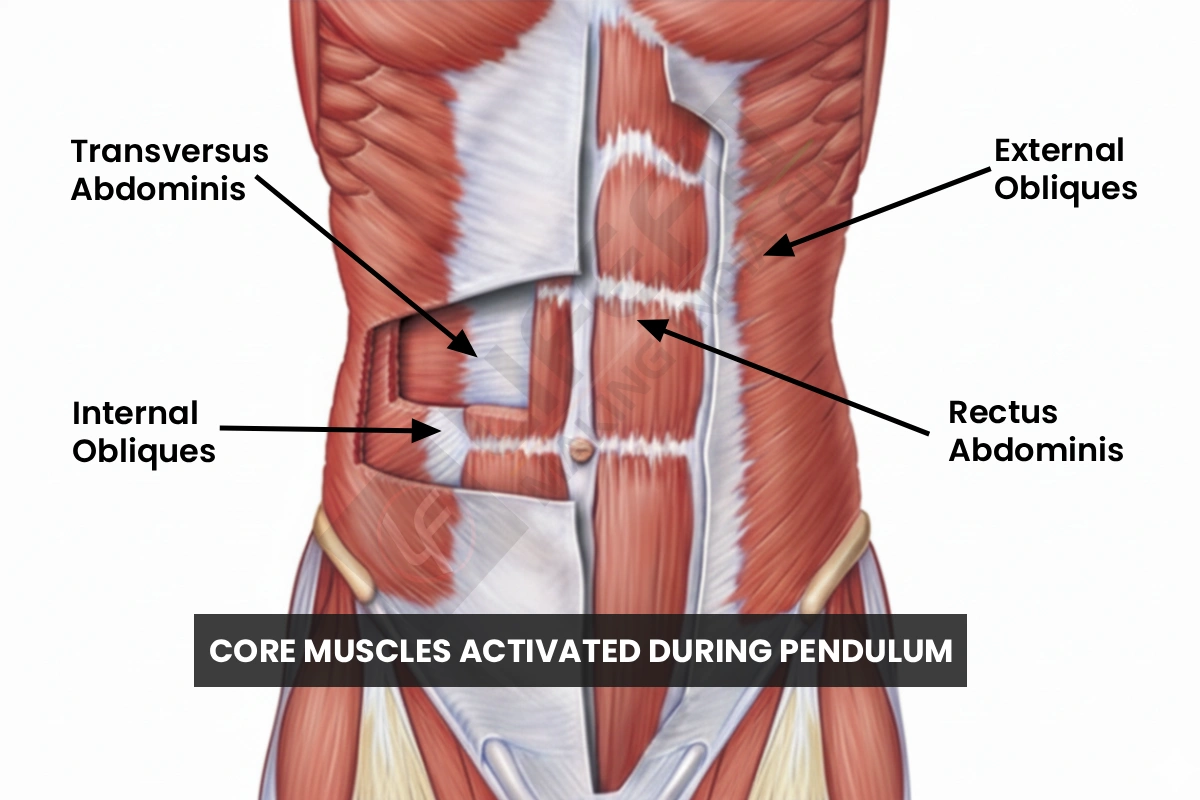
Transversus Abdominis (TrA): The primary stabilizer engaged through ADIM
Internal Obliques: Control trunk rotation
Rectus Abdominis and External Obliques: Provide bracing support
Unlike the ab crunch, this movement focuses on deeper stabilizers. EMG studies show that core movements using small, controlled ranges produce higher activation in the TrA and internal obliques.
 Benefits of the Abdominal Pendulum Exercise
1. Enhances Deep Core Stability
This exercise trains the inner unit of the core, improving posture and spinal support. Combine it with the side plank for comprehensive core balance.
2. May Reduce Low Back Pain
A systematic review from the International Journal of Sports Physical Therapy (IJSPT) found that core stability exercises reduce non-specific low back pain. A clinical trial also supports improvements in spinal control and deep abdominal engagement—key benefits of the pendulum exercise.
3. Builds Foundational Control for Advanced Movements
This movement develops coordination and stability for exercises like hanging leg raises and bicycle crunches.
Common Mistakes to Avoid
Using momentum: Reduces deep core activation
Arching the lower back: Compromises spinal stability
Over-rotating: Shifts emphasis away from the TrA and can strain the spine
Progression Guide
Beginner: Bent knees, small range, slow tempo
Intermediate: Slightly extended legs
Advanced: Perform full lying windshield wipers or progress to weighted crunches and cable crunches.
Related Equipment
Enhance your core workouts with:
Add light dumbbells or adjustable bench for versatility.
Frequently Asked Questions (FAQ)
The transversus abdominis, internal obliques, and rectus abdominis are primarily engaged, improving stability and posture.
Yes, if performed correctly. Keep the lower back pressed into the mat to avoid strain. Studies in the IJSPT confirm that core stabilization exercises can support back health.
The pendulum focuses on control and stability through small movements, while the windshield wiper emphasizes rotational power.
Perform it two to three times weekly alongside planks and Pallof Press.
Yes. Once you master control, progress using resistance bands or a Professional Suspension Trainer.
Final Thoughts
The Abdominal Pendulum Exercise is a precise, effective way to build deep core strength and stability. It’s ideal for beginners or anyone seeking improved posture and spinal support.
By mastering this controlled movement, you lay the foundation for advanced core exercises while reducing the risk of lower back discomfort.
References: