

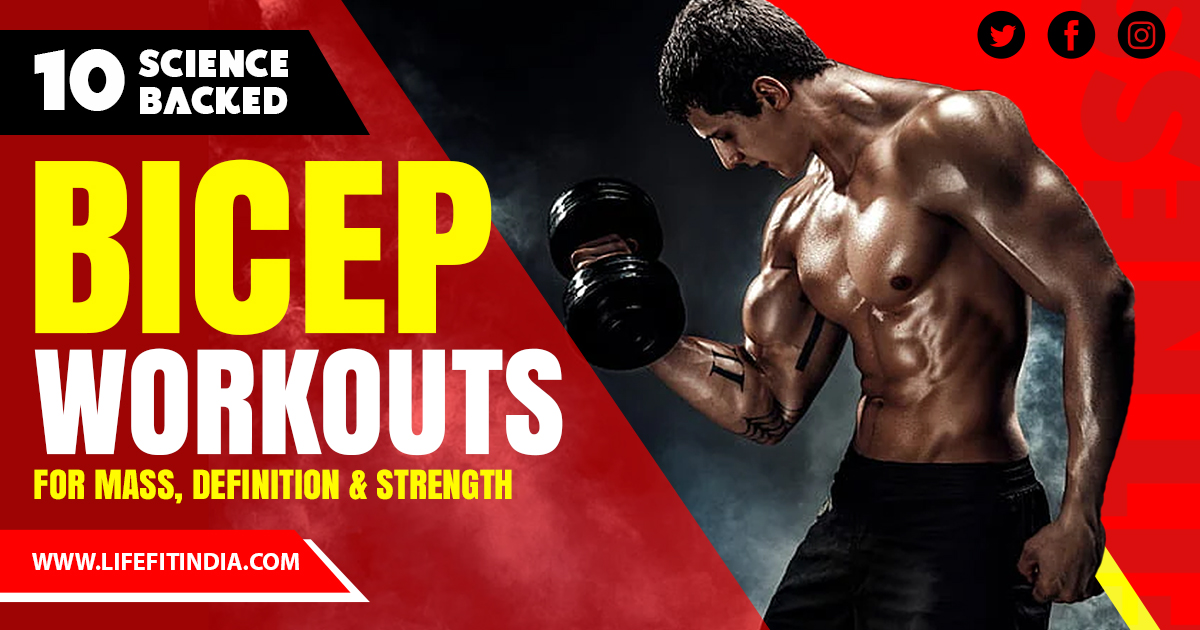

Strong biceps boost more than your mirror game – they enhance posture, protect your shoulders, and make daily movements easier.
This guide cuts through the noise with evidence-based workouts tailored to your goals: mass, definition, or strength.
You’ll find specialized routines (including options for women), must-have equipment, and free resources to kickstart your progress.
Ready to sculpt stronger arms?
Let’s get started!
Bicep Anatomy & Training Science
To maximize your bicep gains, you need to understand the muscle you’re targeting. Here’s the essentials:
Muscle Breakdown:
Long Head (outer bicep): Shapes the peak you see when you flex.
Short Head (inner bicep): Adds width and fullness.
Brachialis (under the bicep): Increases arm thickness by pushing the bicep upward.
Key Functions:
Elbow Flexion: Bending your arm (e.g., curling).
Supination: Rotating your forearm (e.g., turning a key).
Shoulder Flexion: Lifting your arm forward.
Strength Curves:
Different exercises hit the biceps at unique points:Incline Curls stretch the muscle at the bottom of the range.
Concentration Curls peak tension at the top.
Combining these ensures balanced development. (See Top 10 Exercises (#3-top-10-evidence-based-bicep-exercises) for examples.)
Pro Tip: Vary your exercises to target all bicep regions and functions for optimal growth.
Top 10 Evidence-Based Bicep Exercises
These exercises are backed by research, such as the 2014 ACE study, for their ability to effectively target the biceps.
Here’s the updated, science-driven list:
1. Concentration Curl
Why It Works: EMG studies consistently rank the Concentration Curl as the top exercise for isolating the biceps, maximizing muscle fiber recruitment with minimal shoulder involvement.
Pro Tip: Pause and squeeze at the top for 1 second.
2. Chin-Up
Why It Works: This compound move engages both the biceps and back muscles simultaneously, with the underhand grip placing significant emphasis on the biceps for efficient strength and size gains.
Pro Tip: Use a supinated (underhand) grip for max bicep activation.
3. Zottman Curl
Why It Works: By combining supination and pronation, the Zottman Curl targets both the biceps and brachialis, enhancing forearm strength and overall arm thickness.
Pro Tip: Slow the eccentric (lowering) phase to 3 seconds.
4. Incline Dumbbell Curl
Why It Works: The reclined position stretches the long head of the biceps, increasing tension at the bottom of the movement for fuller, more balanced arm development.
Pro Tip: Keep elbows pinned back to maintain tension.
5. Hammer Curl
Why It Works: The neutral grip shifts focus to the brachialis and brachioradialis, adding thickness to the upper arm and improving grip strength.
Pro Tip: Use a controlled tempo – avoid swinging the weight.
6. Drag Curl
Why It Works: By pulling the elbows back, the Drag Curl minimizes shoulder flexion, keeping tension squarely on the biceps throughout the entire range of motion.
Pro Tip: Pull elbows back as you lift to isolate the biceps.
7. Cable Curl
Why It Works: Cables provide constant tension, ensuring the biceps stay engaged from start to finish, especially at the peak contraction point.
Pro Tip: Hold the contraction at 90 degrees for 1 second.
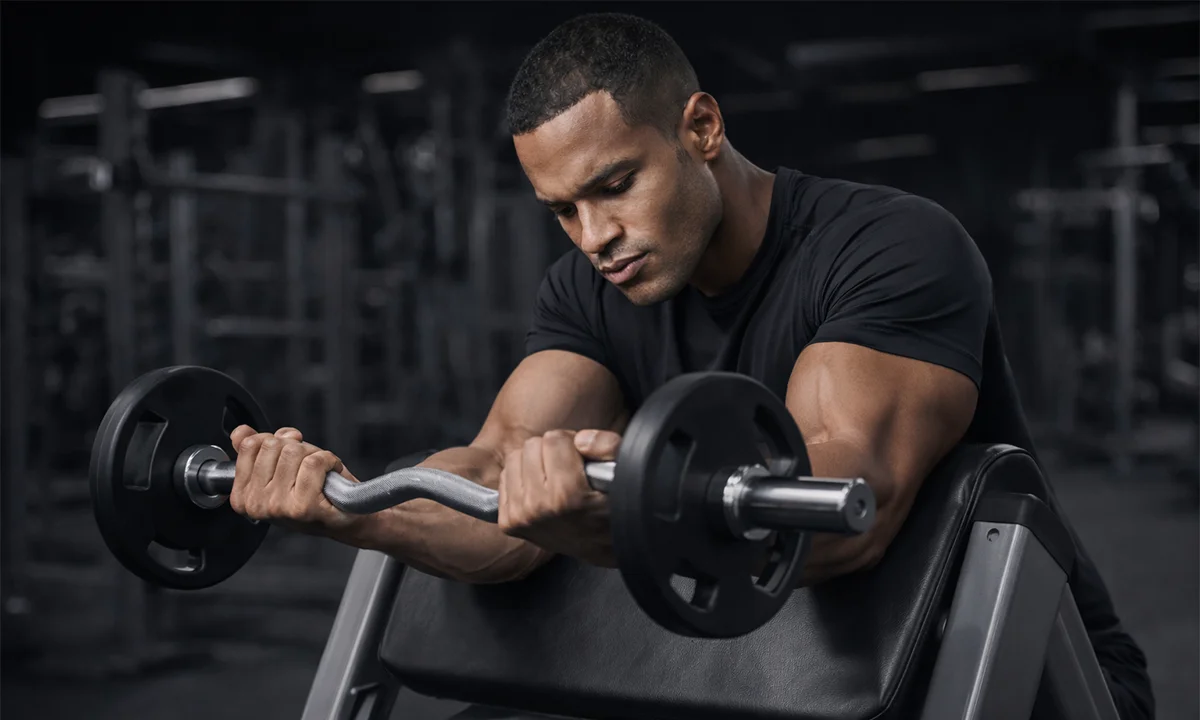
8. Preacher Curl
Why It Works: The preacher bench stabilizes your arms, eliminating momentum and forcing the short head of the biceps to work harder for targeted growth.
Pro Tip: Use an EZ-bar to reduce wrist strain.
9. Reverse-Grip Row
Why It Works: This compound lift works the biceps alongside the back, with the reverse grip increasing bicep recruitment compared to standard rows.
Pro Tip: Focus on pulling with your arms, not just your back.
10. Barbell Cheat Curl
Why It Works: Controlled cheating allows heavier loads, stimulating growth through eccentric overload – ideal for advanced lifters seeking mass.
Pro Tip: Only “cheat” on the last 1–2 reps to avoid injury.
Why These Work: A 2014 ACE study found moves like Concentration Curls and Chin-Ups rank highest in EMG activation, meaning they recruit more bicep muscle fibers. By targeting all three bicep functions — flexion, supination, and shoulder support — these exercises deliver balanced strength and size.
Specialized Workouts
Tailor your training with these science-driven routines:
For Mass:
Heavy Barbell Curls: 4 sets of 6–8 reps.
Superset: Dumbbell Curls + Tricep Pushdowns (3 sets of 10–12 reps).
Why: Heavy loads paired with supersets spark hypertrophy, per research on muscle growth.
For Definition:
High-Rep Cable Curls: 3 sets of 15–20 reps.
Drop Sets: Start heavy with dumbbells, drop weight each set (3 rounds).
Why: Higher reps and progressive fatigue enhance muscle detail and endurance.
For Strength & Control:
Light Dumbbell Curls: 3 sets of 12–15 reps.
Resistance Band Curls: 3 sets of 15 reps.
Why: Moderate weights with focus on form build functional strength and definition.
Pro Tip: Emphasize the “squeeze” at the top of each rep to strengthen the mind-muscle connection — studies show it boosts activation.
Equipment Guide
The right gear amplifies your bicep training. Here’s what to use:
Dumbbells (e.g., LIFE FIT Dumbbells): Versatile for all levels and spaces.
Resistance Bands: Portable tension for dynamic curls (e.g., Banded Cheat Curls).
Cable Machines: Consistent resistance for peak contractions (e.g., Cable Crucifix Curl).
Why These Matter: Variety in resistance types prevents plateaus and targets biceps from multiple angles.
Common Mistakes & Fixes
Avoid these pitfalls to maximize gains and minimize injury:
Mistake: Swinging weights with momentum.
Fix: Perform curls against a wall or slow the eccentric phase (3 seconds). (See Top 10 Exercises (#3-top-10-evidence-based-bicep-exercises) for form tips.)
Mistake: Ignoring supination.
Fix: Add Zottman Curls to engage forearm rotation.
Mistake: Overtraining biceps.
Fix: Train biceps 2–3 times weekly with 48-hour rest between sessions.
Pro Tip: Perfect form trumps heavy weights — focus on technique to see real results.
Bicep Training for Women
Ladies, let’s bust myths and build strong, defined arms:
Myth: Lifting creates bulky arms.
Truth: Women’s lower testosterone levels mean strength training builds lean muscle, not bulk—research backs this up.
Top Exercises for Definition:
Dumbbell Cross-Body Curls: Targets biceps with control.
Cable Preacher Curls: Isolates for precision.
Isometric Holds: Hold a curl at 90 degrees for 20 seconds.
Sample Routine:
Alternating Dumbbell Curls (3×12)
Hammer Curls (3×10)
Resistance Band Curls (3×15)
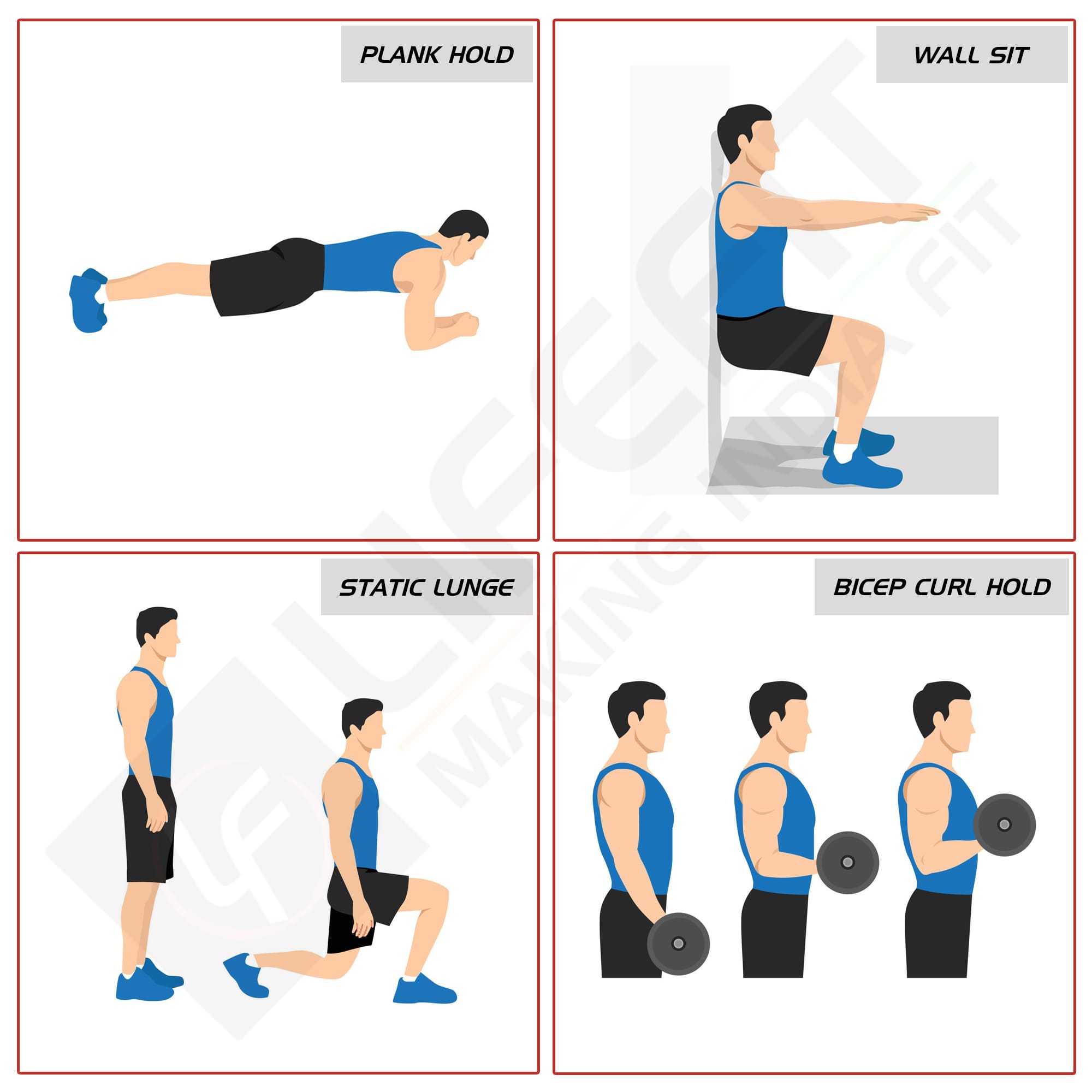
Why This Works: These moves emphasize endurance and control for sculpted, capable arms—goals anyone can share, tailored here for women seeking definition.
Science-Backed Tips
Elevate your training with research-driven strategies:
EMG Insights: A 2018 study confirms Concentration Curls lead in bicep activation, per electromyography data.
Tempo Variations: Lower weights over 3 seconds and pause at the top for 1 second—slow tempos increase time under tension, a key growth driver.
Functional Pairing: Train biceps after back moves like Rows for efficiency, leveraging pre-fatigued muscles.
Why It Matters: These tweaks, grounded in exercise science, optimize muscle fiber recruitment and growth.
FAQs
Your top questions, answered:
2–3 times weekly, paired with back or triceps for balance.
Yes, resistance bands and Chin-Ups are highly effective.
Check form, vary grips, increase weight gradually, and ensure recovery.
Start with 5-10 minutes of light cardio, dynamic arm stretches, and light exercise sets.
Strength gains in 2-4 weeks, visible size changes in 4-6 weeks or longer, depending on diet and training.
Consume 1.2-2g protein per kg body weight, balanced carbs/fats, and stay hydrated.
Change exercises, vary rep ranges, ensure rest, and consider professional advice.
Try bicep stretch (arm behind back) or overhead triceps stretch for flexibility.
Pro Tip: Consistency beats perfection—adjust as you go.
Conclusion
Your path to stronger, more defined biceps starts now. With science-backed exercises, tailored routines, and expert tips, you’ve got everything you need to succeed. We can’t wait to hear about your gains.