

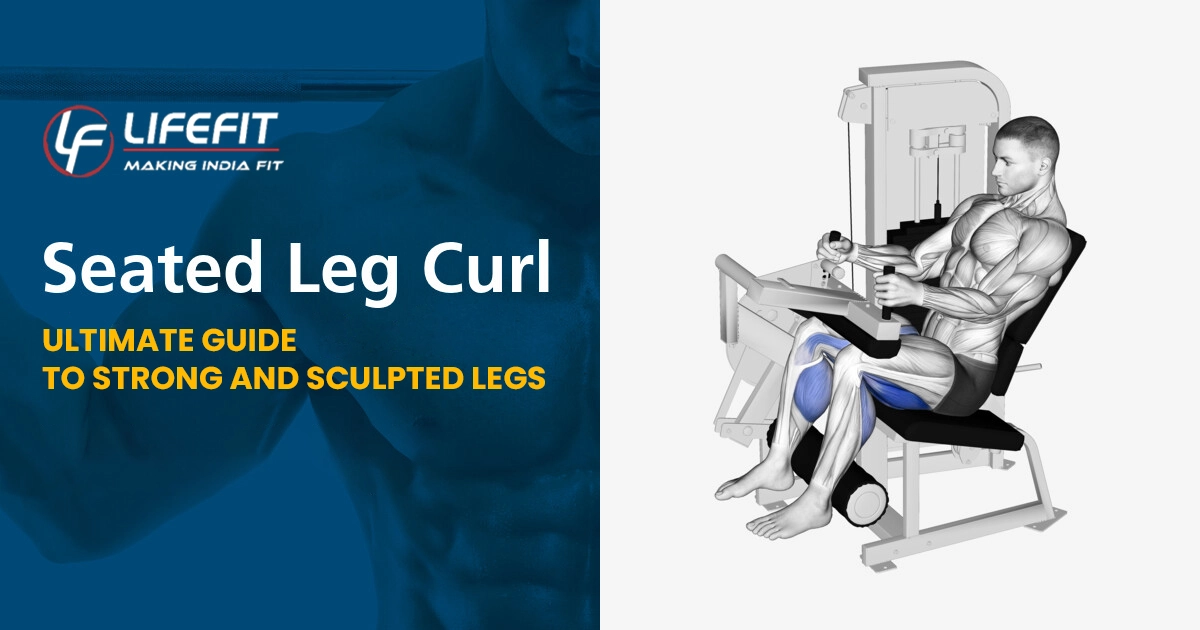
The seated leg curl is a machine-based lower body exercise that primarily targets the hamstrings. It is widely used in gyms because it allows controlled movement, consistent resistance, and focused muscle activation. Due to its seated position, the exercise places the hamstrings under tension through a long range of motion, making it effective for both strength development and muscle definition.
This guide explains how the seated leg curl works, which muscles it targets, how to perform it correctly, and how to include it in a balanced leg training routine.
What Is the Seated Leg Curl Exercise
The seated leg curl is a resistance exercise performed on a leg curl machine where the user bends the knees against a weighted pad while seated. The movement isolates the hamstrings by flexing the knee joint, allowing focused strengthening of the muscles at the back of the thighs.
Compared to lying or standing leg curl variations, the seated leg curl places the hamstrings in a stretched position at the start of the movement, which can increase muscle activation when performed with proper form.
Muscles Worked by the Seated Leg Curl
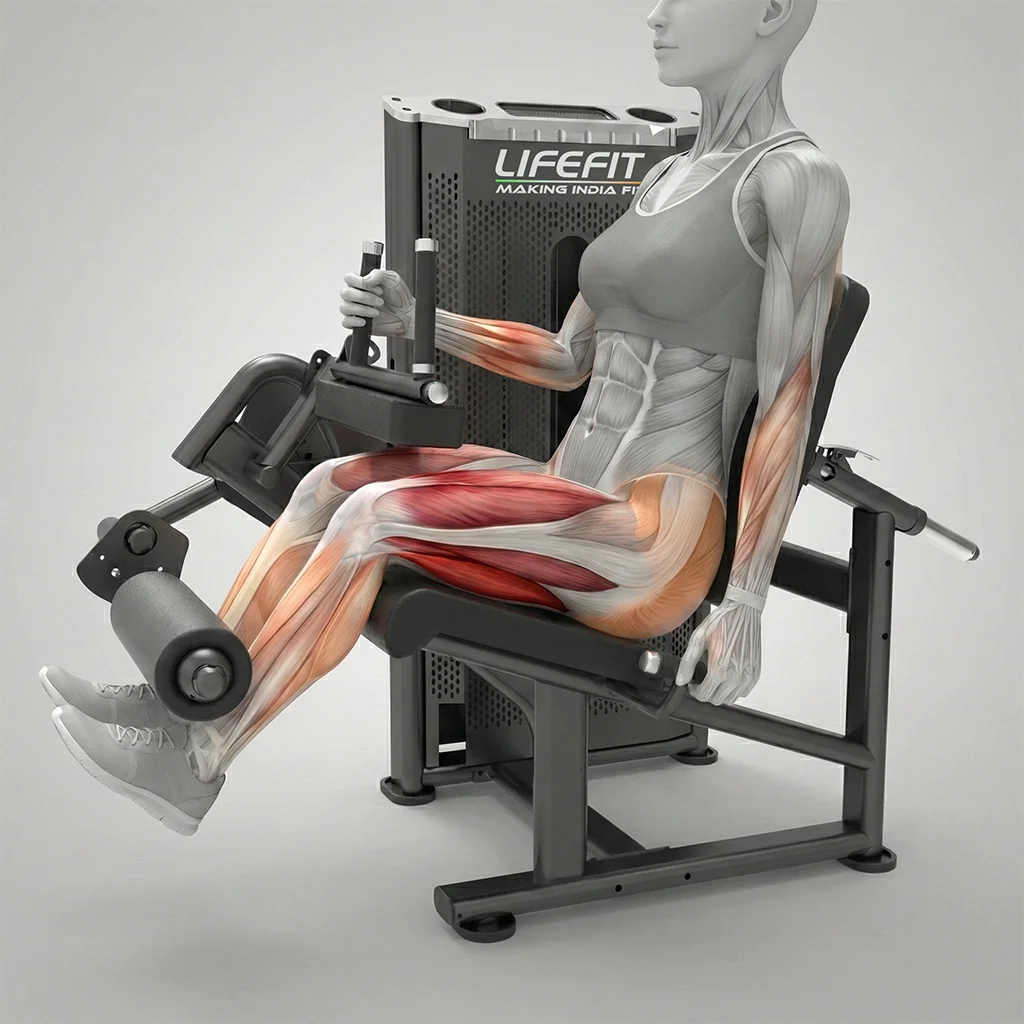
The seated leg curl primarily targets the hamstring muscle group, which includes:
Biceps femoris
Semitendinosus
Semimembranosus
These muscles are responsible for knee flexion and play a major role in walking, running, jumping, and overall lower body stability.
Secondary muscles such as the calves and glutes assist during the movement, while the core helps maintain posture during the exercise.
Benefits of the Seated Leg Curl
The seated leg curl offers several benefits when included regularly in a leg workout routine.
It helps build hamstring strength, which supports knee stability and reduces the risk of injury. Strong hamstrings also contribute to better posture and improved performance in compound exercises like squats and deadlifts.
The controlled movement of the machine allows users to focus on muscle engagement, making it suitable for beginners as well as advanced lifters. It is also useful for improving muscle definition in the back of the thighs.
How to Perform the Seated Leg Curl Correctly
Using proper technique is essential for effectiveness and joint safety.
Adjust the seat so your knees align with the machine’s pivot point
Set the leg pad just above your heels
Sit upright with your back firmly against the seat
Grip the handles and engage your core
Curl your legs downward by bending the knees until the pad reaches the lower position
Pause briefly, then slowly return to the starting position under control
Avoid using momentum and keep the movement smooth throughout the exercise.
Common Mistakes to Avoid
Several mistakes can reduce results or increase strain on the knees.
Using excessive weight often leads to poor control and limited range of motion. Moving too quickly reduces muscle engagement and increases injury risk. Incorrect seat or pad positioning can place unnecessary stress on the knee joint.
Maintaining controlled tempo and proper alignment is more important than lifting heavy weight.
Seated Leg Curl Variations
The seated leg curl can be modified to suit different experience levels.
Beginners should start with lighter resistance and focus on full range of motion. Intermediate users can increase load and slow down the eccentric phase to increase time under tension. Advanced lifters may perform single-leg seated leg curls to address muscle imbalances and improve unilateral strength.
Sets and Reps Recommendations
The ideal sets and reps depend on training goals.
Beginners: 2–3 sets of 12–15 reps
Intermediate: 3–4 sets of 10–12 reps
Advanced: 4–5 sets of 8–10 reps
Rest for 60–90 seconds between sets. The seated leg curl is commonly performed after compound leg exercises or as a focused hamstring movement during leg day.
Safety Tips for Seated Leg Curls
Always warm up the lower body before starting hamstring exercises. Begin with manageable weights and increase resistance gradually over time. Stop the exercise if you feel sharp pain or discomfort in the knees or hamstrings.
Ensure the machine is properly adjusted before each session and avoid locking the movement at either end of the range.
Conclusion
The seated leg curl is an effective exercise for strengthening and shaping the hamstrings while supporting knee stability and lower body performance. Its controlled movement and adjustable resistance make it suitable for users at all fitness levels.
When performed with proper form and included as part of a balanced leg training routine, the seated leg curl can contribute significantly to stronger, more developed legs over time.