

Building strong, well-defined biceps is not just about lifting heavier weights. It is about applying the right resistance, using correct angles, and maintaining strict form. This is where preacher curl machines play a critical role in arm training.
Unlike standing curls, preacher curl machines are designed to limit momentum and stabilize the upper arms. By fixing the arm position against an angled pad, these machines force the biceps to work through a controlled range of motion. This isolation helps lifters focus entirely on the biceps rather than relying on shoulder movement or body swing.
Preacher curl machines are widely used in commercial gyms, strength training facilities, and advanced home gym setups. They are suitable for beginners learning proper curl mechanics as well as experienced lifters aiming to improve muscle definition and mind-muscle connection. When used correctly, they can enhance biceps activation while reducing unnecessary strain on the shoulders and lower back.
This guide explains what preacher curl machines are, how they work, the muscles they target, proper form, common mistakes, and how to integrate them effectively into your biceps training routine. Whether your goal is size, strength, or controlled hypertrophy, understanding preacher curl machines can significantly improve your arm workouts.
What Is a Preacher Curl Machine?
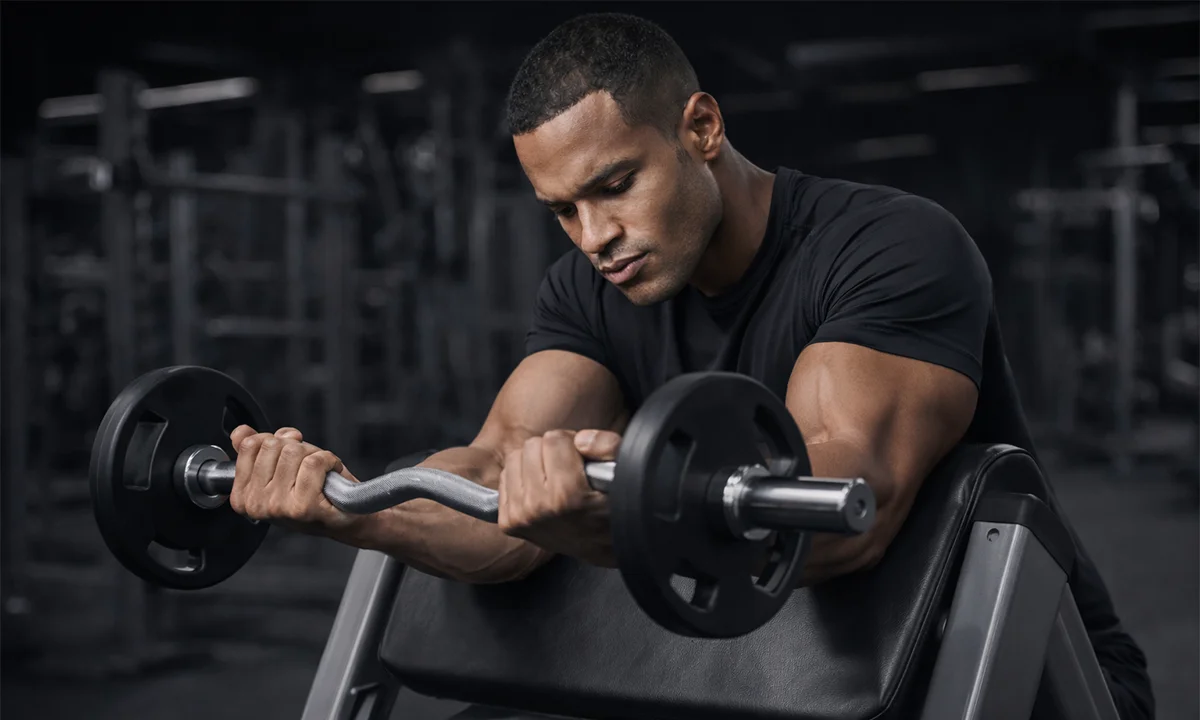
A preacher curl machine is a specialized strength training machine designed to isolate the biceps by fixing the upper arms in a supported, angled position. The machine typically consists of a padded seat, an inclined armrest, and a resistance system that may be plate-loaded, selectorized, or cable-based.
The defining feature of a preacher curl machine is the angled arm pad, often referred to as the preacher bench. This pad supports the upper arms and prevents shoulder movement, which significantly reduces the ability to use momentum. As a result, the biceps are forced to perform most of the work throughout the curl.
Preacher curl machines differ slightly from traditional preacher curl benches. A preacher bench usually requires free weights such as barbells or dumbbells, while a preacher curl machine provides a fixed movement path or guided resistance. This guided setup helps maintain consistent form, especially for beginners or those training with controlled loads.
By placing the biceps in a slightly stretched position at the start of each repetition, preacher curl machines increase tension during the initial phase of the lift. This makes them particularly effective for improving biceps activation, building muscle definition, and reinforcing strict curling mechanics.
Muscles Worked During Preacher Curl Exercises
Preacher curl machines are designed to primarily target the biceps, but several supporting muscles are also involved to stabilize and control the movement. Understanding which muscles are activated helps improve technique and prevents overloading the wrong areas.
Primary Muscle: Biceps Brachii
The biceps brachii is the main muscle worked during preacher curls. Both heads of the biceps are activated:
Short head (inner biceps): The fixed arm position and angled pad place greater emphasis on the short head, contributing to arm thickness and fullness.
Long head (outer biceps): While slightly less dominant than in standing curls, the long head still works throughout the movement, especially during the mid-range of the curl.
Secondary Muscle: Brachialis
Located beneath the biceps, the brachialis plays an important role in elbow flexion. Preacher curls, especially when performed with controlled tempo, activate the brachialis effectively. Developing this muscle helps push the biceps outward, making the arms appear larger from the side.
Forearm Muscles: Brachioradialis
The brachioradialis assists during the curl, particularly when using neutral or slightly wider grips. While it is not the main target, it contributes to overall arm strength and stability.
Minimal Shoulder Involvement
One of the biggest advantages of preacher curl machines is the reduced involvement of the shoulders. The arm pad prevents forward shoulder movement, which is common in standing curls. This keeps the tension focused on the biceps and lowers the risk of shoulder strain.
By isolating elbow flexion and minimizing momentum, preacher curl machines allow for precise biceps training with better muscle engagement and control.
Key Benefits of Using Preacher Curl Machines
Preacher curl machines are not just another arm exercise option. They serve a very specific purpose in structured strength training programs. Their design solves several common issues found in free-weight biceps training.
Superior Biceps Isolation
The biggest benefit of preacher curl machines is isolation. By locking the upper arms against an angled pad, the machine removes momentum and shoulder assistance. This forces the biceps to perform nearly all of the work, resulting in stronger contractions and more consistent muscle activation.
For lifters struggling to “feel” their biceps during standing curls, preacher curls provide immediate feedback and control.
Reduced Cheating and Momentum
Standing barbell or dumbbell curls often turn into partial hip thrusts or shoulder lifts as the weight increases. Preacher curl machines eliminate these compensation patterns. Because the arms are supported, cheating becomes difficult, even with heavier loads.
This makes preacher curls especially effective for hypertrophy-focused training where strict form matters more than maximum weight.
Lower Risk of Shoulder and Lower Back Strain
Poor curling mechanics can stress the shoulders and lower back. Preacher curl machines stabilize the body and reduce unwanted joint movement. This makes them a safer option for:
Lifters with shoulder discomfort.
Users recovering from minor upper-body injuries.
Beginners still learning proper curling mechanics.
Controlled movement and fixed positioning help protect surrounding joints while targeting the biceps directly.
Consistent Range of Motion
Preacher curl machines guide the movement through a uniform range of motion. This consistency ensures the biceps are trained evenly from stretch to contraction. Unlike free weights, where range can shorten due to fatigue, machines encourage full repetition quality.
Over time, this improves strength balance and muscle symmetry.
Ideal for Beginners and Advanced Lifters
Preacher curl machines are highly scalable. Beginners benefit from guided movement and safer positioning, while advanced lifters use them for:
Finishing sets
Isolation days
High-rep hypertrophy work
Drop sets and controlled negatives
This adaptability makes preacher curl machines valuable in both commercial gyms and serious home training setups.
Types of Preacher Curl Machines and Variations
Preacher curl machines come in several designs, each suited to different training styles, gym setups, and user needs. Understanding these variations helps you choose the right machine for your space and training goals.
Plate-Loaded Preacher Curl Machines
Plate-loaded preacher curl machines use Olympic or standard weight plates for resistance. These are commonly found in commercial gyms and professional training facilities.
They allow precise load progression and feel closer to free-weight training while still maintaining strict biceps isolation. Plate-loaded machines are ideal for advanced lifters who want heavier resistance and full control over weight increments.
Best suited for:
Commercial gyms
Strength-focused users
Progressive overload training
Selectorized Preacher Curl Machines
Selectorized preacher curl machines use a weight stack with a selector pin. These machines are beginner-friendly and efficient, making them popular in multi-user gyms.
They allow quick weight changes, consistent resistance, and smoother motion. Selectorized machines are excellent for high-traffic gyms where ease of use and safety are priorities.
Best suited for:
Beginners
Corporate gyms
Rehabilitation-focused training
Time-efficient workouts
Cable-Based Preacher Curl Machines
Cable preacher curl machines use pulley systems to provide constant tension throughout the movement. Unlike plate-loaded machines, cables maintain resistance even at the top and bottom of the curl.
This constant tension increases muscle engagement and makes cable preacher curls ideal for hypertrophy-focused programs.
Best suited for:
Muscle-building phases
Controlled tempo training
Athletes focusing on peak contraction
Preacher Curl Benches with Free Weights
These are traditional preacher benches used with barbells, EZ bars, or dumbbells. While not machines in the strict sense, they remain a popular option due to their simplicity and versatility.
They require more control and experience, as resistance is not guided. However, they allow greater freedom of grip and movement.
Best suited for:
Experienced lifters
Home gyms with limited space
Users preferring free-weight training
Adjustable vs Fixed Preacher Curl Machines
Some preacher curl machines offer adjustable seat heights and arm pad angles. These adjustments improve ergonomics and ensure proper arm positioning for users of different body sizes.
Fixed machines are simpler and often more durable, but adjustable machines provide better comfort and long-term usability in commercial environments.
Proper Form and Technique for Preacher Curl Machines
Using a preacher curl machine with correct form is critical for biceps growth and injury prevention. Poor setup or excessive weight can place unnecessary stress on the elbows and biceps tendon, which is why strict technique matters more here than in many other arm exercises.
Step-by-Step Setup
Start by adjusting the seat height so your upper arms rest flat against the preacher pad. Your armpits should sit just above the top edge of the pad, allowing the biceps to fully stretch at the bottom of the movement without locking the elbows.
Sit upright with your chest against the pad and feet planted firmly on the floor. Your shoulders should remain relaxed and stable throughout the exercise.
Grip the handles or bar with an underhand grip unless performing a variation that requires otherwise. Keep your wrists straight and avoid bending them backward.
Execution Technique
Begin each repetition from a controlled, extended position. Slowly curl the weight upward by contracting the biceps, focusing on squeezing the muscle rather than lifting the load.
Pause briefly near the top of the movement when the forearms are nearly vertical. Avoid curling too high, as this can shift tension away from the biceps.
Lower the weight slowly and under control until your arms are nearly straight. Do not lock out the elbows at the bottom, as this increases strain on the joint.
Maintain a steady tempo throughout the set. Jerky movements or bouncing at the bottom reduce muscle activation and increase injury risk.
Breathing and Control
Exhale as you curl the weight upward and inhale as you lower it. Controlled breathing helps maintain stability and prevents unnecessary tension in the upper body.
Keep your core engaged lightly to support posture, but avoid leaning back or shifting your torso to assist the lift.
Common Form Mistakes to Avoid
Using excessive weight that forces momentum
Lifting elbows off the pad
Locking out elbows at the bottom
Curling too fast without control
Shrugging shoulders during the movement
Correcting these mistakes immediately improves muscle activation and reduces the risk of biceps tears, a concern often associated with preacher curls when performed incorrectly.
Common Mistakes and Injury Risks When Using a Preacher Curl Machine
Preacher curl machines are extremely effective for biceps isolation, but they demand disciplined form. Most injuries associated with preacher curls come from how the exercise is performed, not from the machine itself.
Understanding common mistakes helps you train safely and get better results.
Using Excessive Weight
One of the most frequent errors is loading the machine too heavily. Because the preacher curl removes momentum and stabilizes the arms, the biceps are under constant tension. Lifting more weight than you can control forces the elbows and biceps tendon to absorb unnecessary stress.
If you cannot lift and lower the weight slowly, the load is too heavy.
Locking the Elbows Aggressively
Fully locking out the elbows at the bottom of the movement places high strain on the elbow joint and the distal biceps tendon. Over time, this can lead to elbow pain or tendon irritation.
Instead, stop just short of full extension and maintain tension on the biceps throughout the movement.
Overstretching at the Bottom
Allowing the arms to drop too far down the pad creates an excessive stretch on the biceps. While a controlled stretch is beneficial, overstretching under load increases injury risk, especially with heavier weights.
Maintain control and avoid relaxing the arms completely at the bottom.
Jerking the Weight
Using sudden or explosive movements to start the lift removes tension from the muscle and transfers stress to connective tissues. This often happens when lifters attempt to “cheat” the first half of the rep.
Preacher curls are designed for strict, controlled motion, not speed or momentum.
Can Preacher Curls Tear the Biceps?
This is a common myth that often causes unnecessary fear.
Preacher curls do not inherently cause biceps tears. Biceps tears typically occur due to a combination of poor form, excessive weight, and aggressive elbow extension under load.
When performed with proper technique, controlled tempo, and appropriate resistance, preacher curl machines are safe and effective for long-term biceps development.
Most reported biceps injuries associated with preacher curls involve lifters attempting near-maximal loads, bouncing at the bottom, or ignoring pain signals.
How to Reduce Injury Risk
Use controlled weights you can fully manage.
Avoid locking out elbows under load.
Maintain steady tempo throughout the set.
Warm up before heavy biceps training.
Stop immediately if you feel sharp or abnormal pain.
When used correctly, preacher curl machines remain one of the safest tools for isolating and strengthening the biceps.
Preacher Curl Machine vs Other Bicep Exercises
Not all biceps exercises serve the same purpose. Each variation changes muscle activation, stability, and loading pattern. Understanding when to use a preacher curl machine versus other biceps movements helps you train smarter, not harder.
Preacher Curl Machine vs Standing Barbell Curl
Standing barbell curls allow heavier loads and recruit stabilizing muscles from the core, hips, and shoulders. This makes them excellent for overall arm strength and mass development.
Preacher curl machines remove momentum and body movement, forcing the biceps to work in isolation. Because the arms are supported on an angled pad, cheating is minimized and tension stays on the biceps throughout the lift.
Barbell curls are better for building overall arm strength and power. Preacher curl machines are better for strict biceps isolation and controlled muscle growth.
Preacher Curl Machine vs Dumbbell Curl
Dumbbell curls offer greater freedom of movement and allow each arm to work independently. They help correct strength imbalances and improve coordination.
Preacher curl machines limit movement intentionally. This controlled range of motion keeps constant tension on the biceps and reduces assistance from other muscle groups.
Dumbbells are ideal for functional strength and unilateral training. Preacher curl machines are ideal when the goal is focused biceps engagement without momentum.
Preacher Curl Machine vs Bicep Curl Machine
A standard bicep curl machine typically uses a seated or standing design with guided arms. These machines provide stability but often allow more shoulder involvement than preacher curls.
Preacher curl machines position the upper arms forward and supported, which increases stretch and tension on the biceps. This makes preacher curls more effective for peak contraction and muscle isolation.
If your goal is controlled biceps shaping and strict form, preacher curl machines offer superior isolation compared to most standard bicep curl machines.
When Preacher Curl Machines Are the Better Choice
Preacher curl machines work best when you want to isolate the biceps without assistance from the shoulders or lower body. They are especially useful for:
Biceps hypertrophy and muscle shaping
Lifters who struggle with cheating on curls
Controlled training during injury recovery phases
Finishing sets at the end of arm workouts
They are also ideal for beginners learning proper curl mechanics.
When Free Weights Are the Better Choice
Free-weight curls are better when overall arm strength, coordination, and functional control are the goal. They allow natural movement patterns and heavier loading.
Standing barbell and dumbbell curls are more effective for:
Building raw strength
Improving muscle balance
Training stabilizing muscles
Athletic performance carryover
The most effective biceps programs combine both preacher curl machines and free-weight curls, using each where it performs best.
Preacher Curl Machine Workouts (Beginner to Advanced)
Preacher curl machines are best used as a targeted biceps builder, not a primary heavy lift. Programming them correctly based on experience level helps maximize growth while reducing injury risk.
Beginner Preacher Curl Machine Workout
For beginners, the goal is learning correct movement, building mind-muscle connection, and avoiding excessive load.
Use light to moderate weight that allows full control through the entire range of motion.
Recommended sets and reps
2 to 3 sets of 12 to 15 reps.
Rest 60 to 90 seconds between sets.
Focus on slow lifting, controlled lowering, and keeping the elbows firmly placed on the pad. Avoid locking out at the bottom.
This phase builds tendon strength and prepares the biceps for heavier training later.
Intermediate Volume Protocol
Intermediate lifters can use preacher curls as a primary isolation movement after compound pulling or standing curls.
The emphasis here is time under tension and progressive overload.
Recommended sets and reps
3 to 4 sets of 8 to 12 reps.
Rest 60 seconds between sets.
Control the eccentric portion of the lift for 2 to 3 seconds. Slight increases in load can be added week to week, as long as form remains strict.
This approach supports visible biceps thickness and peak development.
Advanced Preacher Curl Machine Finisher
Advanced lifters should treat preacher curls as a finishing movement, not a maximal strength exercise.
They work best when used to fully exhaust the biceps after heavy compound lifts.
Advanced techniques include
Drop sets with controlled tempo.
Slow negatives with lighter weight.
Partial reps at the top for peak contraction.
Recommended volume
2 to 3 high-intensity sets.
10 to 15 reps per set.
The focus should remain on muscle fatigue, not weight numbers.
How Often Should You Train Preacher Curls?
Preacher curls place high stress on the biceps tendon due to the stretched arm position. Because of this, frequency should be controlled.
For most trainees:
1 to 2 sessions per week is sufficient
Beginners should start with once per week. Intermediate and advanced lifters can use preacher curls twice weekly if volume is managed carefully and recovery is adequate.
Avoid performing preacher curls on consecutive days to reduce the risk of elbow and biceps tendon strain.
What Is a Good Weight for Preacher Curls?
Preacher curls almost always use less weight than standing barbell curls. This is normal and expected. The machine places your biceps in a stretched, isolated position, removing momentum and assistance from the shoulders, hips, and lower back.
If you try to match your standing curl weight on a preacher curl machine, form breakdown and elbow stress usually follow.
Why Preacher Curl Weight Is Lower Than Standing Curls
Standing curls allow body movement, slight lean-back, and shoulder involvement. Preacher curls remove all of that.
On a preacher curl machine:
The elbows are fixed
The biceps stay under constant tension
The stretch at the bottom increases tendon load
This makes the exercise mechanically harder, even with lighter weight.
Beginner Preacher Curl Weight Guidance
If you are new to preacher curls, focus on control rather than load.
A good starting point is 30 to 40 percent of your standing barbell curl weight.
You should be able to complete all reps with a slow tempo and no elbow lift. If you feel strain in the elbows instead of the biceps, the weight is too heavy.
Intermediate Preacher Curl Weight Guidance
Intermediate lifters can gradually increase load while maintaining strict form.
A common working range is 40 to 60 percent of standing curl weight, depending on arm length and machine design.
At this stage, the goal is tension and consistency, not maximum numbers.
Advanced Preacher Curl Weight Guidance
Advanced lifters should still avoid chasing heavy loads on preacher curls.
Even experienced athletes typically stay within 50 to 65 percent of standing curl strength.
Advanced progress comes from better contraction, slower negatives, and increased volume rather than heavier plates.
Ego Lifting Warning
Preacher curls are one of the fastest ways to irritate the biceps tendon if ego lifting takes over.
Warning signs include:
Elbows lifting off the pad
Jerking the weight from the bottom
Locking out aggressively
If any of these appear, reduce the weight immediately.
Safe Progression Rules
Progression on preacher curls should be slow and deliberate.
Increase weight only when:
You can control the full range of motion
All reps look identical
No elbow or shoulder discomfort is present
Adding even 2.5 kg is meaningful on this exercise. Small jumps lead to better long-term growth and fewer injuries.
Safety Tips for Long-Term Biceps Growth
Preacher curl machines are extremely effective, but only when used with discipline. Because the exercise isolates the biceps in a stretched position, small mistakes can lead to elbow irritation or stalled progress over time. These safety principles help ensure steady growth without setbacks.
Warm-Up Is Non-Negotiable
Never start preacher curls with working weight.
Begin with light resistance and slow repetitions to increase blood flow to the biceps and elbows. A proper warm-up prepares the tendon for stretch and reduces injury risk.
A simple warm-up approach:
1–2 light sets on the preacher curl machine
Slow tempo with full control
No locking or jerking
Warm muscles contract better and recover faster.
Control the Tempo on Every Rep
Preacher curls demand control, not speed.
Lift the weight smoothly and lower it slowly. The lowering phase should take longer than the lifting phase. This protects the elbow joint and keeps tension where it belongs, on the biceps.
Avoid bouncing at the bottom or snapping the elbows straight.
Respect Rest Periods
Short rest periods often reduce form quality on preacher curls.
For most lifters:
60–90 seconds rest works best
Heavier isolation work may need slightly longer
Adequate rest allows the biceps tendon to recover between sets and prevents fatigue-based cheating.
Prioritize Elbow Health
Elbow discomfort is a warning sign, not something to train through.
If you feel pain at the front of the elbow:
Reduce load immediately
Shorten the range slightly
Check seat height and arm pad position
Proper alignment keeps stress on the muscle rather than the joint.
Using an EZ-style grip or machine handles instead of a straight bar can also reduce elbow strain for many lifters.
Limit Training Frequency
More preacher curls do not mean faster arm growth.
Because the movement heavily stresses the biceps tendon, preacher curls should be used 1–2 times per week, not every session.
Balance preacher curls with:
Standing curls
Hammer curls
Cable curls
This variation supports growth while protecting connective tissue.
Preacher Curl Machine Buying Considerations
A preacher curl machine may look simple, but small design differences can significantly affect comfort, safety, and long-term usability. Whether you’re selecting one for a home gym or a commercial facility, these factors matter.
Adjustability
Seat height and arm pad angle should be adjustable. Proper alignment ensures your upper arms rest fully on the pad, keeping tension on the biceps instead of the shoulders or elbows. Fixed, non-adjustable machines often limit usability for different body sizes.
Pad Quality and Comfort
The arm pad should be firm yet supportive. Pads that are too soft compress under load and reduce stability, while overly hard pads can cause elbow discomfort. High-density foam with durable upholstery performs best over time.
Overall Stability
A preacher curl machine must remain stable even under heavy loads. Look for a solid base, wide frame footprint, and strong welds. Any rocking or shifting during curls compromises both safety and muscle engagement.
Plate-Loaded vs Selectorized
Plate-loaded machines allow precise load progression and are preferred in strength-focused environments. Selectorized machines offer quicker adjustments and are often better suited for general fitness users or high-traffic gyms. Both are effective when built well.
Home Gym vs Commercial Gym Needs
For home gyms, compact size, smooth movement, and moderate load capacity are usually sufficient. Commercial gyms should prioritize durability, high weight tolerance, and easy adjustability to accommodate multiple users throughout the day.
FAQs About Preacher Curl Machines
The preacher curl machine primarily targets the biceps brachii, with secondary involvement from the brachialis and brachioradialis. Because the upper arms are supported on the pad, the biceps stay under constant tension with minimal assistance from the shoulders.
Neither is universally better. A preacher curl machine is superior for strict isolation and controlled hypertrophy, while dumbbells are better for overall arm development, coordination, and unilateral balance. The best results usually come from using both at different stages of training.
Yes. Preacher curl machines are beginner-friendly because they guide movement and reduce cheating. Beginners should start with light weight, focus on slow tempo, and prioritize correct elbow and pad positioning.
For most lifters, 1–2 times per week is sufficient. Because preacher curls heavily stress the elbow flexors, excessive frequency can slow recovery and increase joint strain without improving results.
Preacher curls are safe when performed with proper form and controlled weight. Problems usually occur due to overloading, locking the elbows at the bottom, or jerking the weight. Keeping tension on the biceps and stopping short of full elbow lock helps protect joint health.
Conclusion
Preacher curl machines are one of the most effective tools for isolating and strengthening the biceps. By eliminating momentum and limiting shoulder involvement, they help improve muscle control, shape, and contraction quality.
When used with proper form and moderate weight, preacher curls support long-term biceps growth and reduce injury risk. They work best as an isolation exercise alongside free-weight curls, not as a replacement.
If your goal is stronger, more defined arms with better muscle focus, the preacher curl machine deserves a place in your training routine.