

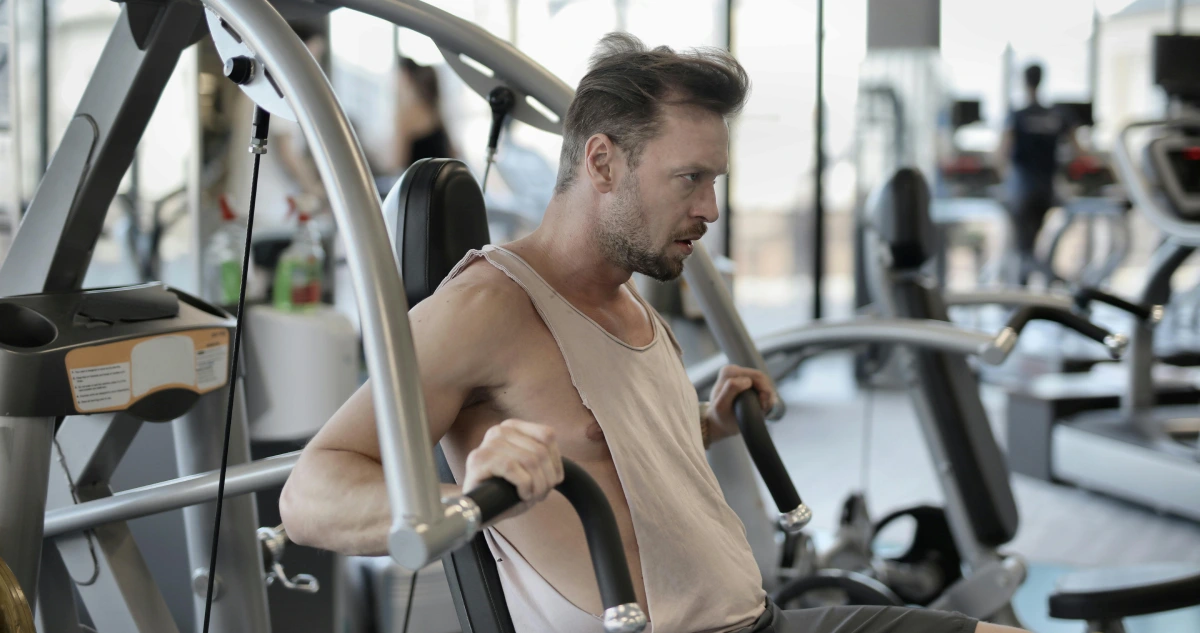
The shoulder press machine is a popular strength-training exercise used to build strong, well-balanced shoulders with controlled movement. Because the machine follows a fixed path, it allows users to focus on proper form and muscle engagement while reducing the risk of poor technique. This makes it suitable for beginners as well as experienced lifters.
This guide explains how the shoulder press machine works, which muscles it targets, how to use it correctly, and how to include it effectively in a training routine.
What Is the Shoulder Press Machine Exercise
The shoulder press machine is a resistance-based exercise that targets the shoulder muscles through a seated or upright pressing motion. Unlike free weights, the machine stabilizes the movement path, helping users maintain consistent posture and alignment.
The exercise primarily works the deltoid muscles while also engaging supporting muscles in the upper body. Because of the guided motion, it is commonly used in gyms for both strength development and rehabilitation-focused training.
Muscles Worked by the Shoulder Press Machine
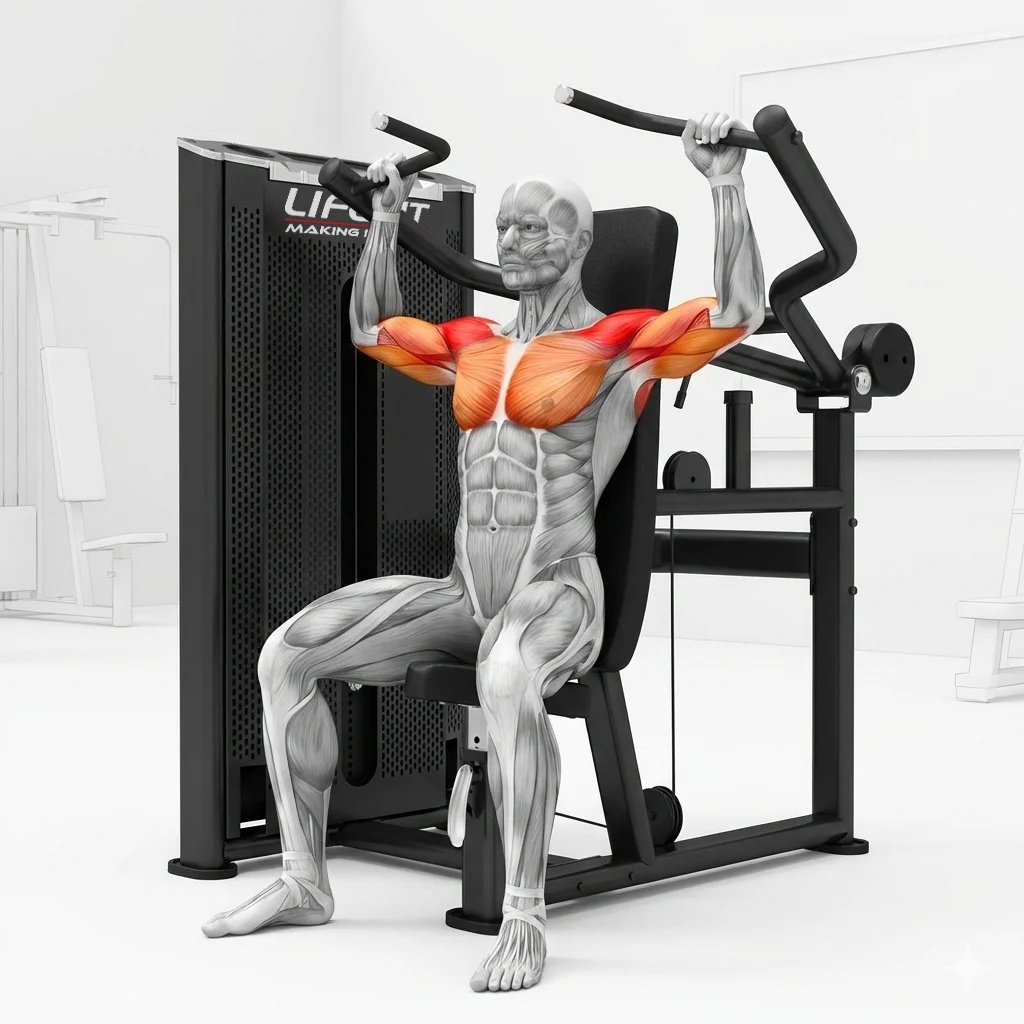
The shoulder press machine targets multiple upper-body muscles:
Anterior deltoids (front shoulders), which perform the main pressing action
Lateral deltoids (side shoulders), which contribute to shoulder width and stability
Triceps, which assist in elbow extension
Upper chest, which supports the pressing movement
Secondary muscles such as the core and upper back also engage to maintain posture during the exercise.
Benefits of Using the Shoulder Press Machine
Using a shoulder press machine offers several advantages compared to free-weight pressing exercises.
It provides controlled movement, which helps reduce strain on the shoulders and lower back. This makes it useful for beginners learning correct pressing mechanics or for users returning from injury.
The machine allows consistent resistance throughout the range of motion, supporting muscle growth and strength development. It also helps improve shoulder stability and posture when used correctly and regularly.
Types of Shoulder Press Machines
Different gym setups may include various shoulder press machine designs.
Seated Shoulder Press Machine
This version includes back support, making it easier to maintain upright posture. It is ideal for users who want added stability during pressing movements.
Vertical or Plate-Loaded Shoulder Press Machine
These machines mimic a more natural overhead pressing motion and often allow heavier loading. They are commonly used for progressive strength training.
Smith Machine Shoulder Press
Although not a dedicated shoulder press machine, the Smith machine can be used for controlled shoulder pressing. It requires more attention to setup and posture compared to selectorized machines.
How to Perform the Shoulder Press Machine Correctly
Proper setup and technique are essential for safe and effective training.
Adjust the seat height so the handles align with shoulder level
Sit upright with your back firmly supported and feet flat on the floor
Grip the handles with palms facing forward or slightly inward
Engage your core and keep your chest lifted
Press the handles upward until your arms are nearly straight without locking the elbows
Lower the handles slowly and under control back to the starting position
Maintain steady breathing throughout the movement and avoid using momentum.
Common Mistakes to Avoid
Several common errors can reduce effectiveness or increase injury risk.
Avoid arching the lower back during the press. Keep the movement controlled and avoid locking out the elbows at the top. Using excessive weight can compromise form and place unnecessary stress on the shoulders and joints.
Sets and Reps Recommendations
The number of sets and reps depends on training experience and goals.
Beginners: 2–3 sets of 10–12 reps with light to moderate weight
Intermediate users: 3–4 sets of 8–10 reps with progressive loading
Advanced users: 4–5 sets of 6–8 reps focusing on strength development
Rest for 60–90 seconds between sets.
Adding the Shoulder Press Machine to a Workout Routine
The shoulder press machine is best placed early in a shoulder or upper-body workout when energy levels are high. It pairs well with lateral raises, rear delt exercises, and upper chest movements for balanced shoulder development.
It can also be used as a primary compound movement on push days or as an accessory exercise following free-weight presses.
Safety and Maintenance Tips
Always warm up the shoulders before using the machine with light movements or resistance. Start with manageable weights and increase gradually.
Check the machine regularly for loose parts or improper seat adjustments. Using properly maintained equipment helps ensure safe and consistent training.
Frequently Asked Questions
Yes. The guided movement makes it easier to learn proper pressing mechanics safely.
It can be an effective alternative but does not fully replace free-weight exercises that require more stabilization.
Two to three times per week is sufficient for most training programs.
Yes. The triceps assist during the pressing motion and receive secondary activation.
Conclusion
The shoulder press machine is an effective and accessible exercise for building shoulder strength, improving stability, and supporting upper-body development. With proper setup, controlled movement, and appropriate loading, it can be a valuable part of a balanced strength-training routine.
Focusing on correct form and progressive training ensures long-term results while reducing the risk of injury.