

Weight plates are the foundation of strength training. Whether you are building a home gym, running a commercial fitness facility, or progressing in your own lifting journey, understanding gym weight plates is essential for safe, effective, and measurable training.
Despite their simple appearance, weight plates vary widely in size, material, accuracy, durability, and intended use. Choosing the wrong type can limit performance, damage equipment, or even increase injury risk. Choosing the right plates, on the other hand, supports progressive overload, consistent strength gains, and long-term training reliability.
This comprehensive guide explains what gym weight plates are, the different types available, Fit India plate standards, how to choose the right plates for home and commercial gyms, and how to use and maintain them properly. If you want every rep to count, this guide will give you the clarity you need.
What Is a Weight Plate in the Gym?
A weight plate is a flat, circular disc used as resistance in strength training. Weight plates are loaded onto barbells, dumbbells, plate-loaded machines, and strength equipment to increase resistance during exercises such as squats, bench presses, deadlifts, rows, leg presses, and shoulder presses.
In gym terminology, plates are often referred to in shorthand. For example, one plate typically means a 20 kg Olympic plate on one side of the bar. This convention is common in commercial gyms and powerlifting environments.
Weight plates allow precise control over training load, making them essential for progressive overload, which is the core principle behind strength and muscle development.
Understanding the Different Types of Gym Weight Plates
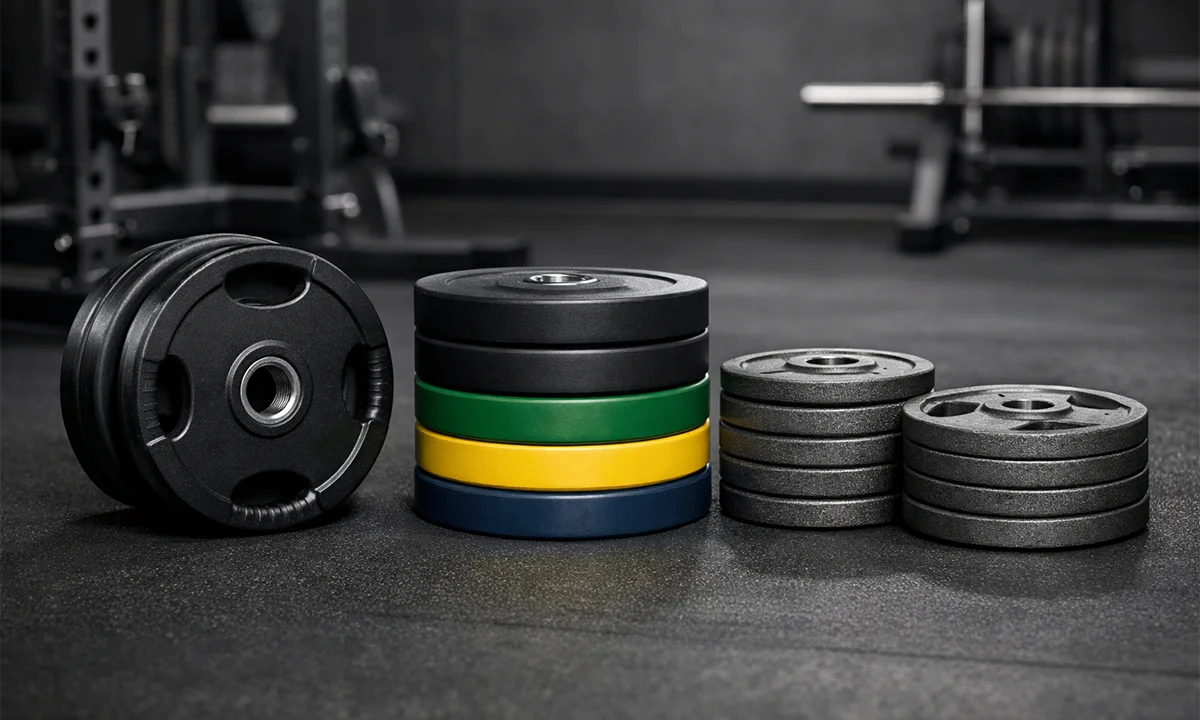
Gym weight plates are categorized based on hole size, material, and training application. Each type serves a specific purpose.
Standard Weight Plates
Standard weight plates typically have a 1-inch hole diameter and are used with standard barbells and dumbbell rods. These plates are commonly found in basic home gyms and older training setups.
They are generally made from cast iron and are suitable for light to moderate strength training. However, they are not ideal for heavy compound lifts due to limited load capacity and bar compatibility.
Standard plates are best for beginners and basic home workouts where space and budget are limited.
Olympic Weight Plates
Olympic weight plates have a 2-inch hole diameter and are designed for Olympic barbells. These plates are the global standard in commercial gyms, professional training facilities, and competitive lifting environments.
They offer greater stability, higher load capacity, and better durability compared to standard plates. Olympic plates are used for squats, deadlifts, bench presses, and Olympic lifts.
If you are serious about strength training or running a gym, Olympic weight plates are the most versatile and future-proof option.
Rubber Bumper Plates
Bumper plates are made primarily from dense rubber with a steel inner ring. They are designed to be dropped safely from overhead or shoulder height without damaging floors or equipment.
Bumper plates are widely used in Olympic lifting, CrossFit, and functional training environments. They reduce noise, protect flooring, and allow repeated high-impact use.
While they are thicker than metal plates, bumper plates are ideal for gyms focused on dynamic lifting and athlete training.
Competition Weight Plates
Competition plates are precision-calibrated Olympic plates used in professional powerlifting and weightlifting competitions. They follow strict color coding and weight accuracy standards.
These plates are thinner, highly accurate, and designed for maximum load efficiency. They are typically more expensive and are best suited for advanced lifters and professional gyms.
Cast Iron vs Rubber-Coated Plates
Cast iron plates are durable and compact but can cause noise and floor damage if dropped. Rubber-coated plates reduce noise, protect equipment, and improve handling, making them more suitable for commercial gyms and shared training spaces.
What Should a Life Fit India Plate Look Like?
Life Fit India standards focus on safety, accuracy, and usability in Indian fitness environments. A proper Life Fit India compliant weight plate should meet the following criteria:
Clearly marked weight in kilograms
Accurate weight tolerance within acceptable limits
Smooth, burr-free edges to prevent hand injuries
Proper hole diameter matching bar specifications
Durable material suitable for repeated use
Balanced construction to avoid wobbling on bars
In commercial gyms, Life Fit India plates should also be corrosion-resistant and easy to clean, supporting hygiene and long-term durability. Poorly manufactured plates with inaccurate weight markings or uneven casting can compromise training quality and safety.
Standard vs Olympic Weight Plates
Choosing between standard and Olympic plates depends on your training goals and setup.
Standard plates are suitable for light training and basic home gyms. They are affordable but limited in load capacity and compatibility.
Olympic plates are ideal for serious strength training, commercial gyms, and long-term progression. They support heavier loads, offer better bar stability, and are compatible with most modern gym equipment.
For anyone planning progressive strength training or gym expansion, Olympic plates are the recommended choice.
Weight Plate Sizes, Colors, and Coding Explained
Olympic weight plates often follow a color-coded system, especially in competition settings:
25 kg – Red
20 kg – Blue
15 kg – Yellow
10 kg – Green
5 kg – White
Smaller plates vary by manufacturer
This color coding allows quick identification and efficient loading during workouts. Plate thickness also varies depending on material, with competition plates being thinner than rubber bumper plates.
Understanding plate sizing helps ensure consistent training loads and proper bar balance.
Choosing the Right Weight Plates for Home Gyms and Commercial Gyms
Home Gym Considerations
For home gyms, noise reduction, space efficiency, and floor protection are key. Rubber-coated plates or bumper plates are ideal choices. Olympic plates provide long-term flexibility if you plan to progress in strength.
Budget-conscious users should still prioritize accuracy and durability over cheap, inconsistent plates.
Commercial Gym Considerations
Commercial gyms require durable, high-usage plates that can withstand daily wear. Olympic plates and bumper plates are preferred due to their compatibility, safety, and professional feel.
Ease of handling, storage racks, and standardized sizing are also important in high-traffic environments.
How to Use Weight Plates Safely
Using weight plates correctly is essential for injury prevention and equipment longevity.
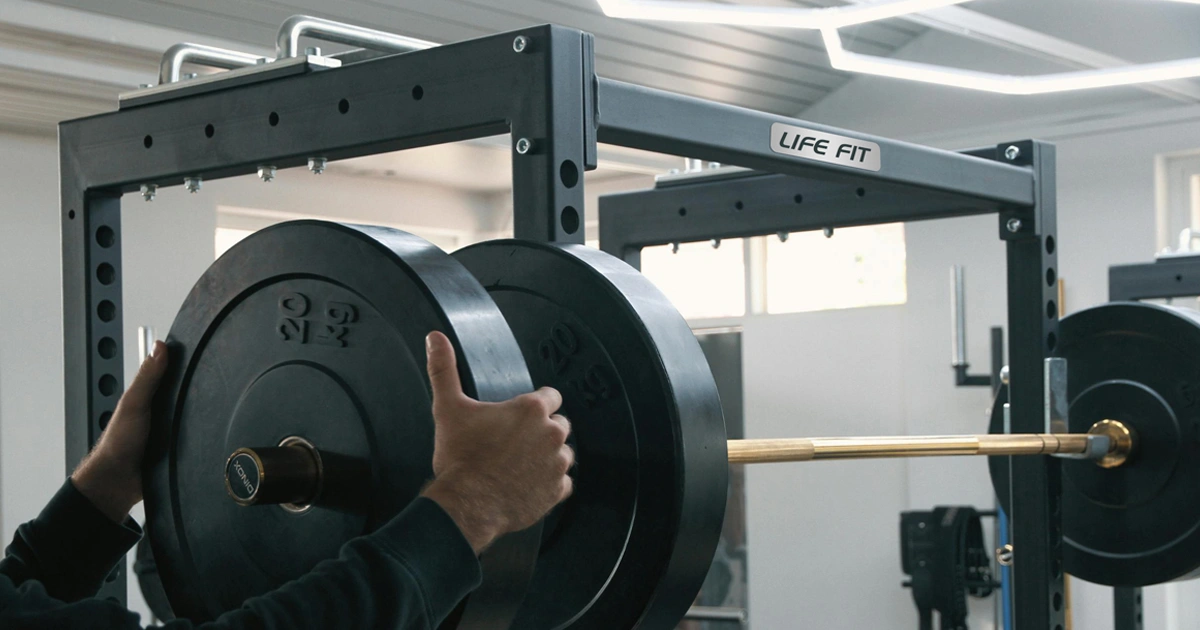
Always load plates evenly on both sides of the bar. Secure them with collars to prevent movement. Avoid dropping metal plates directly on hard floors. Maintain proper lifting form and warm up before heavy sets.
On machines like leg presses or plate-loaded equipment, ensure plates are fully seated and balanced before starting the exercise.
Maintenance and Care of Gym Weight Plates
Proper care extends the life of weight plates and maintains hygiene standards.
Clean plates regularly to remove sweat and dust. Store them on racks to prevent warping and accidents. Inspect plates for cracks, loose inserts, or damage. Rubber plates should be kept away from prolonged direct sunlight to prevent degradation.
Common Mistakes When Buying Weight Plates
Many buyers make avoidable mistakes such as choosing the wrong hole size, buying inaccurate plates, mixing incompatible standards, or ignoring floor protection needs.
Another common mistake is prioritizing low price over quality. Cheap plates often have poor weight accuracy and short lifespan, leading to higher long-term costs.
Frequently Asked Questions
The main types include standard plates, Olympic plates, bumper plates, and competition plates, each designed for different training needs.
In most gyms, one plate refers to a 20 kg Olympic plate loaded on one side of the bar.
Rubber-coated Olympic plates or bumper plates are ideal for home gyms due to noise reduction and floor protection.
Yes. Olympic plates offer higher durability, better stability, and support heavier training loads.
Regular cleaning, proper storage, and routine inspection help extend the life of weight plates and maintain safety.
Conclusion
Gym weight plates are more than just added resistance. They are precision tools that influence training quality, safety, and long-term progress. Understanding the differences between plate types, standards, and applications allows you to train smarter and invest wisely.
Whether you are setting up a home gym or equipping a commercial facility, choosing the right weight plates ensures consistent performance, reliable progression, and safer workouts. With the right knowledge and proper care, weight plates become a long-term asset in any strength training environment.