


Buying a treadmill for home use in India sounds straightforward until you start comparing options. One brand highlights peak horsepower, another promotes dozens of workout programs, and a third promises gym-level performance at a surprisingly low price. The result is confusion, not confidence.
Most buyers do not end up unhappy because they chose the wrong brand. They regret the purchase because they did not understand what actually matters for home use in Indian conditions.
This guide is designed to solve that problem.
Instead of pushing specific models, this article helps you decide what type of treadmill suits your home, your body, your usage pattern, and your long-term expectations. The goal is simple. When you buy, you buy once and buy right.
Why Buying a Home Treadmill Is Different From Gym Treadmills
Gym treadmills are built for continuous use, controlled environments, and professional maintenance. Home treadmills operate in a very different reality.
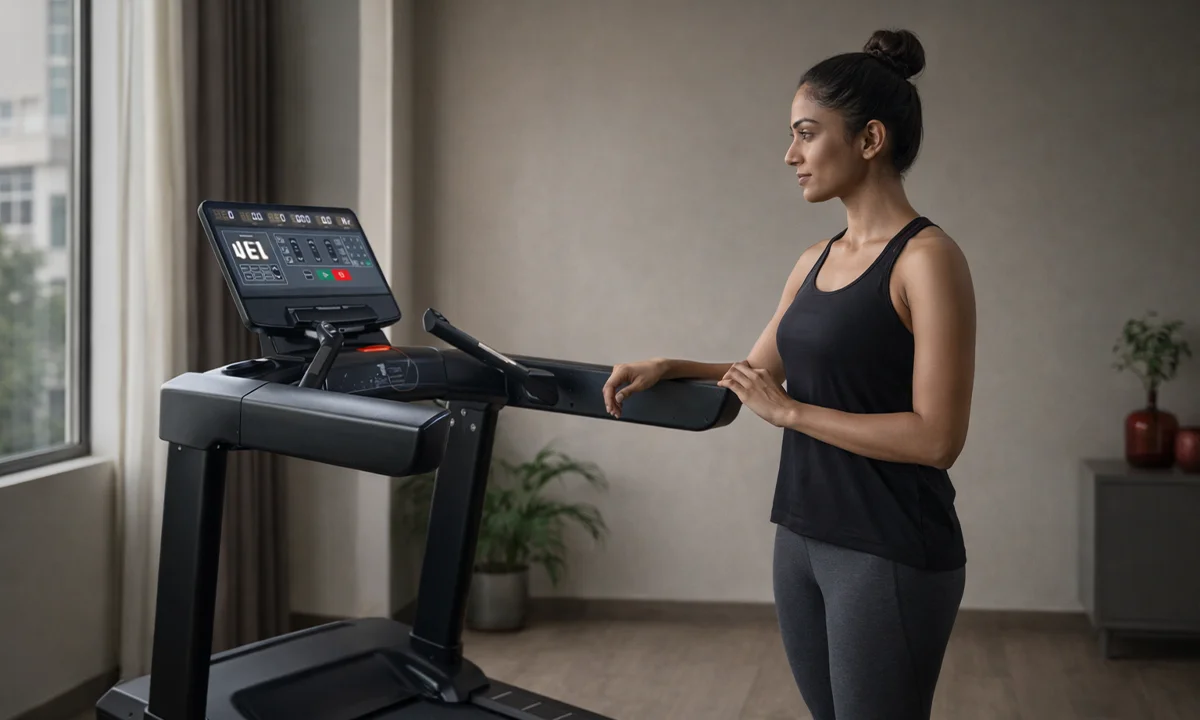
Indian homes have space limitations, variable electricity supply, dust, and shared usage by multiple family members. Noise matters. Service response time matters. Power consumption matters.
Many buyers make the mistake of judging home treadmills using gym standards or marketing numbers. This guide focuses only on what works in real Indian homes.
Is a Home Treadmill Worth It in India
For many households, a home treadmill is a practical and reliable fitness investment.
Time savings play a major role. There is no travel, no waiting for equipment, and no dependency on gym timings. Weather and pollution also make indoor workouts more consistent, especially during monsoons, summers, or high AQI days.
Safety and privacy are additional benefits, particularly for women, seniors, and families. Most importantly, a treadmill at home improves workout consistency, which is the single biggest factor in fitness results.
That said, a treadmill is not for everyone. If you dislike exercising alone or know that motivation drops quickly without external structure, a gym membership may be a better fit. A treadmill only delivers value if it is used regularly.
Types of Treadmills for Home Use
Before comparing prices or features, it is important to understand the basic categories.
Manual vs Motorized Treadmills
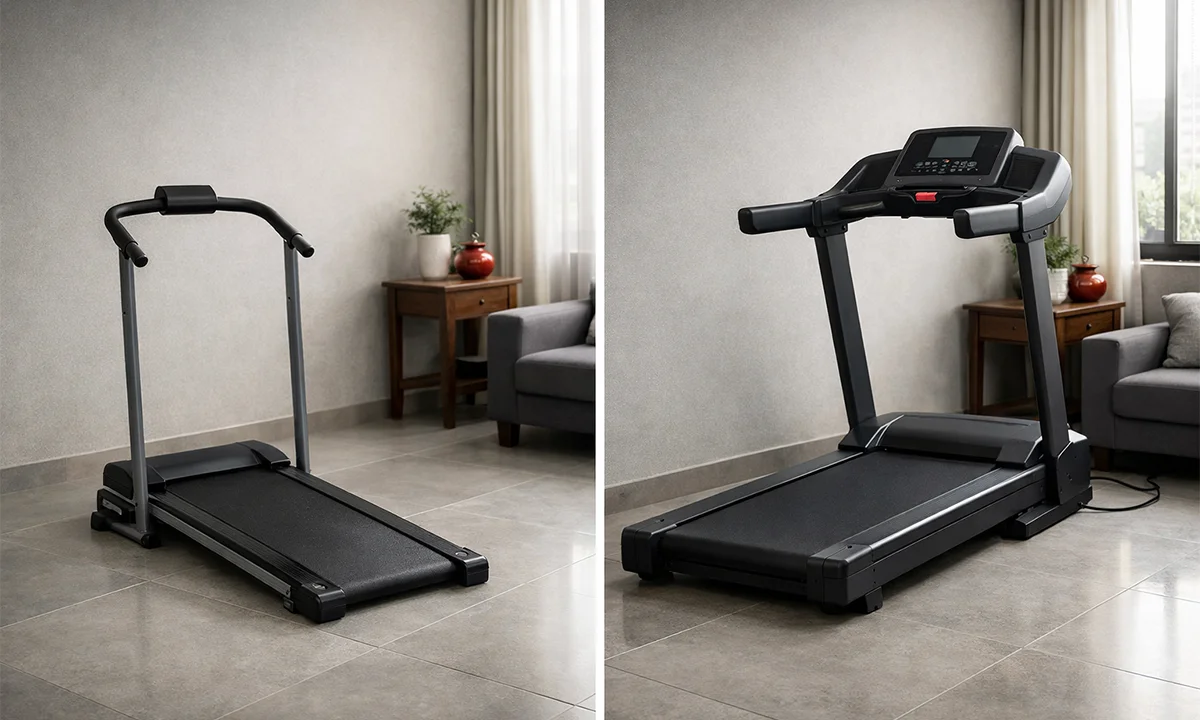
Manual treadmills move only when you walk. They do not require electricity and are usually lower in cost. However, they are best suited only for light walking and short sessions. Speed control is inconsistent and joint impact is higher.
Motorized treadmills use an electric motor to drive the belt. They allow precise speed control, incline adjustment, and longer workout durations. For weight loss, jogging, or running, motorized treadmills are far more practical for Indian homes.
Feature | Manual Treadmill | Motorized Treadmill |
Effort | Belt moves only when you walk (Harder) | Motor moves the belt (Consistent) |
Electricity | Zero cost | ~₹200–350/month |
Best For | Walking only | Fat loss, Jogging, Running |
Durability | Lower | Higher (better for long-term) |
For most users, a motorized treadmill is the better long-term choice.
Folding vs Non-Folding Treadmills
Space is a real constraint in Indian apartments.
Folding treadmills are designed for shared living spaces such as bedrooms or living rooms. They are easier to store and move when not in use.
Non-folding treadmills are more stable and durable but require a dedicated workout area.
If the treadmill shares space with daily life, folding convenience matters. If you have a dedicated fitness room, stability and frame strength should take priority.
How to Choose the Best Treadmill for Home Use in India
This section is the core of the buying decision. Ignore promotional labels and focus on these fundamentals.
Motor Power Explained Simply: HP vs CHP
Peak horsepower is a marketing number. It shows the maximum output a treadmill motor can briefly achieve, not what it can sustain during regular use.
CHP, or Continuous Horsepower, reflects real-world performance and durability. This is the number that actually matters for home use, especially in Indian conditions where voltage fluctuation, dust, and longer sessions are common.
A separate guide on AC vs DC treadmill motors explains how motor type affects efficiency, noise, and durability.
Use this as a general guideline.
User Goal | Recommended CHP | Peak HP Claims to Ignore |
|---|---|---|
Walking | 2.0 CHP | 4 to 5 HP peak |
Jogging | 2.5 CHP | 6 HP peak |
Running | 3.0 CHP or higher | 7 to 8 HP peak |
User above 90 kg | Add 0.5 CHP buffer | Any peak-only rating |
Choosing adequate CHP ensures smoother performance, lower noise, and longer motor life.
Running Area and Deck Size
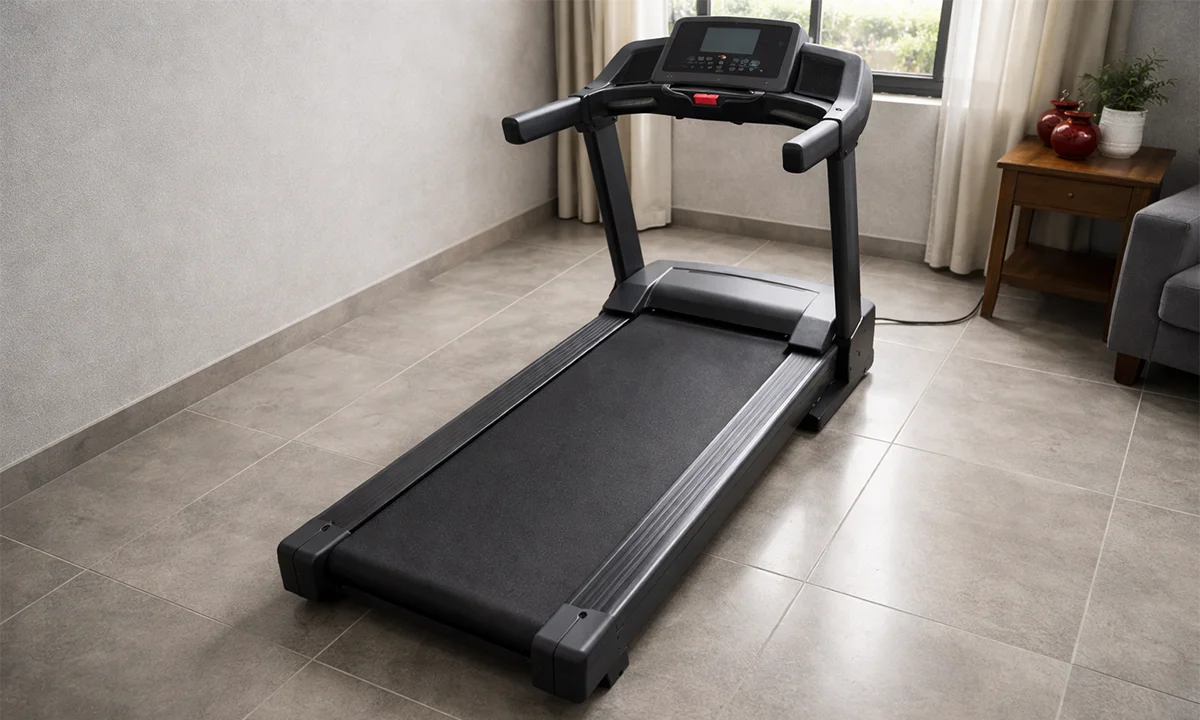
A cramped running surface is uncomfortable and unsafe.
Taller users need longer decks to maintain natural stride. Runners require more length than walkers. Wider decks reduce the risk of missteps and help maintain balance.
Deck size is one of the most overlooked specifications and one of the most common causes of dissatisfaction after purchase.
Maximum User Weight and Frame Strength
Always choose a treadmill rated at least 20 to 25 kg above the heaviest user in the household.
A higher weight rating usually indicates a stronger frame, better motor support, and reduced vibration. This matters more than top speed for long-term durability.
Buying a treadmill that is just at your body weight limit is one of the most common mistakes Indian buyers make.
Incline: Manual vs Auto
Incline is not just about intensity. It reduces joint impact and improves calorie burn efficiency.
Manual incline is basic and budget-friendly but requires stopping the workout to adjust. Auto incline is more convenient, safer, and better suited for structured fat loss routines.
If weight loss is a primary goal, incline capability is more important than high top speed.
Noise Levels for Apartments
Noise can become a deal-breaker in Indian flats.
DC motors are generally quieter and more energy-efficient than AC motors. Vibration damping is as important as motor noise, especially for upstairs apartments.
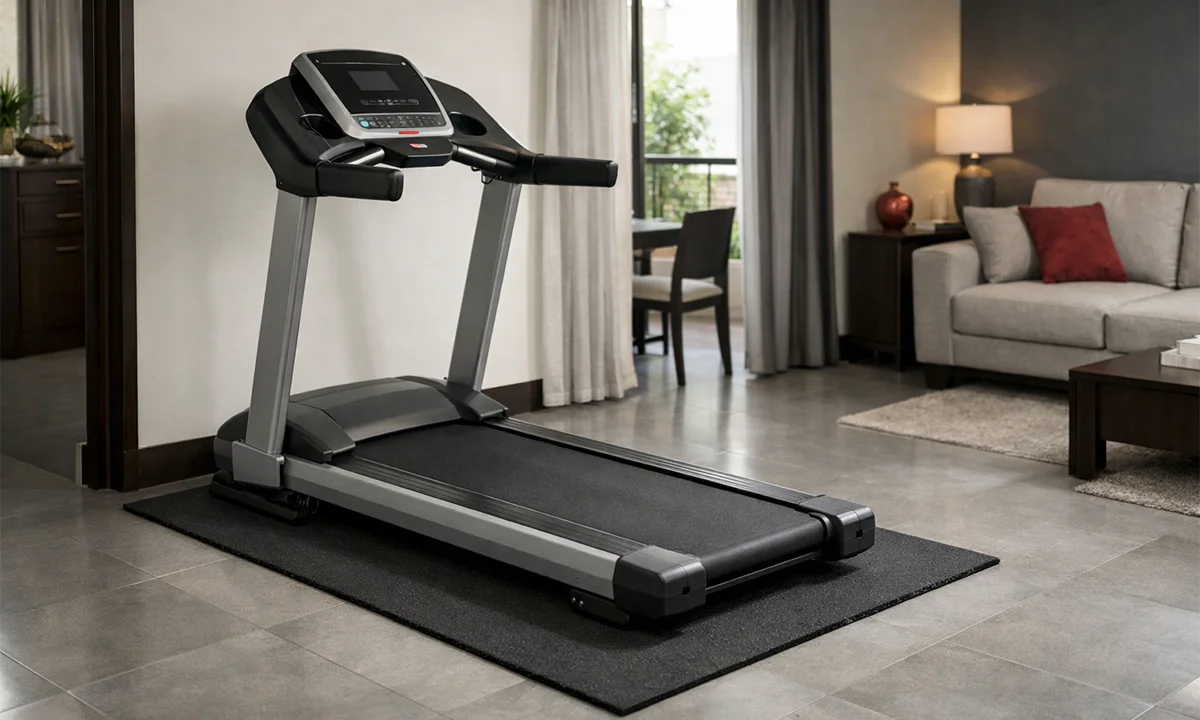
Using a proper treadmill mat is strongly recommended to reduce sound transmission and protect flooring.
Console and Smart Features: What Actually Matters
Useful features include a clear display showing speed, time, distance, incline, and heart rate. Simple preset programs help beginners maintain consistency.
Features that often add cost without long-term value include overloaded apps, excessive workout modes, and built-in speakers.
Simplicity improves usability and long-term adherence.
Need help choosing the right treadmill for your home?
Share your space, usage, and fitness goals. Our experts can help you shortlist the right treadmill based on Indian home conditions.

Electricity Consumption and Power Bills in India
This is one of the biggest concerns for Indian buyers and one of the least clearly explained.
A DC motor treadmill with 2.0 to 3.0 CHP typically consumes around 1 to 1.5 electricity units per hour during continuous running. Walking or light jogging usually consumes less than 1 unit per hour.
For most households, using a treadmill for 30 minutes a day, five days a week, adds approximately 200 to 350 rupees per month to the electricity bill, depending on state tariffs.
A poorly lubricated belt can increase power consumption by 20 to 30 percent. Basic maintenance directly affects electricity usage.
Voltage Fluctuations and Stabilizer Requirement
Indian power supply is inconsistent in many areas, and treadmills are sensitive to voltage fluctuations.
Using a stabilizer is strongly recommended for motorized treadmills.
A 4 KVA stabilizer is generally suitable for home treadmills. It protects the controller board, prevents sudden shutdowns, and extends motor lifespan.
Many treadmill motor failures are caused by voltage damage rather than manufacturing defects, and such damage is often not covered under warranty.
If a seller claims a stabilizer is not required, treat that statement with caution.
Best Treadmill for Home Use in India: Who Should Buy What
Instead of focusing on model lists, think in terms of usage profiles.
For Walking and Senior Users: Lower speed range, strong handrails, cushioned deck, and stable frame are more important than high motor power.
For Weight Loss and Beginners: A motorized treadmill with incline support, comfortable deck size, and smooth speed transitions works best.
For Regular Runners: Higher CHP motor, larger running area, stronger frame, and longer warranty are essential for durability. A commercial-grade setup becomes important at this level, as shown in this commercial-grade treadmill review.
For Families With Multiple Users: Look for higher weight capacity, durable motor, simple controls, and dependable service support. A mid-range treadmill built for daily use, such as the LIFE FIT LF-8600, highlights what to expect from this category.
Not sure which treadmill fits your usage category?
Leave your details and get a personalized recommendation based on your body weight, usage type, and available space.
Indian Brands vs Imported Brands: What Actually Matters
This decision is less about nationality and more about service accountability.
Many Indian brands assemble or source components globally. Many imported brands lack consistent after-sales support.
What truly matters is whether the brand has a service center in your city, whether spare parts are available locally, and whether technicians are in-house or outsourced.
Before buying, call the service helpline, ask about response time, and clarify motor replacement timelines. A reliable service network matters more than brand prestige.
Treadmill Price Range Breakdown in India
Clear expectations prevent disappointment.
Category | Price Range | Best For |
|---|---|---|
Entry-Level | ₹18,000 to ₹28,000 | Walking, seniors, light use |
Mid-Range | ₹30,000 to ₹55,000 | Weight loss, daily jogging |
Premium Home | ₹60,000 and above | Running, heavy users, families |
These ranges reflect what is typically available across current treadmill options.
If a treadmill under ₹25,000 claims running-grade performance, it is usually over-marketed and under-built.
Looking for a treadmill within your budget range?
Get quick guidance on models that match your budget, usage needs, and service availability in your city.
Warranty Benchmarks You Should Expect
Warranty terms vary widely and often confuse buyers.
Use this as a reference point.
Component | Acceptable | Good | Excellent |
|---|---|---|---|
Frame | 3 to 5 years | 5 to 10 years | Lifetime |
Motor | 1 year | 3 years | 5 years |
Parts | 6 months | 1 year | 2 years |
A treadmill marketed for running with only a one-year motor warranty should raise concerns.
Common Mistakes to Avoid When Buying a Home Treadmill
Most buyer regret comes from misunderstanding specifications, not from budget limitations. Avoid these five frequent errors:
Chasing "Peak HP" Numbers: Don't buy based on the flashy "Peak HP" rating on the sticker. This is a maximum power burst the motor can only sustain for seconds. Always look for the CHP (Continuous Horsepower) rating for real-world performance.
Ignoring Vertical Space: Many buyers measure the floor area but forget the ceiling height. Remember that the treadmill deck is raised off the ground. When running at an incline, you can be 6–8 inches higher than usual, which might put you dangerously close to a ceiling fan.
Buying for "Future Fitness": Don't overspend on a high-end runner’s treadmill if you are currently a beginner. Buying for a fitness level you might reach in three years often leads to wasted money on features you never use. Buy for your current reality.
Skipping the Service Check: Never buy a treadmill without verifying after-sales support. Call the customer care number before you buy to see if they answer. If a brand doesn't have a service network in your specific city, even a minor repair can become a nightmare.
Overlooking Floor Strength: Treadmills are heavy and create vibration. Placing them on weak flooring or without a mat can cause tile cracks or noise complaints from neighbors downstairs.
Maintenance and Longevity Tips for Home Treadmills
A treadmill’s lifespan depends heavily on care. Basic maintenance can significantly extend the life of the motor and belt.
Lubricate with 100% Silicone Oil: This is the most critical task. Apply silicone oil under the belt every 3 months or after 40 hours of use. Never use WD-40 or grease, as these will damage the belt material.
The "Cool Down" Rule: Home treadmills typically use DC motors, which heat up during operation. To prevent overheating, allow the machine to rest for 20 minutes after every 45–60 minutes of continuous use.
Voltage Safety is Mandatory: Indian power grids are unpredictable. Always use a 4 KVA stabilizer and surge protector to shield the sensitive circuit board from voltage spikes.
Fight the Dust: Dust is the enemy of electronics. Wipe down sweat after every workout and vacuum the area around the motor cover weekly to prevent clogging.
Check Belt Tension: If the belt slips while running or feels "sticky," adjust the rear tension bolts slightly to maintain smooth operation.
Frequently Asked Questions
The best treadmill is not the most expensive one, but the one that fits your specific needs. For most Indian homes, a motorized treadmill with 2.5–3.0 CHP, auto-incline, and a service center in your local city is the ideal choice.
For most homes, 2.5 to 3.0 CHP is sufficient. Heavier users and runners should consider higher capacity.
Yes, when used correctly with proper cushioning, incline control, and routine maintenance.
DC motors are better for home use. They are quieter, more energy-efficient, and responsive. AC motors are powerful but generally too noisy and bulky for typical Indian apartments.
Not as much as you might think. A standard home treadmill (2.5 CHP) typically consumes about 1 unit of electricity per hour of use. For average usage (30 mins/day), this adds roughly ₹200–₹350 per month to your bill.
Service quality varies by city. Instead of looking for a "best brand," look for a brand that has an authorized service center in your pin code. Local spare part availability is more important than the brand name on the console.
Final Thoughts
A treadmill is not just a piece of equipment. It is a habit-building tool.
The best treadmill for home use in India is one that fits your space, matches your fitness level, operates reliably in Indian conditions, and encourages consistency rather than intimidation.
Choose based on reality, not aspiration. When you do, your treadmill becomes part of your routine instead of a reminder of a rushed decision.
Screenshot This: Your Treadmill Buying Checklist
[ ] Motor: Is it at least 2.5 CHP? (Ignore Peak HP)
[ ] Weight: Is the max user weight 20kg more than my weight?
[ ] Space: Do I have a 4KVA stabilizer point nearby?
[ ] Warranty: Is the motor covered for at least 3 years?
[ ] Service: Does this brand have a service center in my city?