


Battle ropes are one of the most effective tools for building strength, endurance, and conditioning in a short amount of time. Used widely in athletic training, functional fitness, and rehabilitation settings, battle rope exercises combine cardiovascular demand with full-body muscular engagement.
When performed with proper technique, battle rope training improves power, grip strength, core stability, and metabolic conditioning. This guide breaks down five effective battle rope exercises, explains correct form, and shows how to program them safely for different fitness levels.
Why Use Battle Ropes in Your Training Program
Battle rope workouts are valued by strength coaches and personal trainers because they deliver high training stimulus without excessive joint impact. Unlike running or jumping-based cardio, ropes allow you to push intensity while keeping stress on the knees and ankles relatively low.
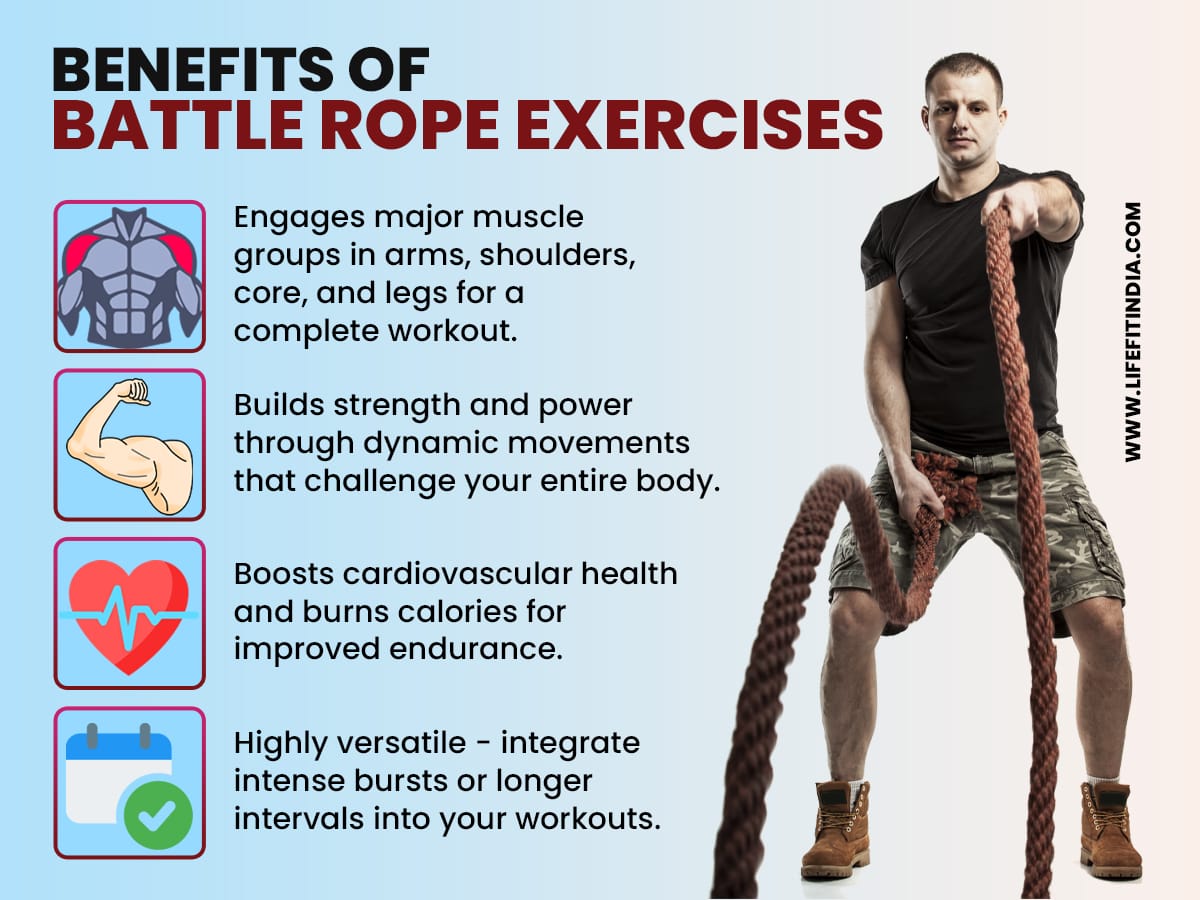
Key benefits include:
Full-body muscle activation using arms, shoulders, core, and legs
Improved cardiovascular endurance through high-intensity intervals
Enhanced coordination, grip strength, and postural control
Effective calorie burn in short training sessions
Because of their high-intensity nature, battle rope exercises are often used in cardio workouts to improve endurance, burn calories, and build conditioning without excessive joint impact.
Proper Battle Rope Technique and Safety Guidelines
Correct form is essential to maximize results and reduce injury risk. Poor posture or excessive shoulder tension can lead to strain over time.
Follow these technique principles:
Stand with feet shoulder-width apart and knees slightly bent
Maintain a neutral spine and engaged core
Keep shoulders relaxed and avoid shrugging
Use controlled, rhythmic arm movements rather than jerking motions
Breathe steadily throughout each set
Beginners should start with lighter ropes and shorter intervals before progressing to longer or more explosive sets.
1. Double Wave Exercise
The double wave is a foundational battle rope movement that builds endurance and upper-body strength.
How to Perform
Hold one rope handle in each hand
Move both arms up and down simultaneously
Create consistent waves along the length of the rope
Benefits
Strengthens shoulders, arms, and core
Improves muscular endurance
Excellent for conditioning circuits
2. Alternating Wave Exercise
Alternating waves add coordination and unilateral loading to rope training.
How to Perform
Hold the rope handles firmly
Move one arm up while the other moves down
Maintain a steady rhythm and balanced stance
Benefits
Enhances coordination and motor control
Builds shoulder and arm endurance
Challenges core stability
3. Power Slams
Power slams focus on explosive strength and total-body engagement.
How to Perform
Raise both arms overhead while gripping the ropes
Slam the ropes forcefully toward the floor
Reset and repeat with control
Benefits
Develops explosive power
Engages core, shoulders, arms, and hips
Useful for athletic performance training
4. Side-to-Side Waves
This variation introduces lateral movement and rotational core activation.
How to Perform
Move both arms together from side to side
Generate waves that travel laterally
Keep hips stable and core engaged
Benefits
Improves rotational strength
Enhances lateral coordination
Strengthens core and shoulders
5. Alternating Power Slams
This advanced movement combines unilateral control with power output.
How to Perform
Lift one arm at a time and slam the rope downward
Alternate sides with each repetition
Maintain balance and posture throughout
Benefits
Builds unilateral strength
Improves coordination under fatigue
Challenges full-body control
How to Structure a Battle Rope Workout
A simple and effective battle rope circuit can be structured as follows:
Warm-up: 5 to 8 minutes of light cardio and mobility
Work interval: 30 seconds per exercise
Rest interval: 30 seconds
Total rounds: 3 to 4 rounds
As conditioning improves, increase work duration or reduce rest time rather than rushing into heavier ropes.
Common Mistakes to Avoid
Using excessive shoulder tension instead of whole-body movement
Leaning too far forward and losing spinal alignment
Starting with heavy ropes before mastering technique
Training battle ropes every day without recovery
Battle rope workouts are demanding and should be programmed 2 to 3 times per week for best results.
Frequently Asked Questions
Yes. Beginners can start with lighter ropes, shorter intervals, and basic wave patterns before progressing.
Primarily shoulders, arms, and core, with additional involvement from legs and back depending on movement style.
Most effective sessions range between 15 and 30 minutes, including warm-up and cooldown.
Yes. High-intensity rope training increases calorie expenditure and supports fat loss when combined with proper nutrition.
Only the ropes and a secure anchor point are required. Adequate floor space is important for safety.
Conclusion
Battle rope exercises offer a powerful combination of strength training and cardiovascular conditioning. When performed with correct technique and structured programming, they improve endurance, coordination, and total-body strength without excessive joint stress.
Whether used as a standalone workout or part of a larger training program, battle ropes provide an effective and scalable way to challenge the body and elevate overall fitness levels.